Gesture
The Sign of the Horns
The corna; the metal horns; mano cornuta
An old charm against the evil eye, carried into rock and metal — and misread there as the salute of the Devil.
- Mediterranean corna
- Against the evil eye
- Dio, 1979
- Thumb out: a different sign
The form
A fist with the index and little fingers extended, the two middle fingers held down by the thumb. With the thumb tucked it is the sign of the horns; with the thumb held out to the side it becomes a different sign entirely — in American Sign Language, ‘I love you’ — and the two are frequently and comically confused in photographs.
The old meaning
Long before rock, the mano cornuta was a protective gesture around the Mediterranean, made to turn away the malocchio, the evil eye, and to send a curse back where it came from. Related horned-hand gestures appear in South Asian religious art as mudras. Its oldest work is defensive — a charm against harm, not a summons to it — and Italian grandmothers were making it for that reason long before any stage.
How it reached metal
Ronnie James Dio brought it into heavy metal in 1979, on joining Black Sabbath, and said all his life that he took it directly from his Italian grandmother, who made it against the evil eye. Through Dio and the bands who followed, it became the universal salute of metal — thrown from the stage and the crowd as the sign of the music itself, a gesture of belonging rather than of allegiance to anything.
What is said about it
Outside that world the same gesture is widely read as a satanic salute, a sign of loyalty to the Devil, and it is collected alongside the Illuminati gestures as proof of hidden allegiance whenever a public figure is caught making it.
Dio and his grandmother
The gesture entered heavy metal through one man and he was explicit about where he got it. When Ronnie James Dio replaced Ozzy Osbourne in Black Sabbath in 1979 he wanted a sign of his own rather than borrowing his predecessor’s peace fingers, and he used the corna his Italian grandmother had made to ward off the malocchio, the evil eye. He said as much in interviews for the rest of his life. In Italy the same shape is also a crude insult implying a man’s wife is unfaithful, and in Texas it has meant Hook ’em Horns at football games since 1955. One hand shape, three unrelated meanings, none of them a pledge to the Devil.
Where the Vault stands
One gesture holds a protective charm, a metal salute and, to its accusers, a devil's sign — and only the last of the three is a misreading. The oldest and commonest use, by a wide margin, is a ward against evil; calling it a summons of evil turns a grandmother's blessing on its head. The Vault reads the horns as what they have mostly always been: protection, and belonging.
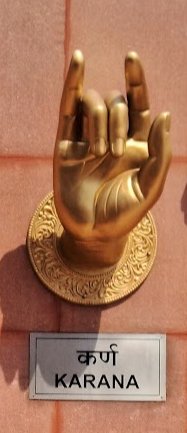

- Corna
- Evil eye
- Metal