Talisman
The Pentacle
The Solomonic pentacles; the earth disc; the pentagram in its circle
Not a star but an object: the inscribed disc of Solomonic magic — and only since the twentieth century the everyday name for the pentagram in its circle.
- Key of Solomon, 16th–18th c.
- 44 planetary pentacles (Mathers, 1888)
- Golden Dawn: the weapon of earth
- Wicca: the altar disc
The form
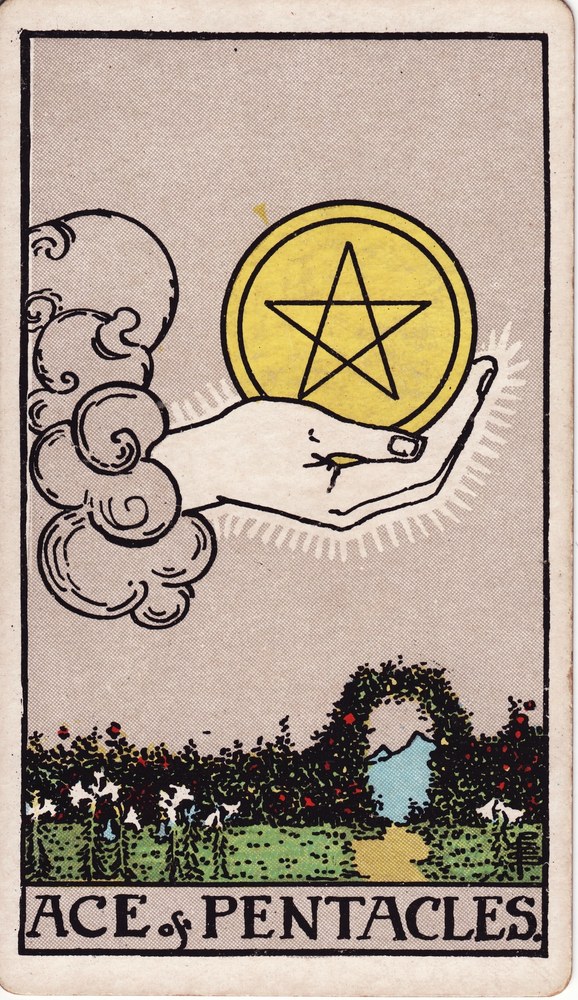
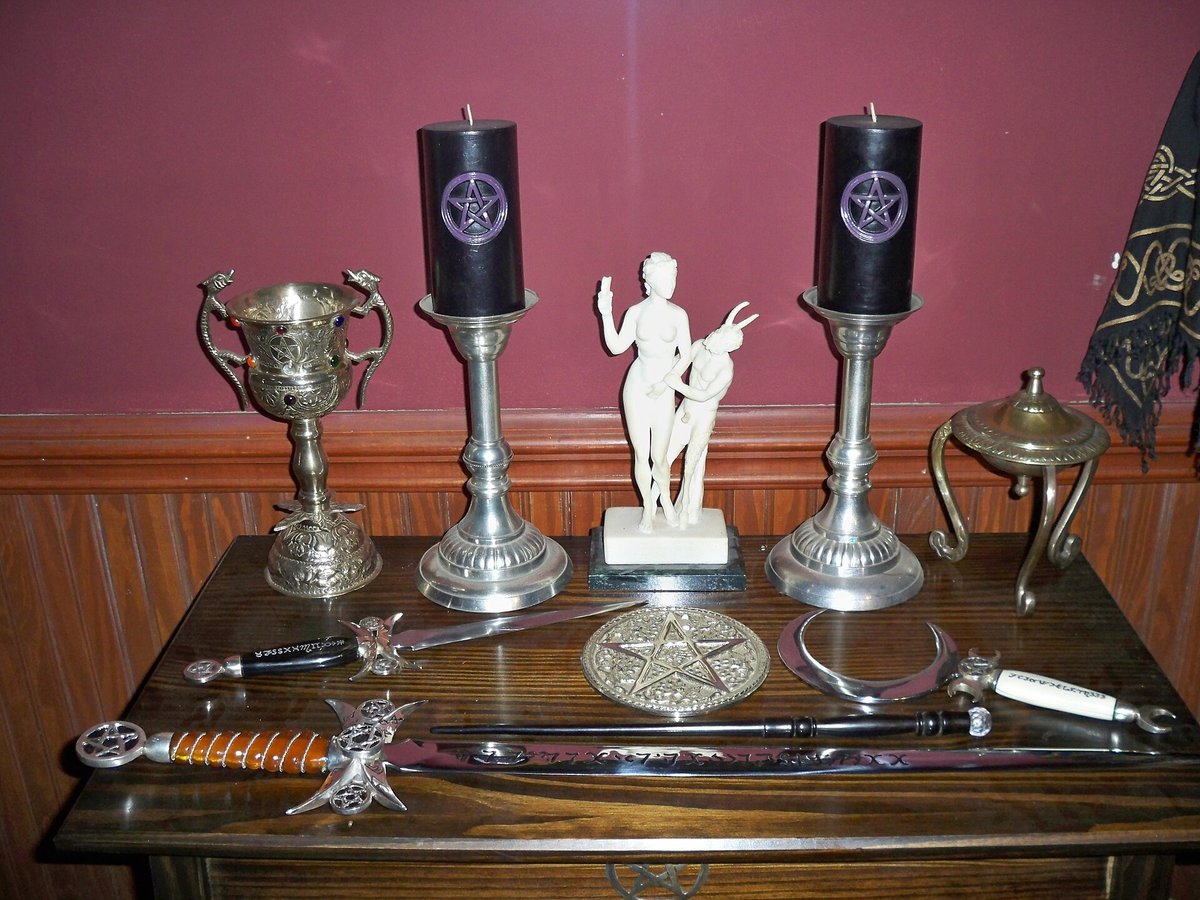
Two quite different things share the name. In ceremonial magic a pentacle is a flat object — a disc or square of parchment, wax or metal — inscribed with divine and angelic names, verses of scripture, magic squares and characters, made under fixed conditions and carried, worn or laid out for protection and authority. In modern Wiccan and neopagan usage the word means one single figure: the upright pentagram enclosed in a circle. The mark on the card shows the second; the plates below show the first, which is much older.
The word
Its origin is uncertain. It is often linked to the Greek pente, five, and so to the five-pointed star — but the oldest pentacles have nothing to do with five, and an older explanation derives the word from the French pendre, to hang, for an amulet hung around the neck. Éliphas Lévi preferred the spelling pantacle, from the Greek pan, all, for a figure that sums up a whole doctrine in one image.
The pentacles of Solomon
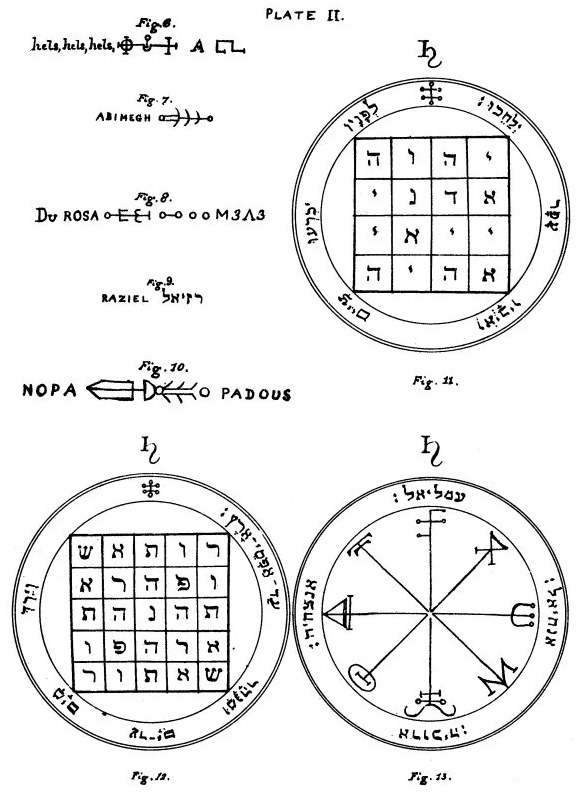
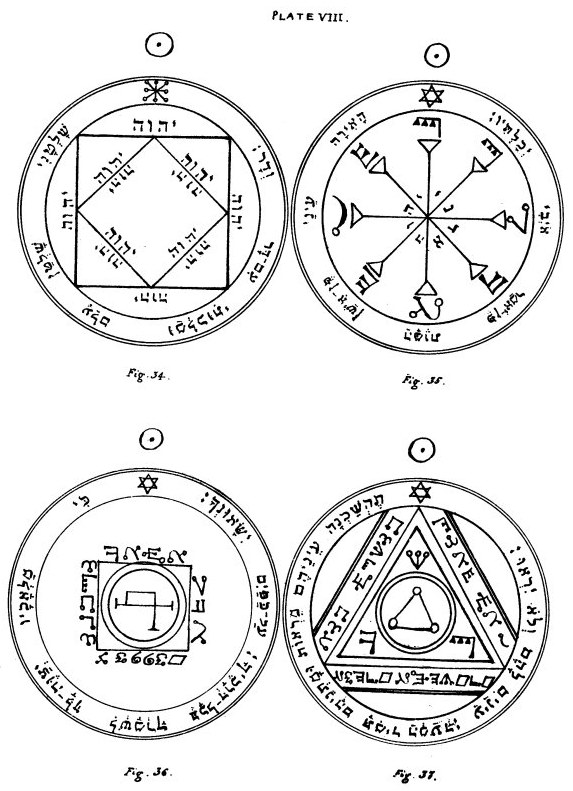
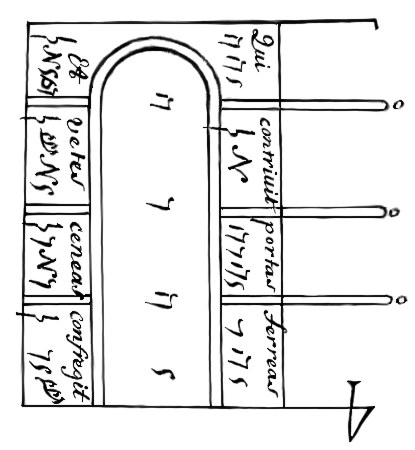
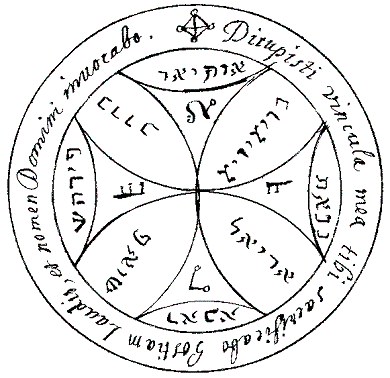
The great source is the Key of Solomon, the Clavicula Salomonis, preserved in Latin, Italian and French manuscripts of the sixteenth to eighteenth centuries. In the edition S. L. MacGregor Mathers published in 1888 it contains forty-four pentacles arranged under the seven planets — seven each for Saturn, Jupiter, Mars and the Sun, five each for Venus and Mercury, six for the Moon. Each is to be made on the day and in the hour of its planet, in its colour or metal, and each has its own purpose: the pentacles of Jupiter for riches and honour, those of Mars for conflict, those of the Moon for travel and for what is closed. The First Pentacle of the Moon shows a door framed by the verse He hath broken the gates of brass (Psalm 107:16) and is said to open locked doors; the Seventh Pentacle of the Sun, ringed by Thou hast loosed my bonds (Psalm 116:16), is said to free whoever is held in chains.
Names, not stars
What fills a Solomonic pentacle is almost never a star. It is Hebrew — the names of God, of angels and planetary intelligences — together with verses from the Psalms and the prophets, and squares of letters that read the same in several directions. The pentacle is a prayer made solid: its power, in the logic of the grimoires, comes from the divine names written on it, and it protects the magician precisely because it places him under a higher authority than the spirits he calls. The Lesser Key of Solomon adds its own Pentagram and Hexagram of Solomon, to be worn as protection in the same spirit, and Agrippa's Three Books of Occult Philosophy (1533) had already treated holy pentacles and seals as a class of their own.
The weapon of earth
In the Hermetic Order of the Golden Dawn at the end of the nineteenth century the pentacle became one of the four elemental weapons, beside the wand of fire, the cup of water and the dagger of air: a disc that the magician designs and consecrates as the instrument of earth. From there it passed into the tarot. In the Rider–Waite deck of 1909, drawn by Pamela Colman Smith, the old suit of coins became the suit of pentacles — golden discs, each bearing a star in a circle. Crowley's Thoth tarot calls the same suit disks.
The Wiccan pentacle
In Wicca, as Gerald Gardner presented it in the 1950s, the pentacle is the altar disc on which objects are consecrated, engraved with a pentagram and other signs. Its outward form — the star in a circle — became the best-known emblem of modern pagan religion, worn as a pendant and read as protection, unity and the elements held together by spirit. In 2007 the United States Department of Veterans Affairs, after a lawsuit, added the pentacle to the emblems of belief it allows on the gravestones of fallen soldiers.
Where the Vault stands
Few objects are more often taken for devilry and are less so. A Solomonic pentacle is covered in the names of God and lines from the Psalms; the Golden Dawn made it the sober tool of earth; Wicca made it a sign of protection and wholeness. Whoever sees in the circled star a satanic emblem is reading the inverted pentagram into a figure that points upward — and overlooking that the older pentacle is, in its own terms, a prayer.






- Protective
- Ceremonial magic
- Wicca