Standing clarification
Nobody Made You Do It
Blaming Satan for your failures is unfair to him and, far more to the point, it is beneath you — and it keeps you weak.
There is an old habit, learned so early that most people never notice they are doing it. When something in you turns out ugly — the cruelty, the appetite, the rage, the thing you did at nineteen that you still do not say out loud — it was not quite you. Something got in. Something tempted you. The devil made you do it.
A very old technology
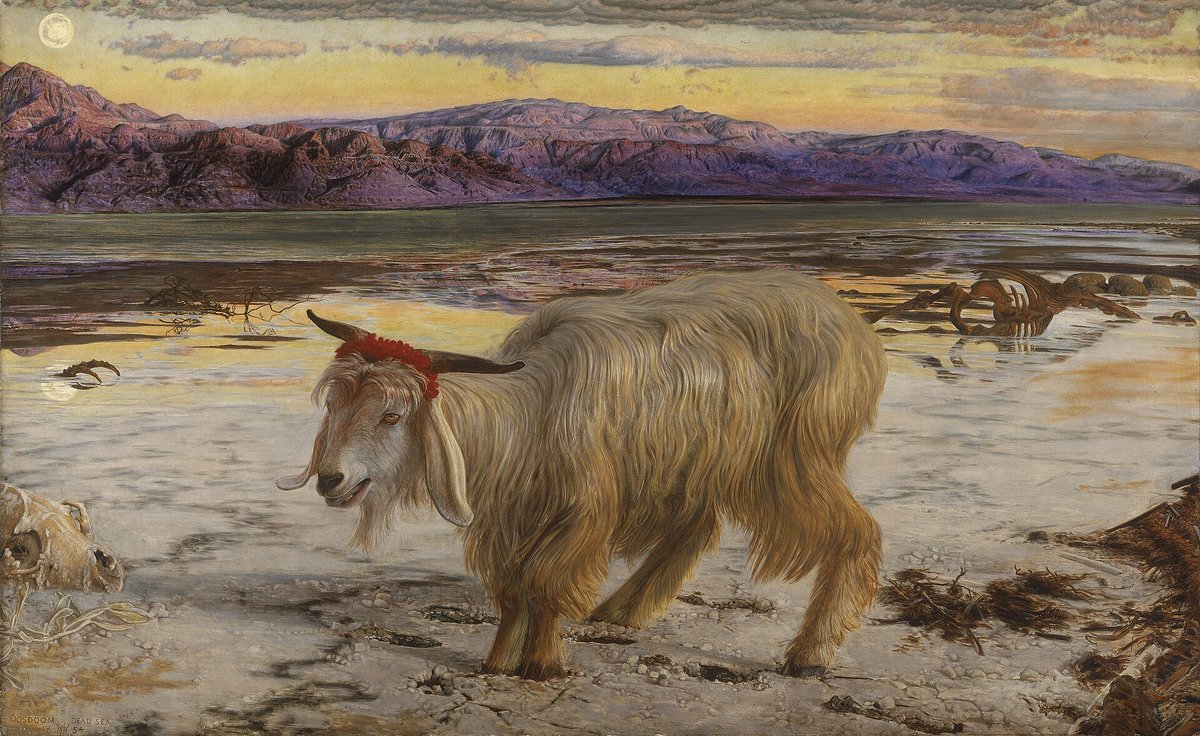
It is a comfortable arrangement, and it was built on purpose. A scapegoat is a piece of religious technology and a very old one. In Leviticus 16, on the Day of Atonement, the priest confesses the sins of the people over a living goat and sends it out into the wilderness “for Azazel”: you load the failures of the community onto something, drive it away, and walk home clean. It worked so well that an entire cosmology grew up around the animal. Every impulse the authorities wished people to be ashamed of was given a face and a name, and the name was his.
Two objections
The Vault objects on two counts, and the first is simply fairness. Whatever Satan is — a symbol on the left of the map, a being on the right — he did not do it. You did. The record you are trying to hand him is your own, and it has your handwriting all over it.
The second count is the one that actually matters: the habit makes you weak. It is not a moral complaint. A thing you did not do is a thing you cannot fix. Every fault you post to somebody else’s account leaves your own books unreadable — you cannot correct what you have declined to own, cannot learn from it, cannot even see it clearly, because all the energy went into getting rid of it instead of into looking at it. The scapegoat does not carry your sins off into the wilderness. It carries away the only material you had to work with.
The whole of the path
This is not a footnote to the Left-Hand Path. It is the whole of it. The path’s first principle is that you are your own authority — and authority is not a privilege, it is a bill. If you are the one who decides, you are the one who answers, and there is nobody else in the room. That is exactly what makes it harder than the alternative, and exactly what makes it worth walking.
So: your shadow is yours. Your cruelty is yours, your appetite is yours, and so is the thing you did at nineteen. Look at it, name it, and put it to work. That is what a demonolator means by integration — not that the ugly parts are secretly fine, but that they are yours, they are not going anywhere, and pretending they belong to a devil is the surest way to guarantee they run you for the rest of your life. The propaganda taught you to hand them over. Don’t. You are going to need them.