The Vault's sharpest disagreement
On Commanding Spirits
The old rites bind and threaten. This Vault does not — and not because it is squeamish. Because coercion is borrowed authority, and it cannot buy the thing the work is actually for.
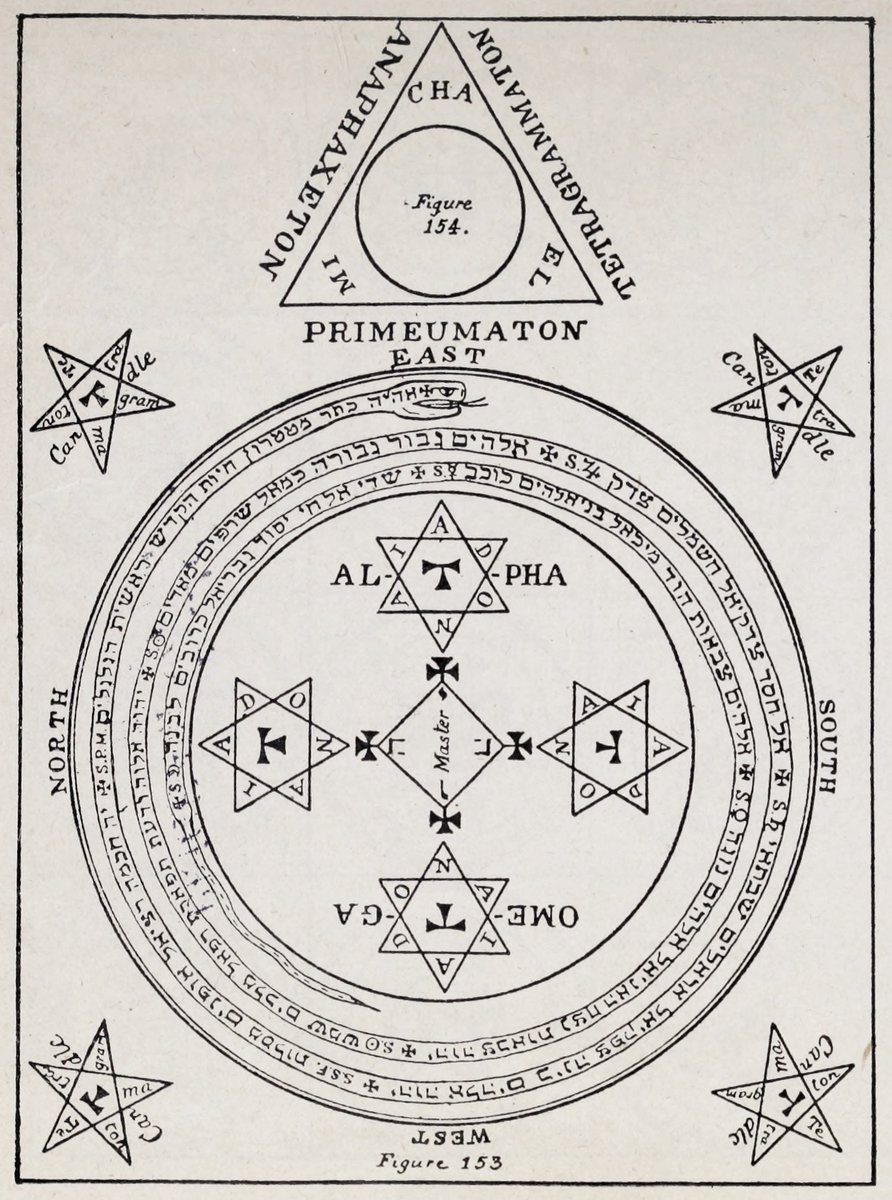
Open almost any surviving grimoire and you will find the same posture. The operator stands inside a circle. The spirit is called into a triangle outside it. If it does not come, it is threatened — with divine names, with the wrath of angels, with imprisonment in a brass vessel, with fire. The Lesser Key of Solomon escalates step by step from conjuration to constraint to a formal curse, the “Spirits’ Chain”, and finally to burning the spirit’s seal in a box of foul-smelling substances over the coals. The whole architecture is a summons, a cage, and a lever.
This Vault works those same seventy-two spirits and does none of it. The objection is worth spelling out, because "be polite to demons" is not the argument. There are three parts to it.
What the model assumes
The rite assumes the spirit is real enough to answer, real enough to be useful, and real enough to be dangerous — and then handles it like a machine with a password. That is not a coherent position about an intelligence. It is a coherent position about a vending machine. If there is nothing there, the threats are theatre and the circle is a stage prop. If there is something there, then you have decided that the correct opening move with an intelligence older than your civilisation is a threat. The first reading is embarrassing. The second is also stupid.
Whose authority?
The coercive rite is not neutral technique that happens to be old. It is Right-Hand-Path apparatus wearing a black coat. Read the conjurations closely: the operator has no authority of his own anywhere in them. Every ounce of leverage he claims is borrowed — he commands in the name of God, of Adonai, of Tetragrammaton, by the seal of Solomon, by angels he is himself not on speaking terms with.
He is not sovereign. He is a middle manager reading out a memo from head office, and the entire performance only works if the demon is more afraid of his employer than he is. There is no Left-Hand Path in that room at all. The man in the circle is every bit as obedient as the thing in the triangle. He has simply found someone to stand above.
What a cage cannot produce
The third objection is the practical one: coercion cannot produce what the work is for. You can force compliance. You cannot force candour. Everything a demonolator actually wants from a spirit — teaching, counsel, being shown the thing you were carefully not looking at — belongs to the category of gifts that can only be given and never taken. A frightened party tells you whatever stops the threat. That is the least useful sentence in the world, and it is the only sentence a cage can produce.
So the Vault honours and asks. It brings offerings, keeps its appointments, and accepts that the answer may be no — because an answer that cannot be no is not an answer. This is slower. It is much slower, and it will not deliver on a schedule. That is not a defect of the method; it is what a relationship costs, and there is no version of this where you get the relationship without paying for it.
And the plain note, since it belongs here: nothing in this Vault is an instruction to conjure, to bind, or to compel anything. The criticism above is not that the coercive rites are dangerous to you. It is that they are wrong, borrowed, and useless. If you are new here, you are missing nothing by never performing one.