Eye
The Eye of Horus
The Wedjat; the Udjat; the all-seeing eye
An Egyptian sign of protection, healing and royal power — and one root of everything later called the all-seeing eye.
- Egyptian Wedjat
- Protection and healing
- The myth of Horus and Set
- Read later as the all-seeing eye
The form
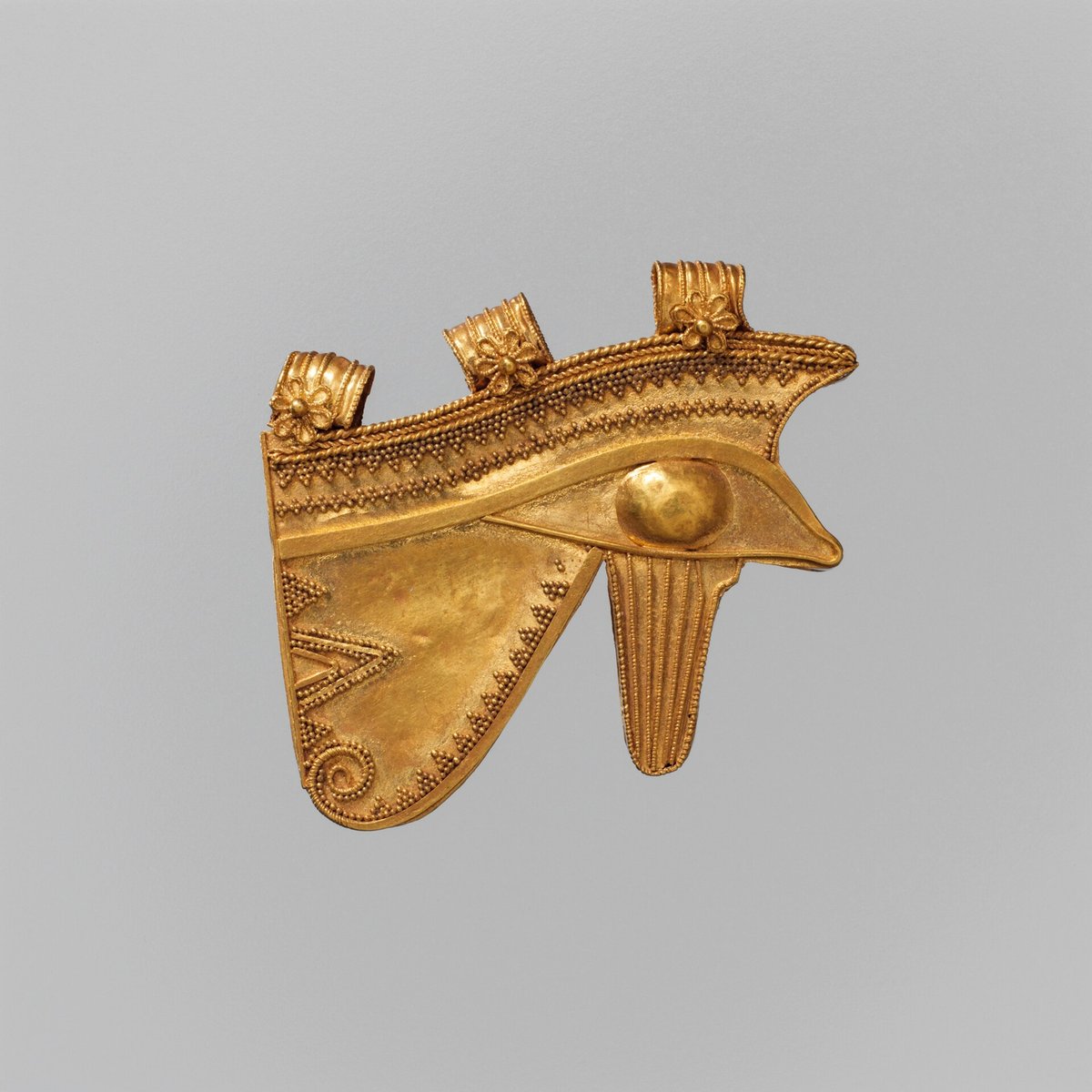
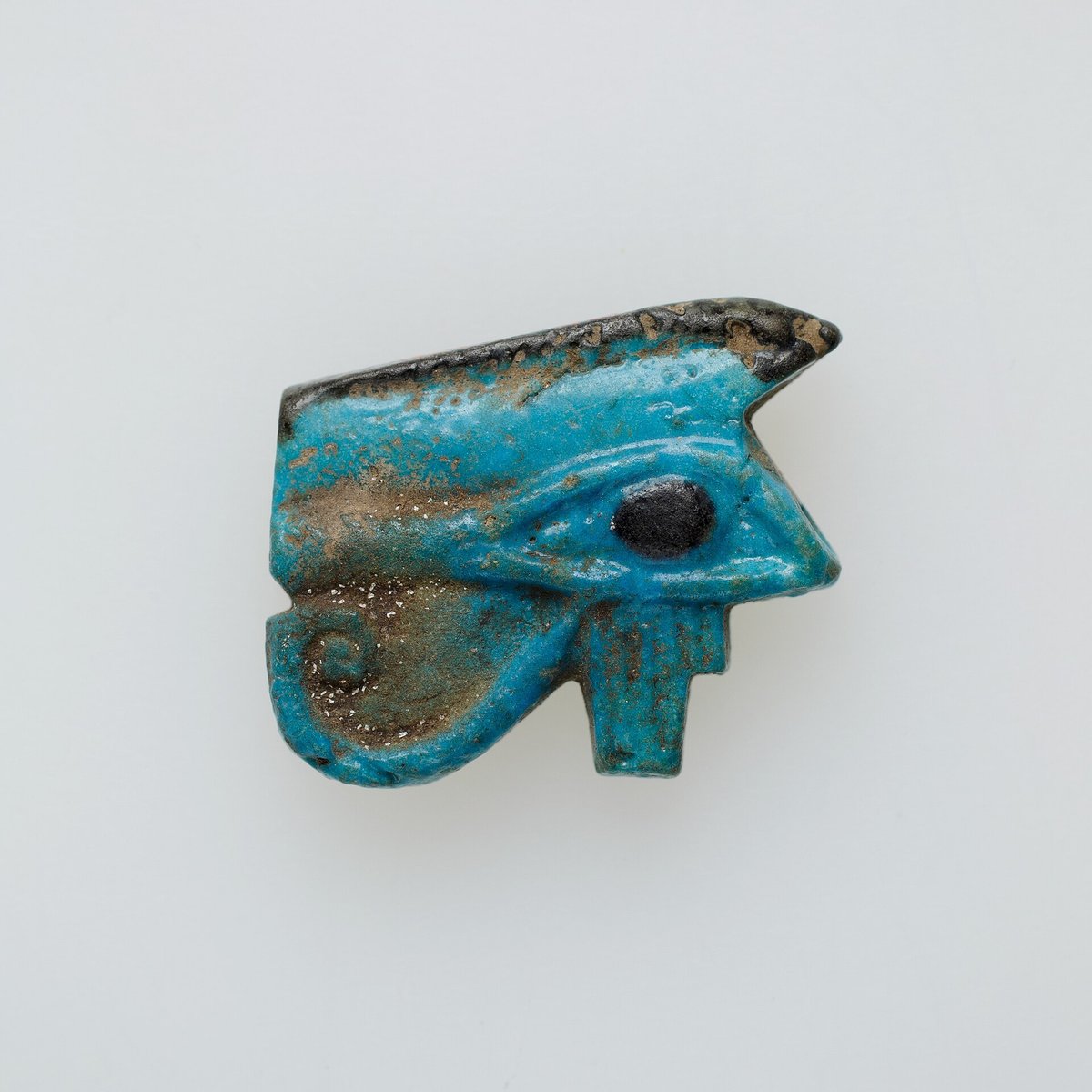
A stylised human eye combined with the markings of a falcon: the eyebrow above, and below the eye a straight descending line and a curling spiral, drawn from the facial markings of the falcon that was Horus's animal. It is almost always drawn as the right eye, associated with the sun; the left, the moon, is the Eye of Ra or of Thoth.
The Egyptian meaning
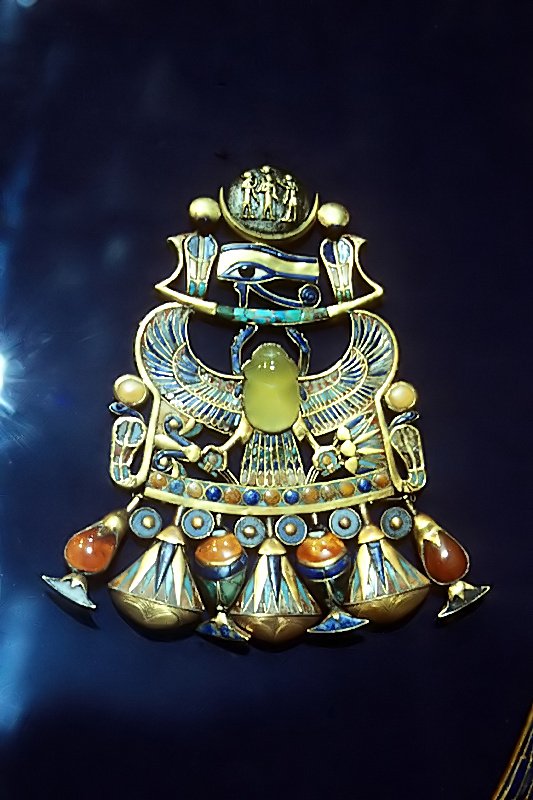
In myth the sky-god Horus lost his eye in his long battle with Set and had it torn to pieces and then restored whole by Thoth; the restored eye, the Wedjat — ‘the sound one’ — became the great sign of wholeness, healing and protection. It was painted on coffins, worn as an amulet, and its six parts were even used as fractions for measuring grain and medicine. It is, at root, a sign of a thing broken and made whole again.
How it became the all-seeing eye
Because it is an eye and it protects, it was folded over the centuries into the wider idea of a single watching eye, and it is now routinely identified, in popular use, with the eye of providence on the dollar and with the ‘all-seeing eye’ of esoteric and conspiracy lore. The two are historically distinct — one Egyptian and protective, one Christian and providential — but modern usage has quietly married them into one family of watching eyes.
Where it is seen now
It appears as jewellery, as a tattoo, in album and brand design, and across the imagery of hidden and watching power. To some it means protection and Egyptian heritage; to others, surveillance and a concealed authority. The same shape carries guardian and watcher at once.
The eye that was broken
The wedjat is a healing sign because it is a repaired one. In the myth Set tears out Horus’s eye during their long fight, and Thoth restores it — wedjat means the whole one, the sound one, and what it promises is not protection from harm but recovery after it. There is a further tradition, proposed by Georg Moller in 1911 and much repeated since, that the six parts of the drawn eye served as fractions for measuring grain: one half, one quarter, one eighth and so on down to one sixty-fourth, summing to sixty-three sixty-fourths, with the missing fraction supplied by Thoth. Egyptologists now doubt the fraction reading. It is included here because it is everywhere, and because it deserves the caveat it is rarely given.
Where the Vault stands
On the record the Eye of Horus is a healing and protective sign four thousand years old, and that is where the Vault sets it. What it is taken to mean now — guardian eye, or watcher of a hidden hand — depends on the tradition doing the looking; but the oldest and truest reading is the Egyptian one, the eye made whole, and it is far kinder than its modern shadow.



- Wedjat
- Protection
- All-seeing eye