Star
The Hexagram
The six-pointed star; Seal of Solomon; Magen David
A binding and balancing figure drawn on every continent — far more Jewish and alchemical than infernal.
- Drawn worldwide for millennia
- The Seal of Solomon
- Magen David (modern)
- Alchemy: fire over water
The form
Two equilateral triangles interlaced, one pointing up and one down, making a six-pointed star around a central hexagon. The upward triangle is read as fire and the ascending principle, the downward as water and the descending; their union is the classic ‘as above, so below,’ and the whole figure is a diagram of balance before it is anything else.
The many origins
The hexagram is so simple that it was drawn independently across the world: in Bronze Age contexts, in India where it long predates any Western use, in Islamic art as the Seal of Solomon (Khatam Sulayman), and throughout medieval Europe on churches, wells and doorways as a charm. It is the property of no single tradition; it recurs because two triangles are one of the first things a hand reaches for.
Seal of Solomon and Magen David
In the grimoire tradition the hexagram is the Seal of Solomon, the ring by which the legendary king bound and commanded spirits — the very frame of the Ars Goetia. Its identification with Judaism as the Magen David, the Shield of David, is comparatively recent: it spread from the seventeenth century, became a fixed communal emblem only in the nineteenth, was chosen for the Zionist movement in 1897, and now marks the flag of Israel.
Alchemy and the conspiracy reading
Alchemy read the two triangles as the reconciliation of the four elements and of the volatile and the fixed — fire and water, the great pair. A strand of twentieth-century American fundamentalist and conspiracy writing, borrowing occult language, recast the hexagram as a magician's or ‘witch's’ sign and sometimes tied it to Saturn; that reading is recent, thin, and travels mostly among people already looking for hidden evil.
The star is younger than the people
The six-pointed star is ancient, but its use as the emblem of Judaism is not. For most of its history the figure was a general-purpose ornament and a protective device, cut into churches, mosques and synagogues without distinction, and it appears in Islamic and Christian architecture as readily as in Jewish. Its career as a specifically Jewish sign begins in Prague in the fourteenth century, when the community was granted a flag bearing it, and only in the nineteenth century did it spread as the counterpart to the Christian cross. It reached the Israeli flag in 1948. So a symbol treated by conspiracy writers as an immemorial secret is, in its best-known meaning, younger than printing.
Where the Vault stands
The hexagram's overwhelming meanings across history are protective, royal, alchemical and Jewish; it binds and balances far more than it curses, and the grimoires that use it use it to control spirits, not to serve them. Reading it as an infernal sign means ignoring several thousand years of the opposite and mistaking the tool of the binder for a mark of the bound. The Vault reads it as what it is: a sign of balance and of Solomon's authority.
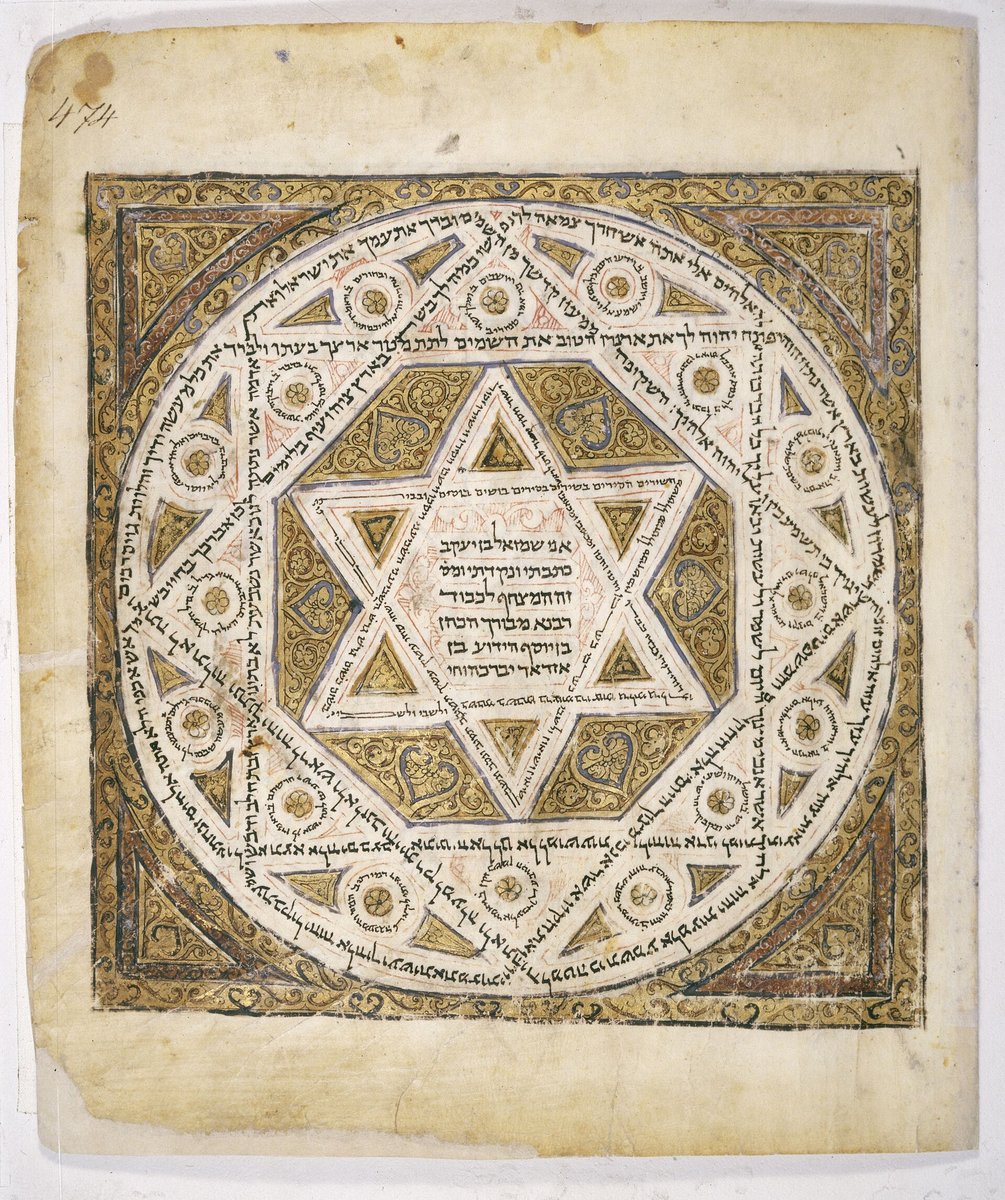

- Seal of Solomon
- Alchemical
- Contested