Star
The Octagram
The eight-pointed star; the Star of Chaos; the star of Ishtar
Two very different stars share one name — an ancient goddess-mark and a modern emblem of pure possibility. Neither is satanic.
- Ishtar / Inanna, Mesopotamia
- Star of Lakshmi, India
- Moorcock's Chaos star
- Chaos Magick, late 1970s
The form
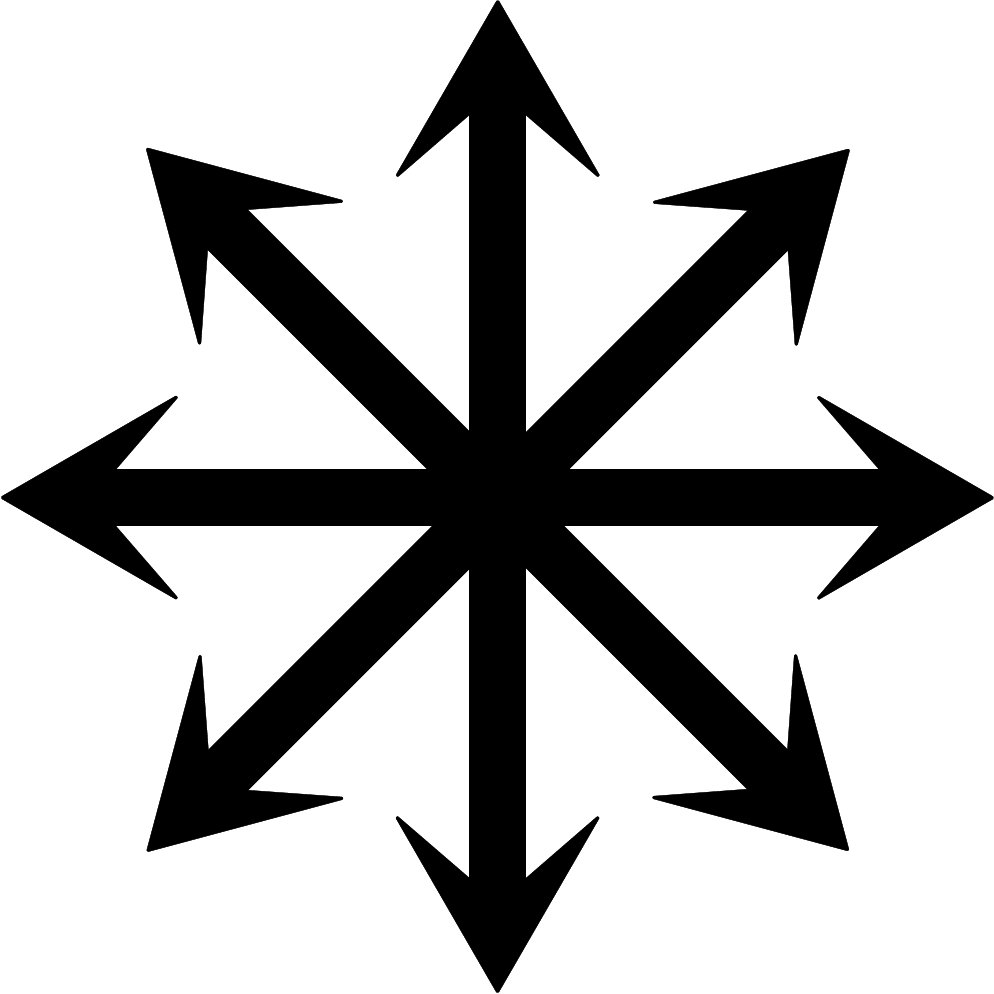
An eight-pointed star, drawn either as two overlaid squares (the Star of Lakshmi) or as eight arrows radiating from a single central point (the Star of Chaos). The two constructions look kin but come from utterly different worlds and were never one symbol.
The ancient star
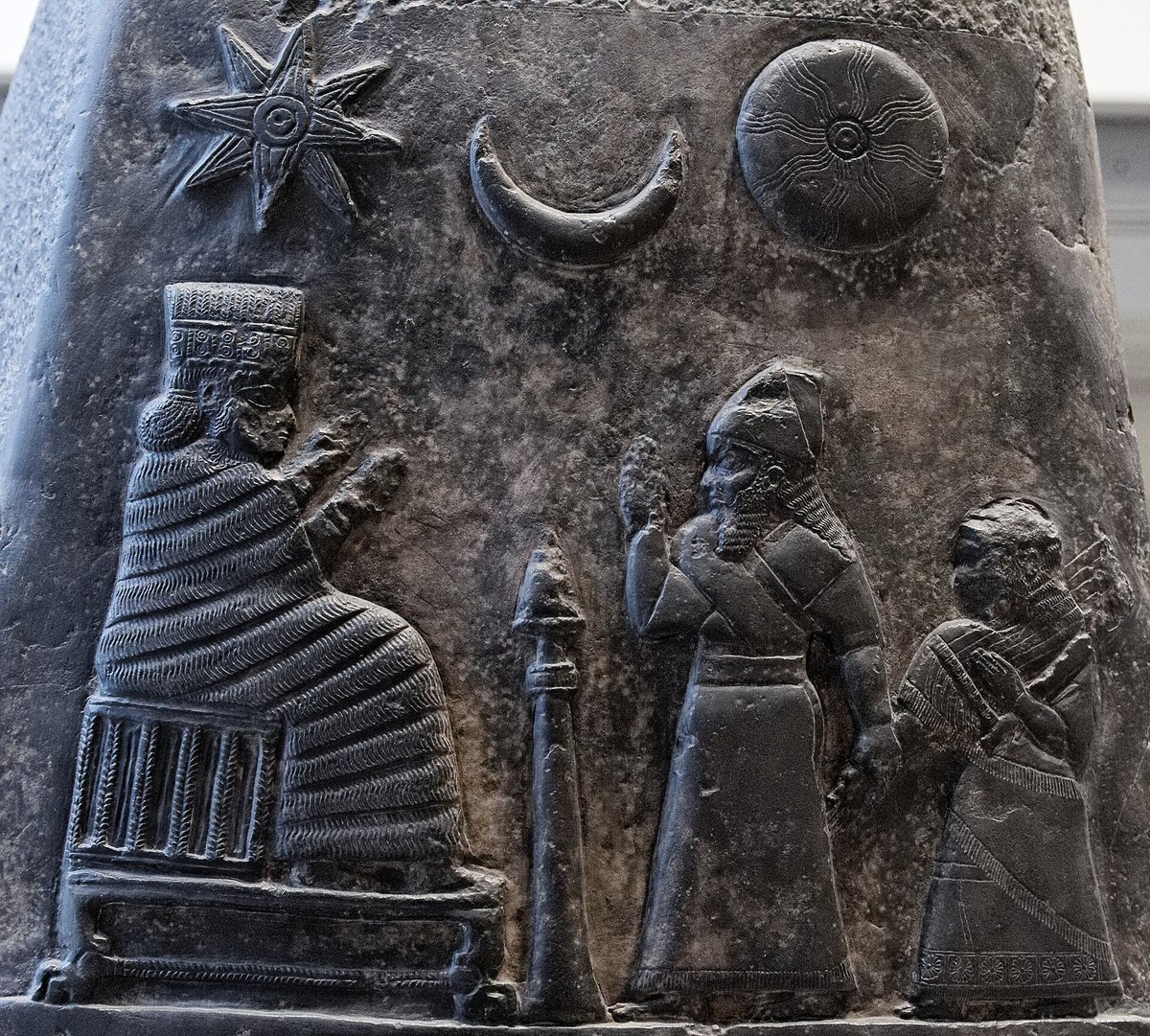
The eight-pointed star is one of the oldest religious signs of the Near East, marking the Mesopotamian goddess Inanna, later Ishtar — deity of love and war and of the planet Venus — from at least the third millennium BCE, where it stands beside her name in cuneiform. In Hindu tradition the eight-pointed Star of Lakshmi carries her eight forms of wealth. In both, it is a sign of divine abundance and power.
The Chaos star
The eight-arrow version is modern and traceable to a single author: the fantasy novelist Michael Moorcock, who devised it in the 1960s and 70s as the emblem of Chaos in his Eternal Champion novels, set against the single arrow of Law. Chaos Magick, emerging in England in the late 1970s from Austin Osman Spare's ideas by way of Peter Carroll and Ray Sherwin, adopted it as the sign of infinite possibility — every direction open at once, no fixed doctrine.
The reputation
Through Chaos Magick, and later through its prominence in the Warhammer fictional universe, the eight-arrow star acquired a vaguely dark-occult flavour for outsiders. But Chaos Magick has no devil and no dogma; its founding premise is that belief itself is a tool to be picked up, used and put down.
The star of the morning
Before it was anything else, the eight-pointed star belonged to Inanna and then to Ishtar, and it stood for Venus — the morning and evening star, goddess of love and of war together. The astronomy behind it is worth having, because it links this figure to the pentagram in a way no one invented. Five synodic periods of Venus fall almost exactly in eight Earth years, and if you plot where Venus stands against the stars at each conjunction and join the points, the planet traces a five-petalled rosette — a pentagram — across eight years. Five, eight and the star of Venus are bound together by orbital mechanics, not by mysticism.
Where the Vault stands
One name, two symbols, and no Satan in either. The older octagram is a goddess-star of abundance; the newer is a modern emblem of an open, directionless field of possibility. Reading either as infernal simply mistakes the unfamiliar for the evil, and the Vault declines the mistake.


- Ishtar
- Chaos Magick
- Modern