Number
Thirteen
The unlucky number; triskaidekaphobia
A number demonised into bad luck — and, in older reckonings, the count of the moon, the goddess and the year.
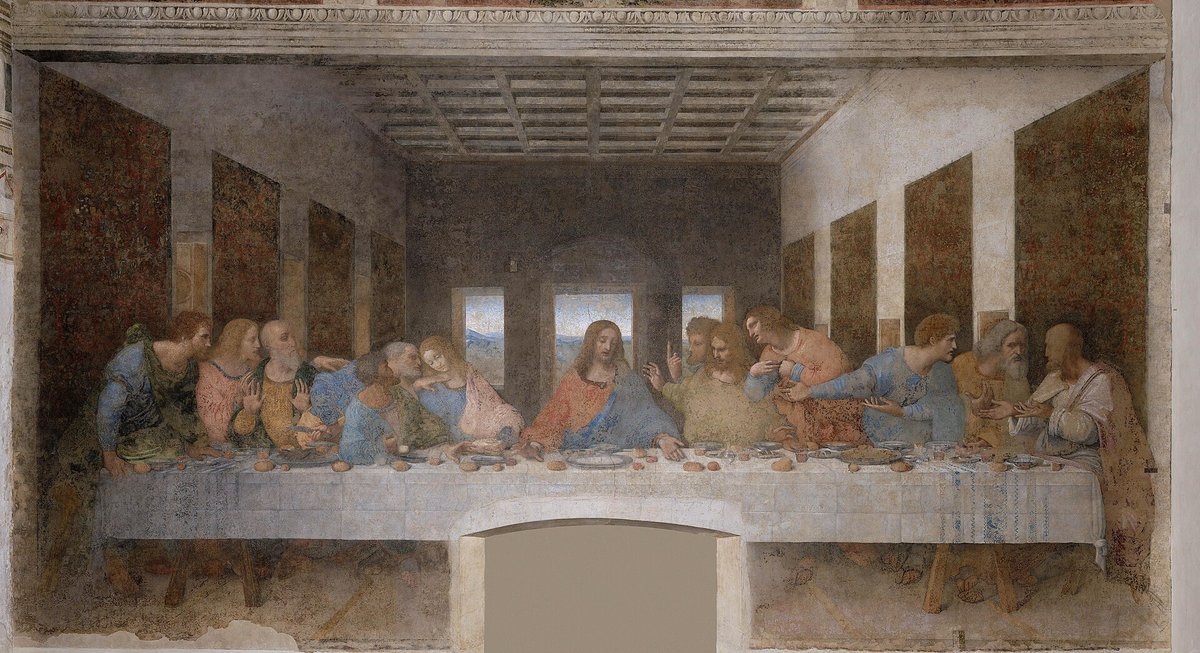
- Judas as the 13th guest
- Templars arrested Friday 13, 1307
- Thirteen lunar months
- Friday the 13th
The form
Simply the number thirteen. Its dread is cultural, not arithmetical: hotels skip the thirteenth floor, airlines the thirteenth row, streets the thirteenth house, and the fear of it is common enough to carry a clinical name, triskaidekaphobia.
Where the fear comes from
Several strands feed it. In Christian memory thirteen sat at the Last Supper, and the thirteenth was Judas; Norse legend seats Loki as the uninvited thirteenth at a feast of the gods, and a death follows. Friday the 13th joins two older unlucky signs into one dreaded day — and it is often noted that the Knights Templar were arrested across France on Friday, 13 October 1307, the event that first put the word Baphomet into the record.
The older count
Before it was unlucky, thirteen was simply how the sky was counted. There are thirteen lunar months in a solar year and thirteen full moons from one turn of the seasons to the next, and a long strand of tradition ties the number to the moon, to the feminine and to the older goddess-reckonings that the solar calendar of twelve displaced. In the tarot the thirteenth trump is Death — read in the cards not as an ending but as transformation, the necessary turn of the wheel.
Where it is seen now
It carries into modern lore as a marker of witchcraft (the traditional coven of thirteen), of misfortune to be warded against, and of a deliberate, chosen defiance — worn on purpose by those who take the feared thing as their own and refuse the flinch that is expected of them.
Twelve, and then one more
The fear of thirteen is really a fondness for twelve. Twelve is the number of closed and satisfying systems — twelve months, twelve signs of the zodiac, twelve tribes, twelve apostles, twelve hours on the face of a clock. It divides cleanly by two, three, four and six, and a culture that likes its order tidy grows attached to it. Thirteen is the one that will not fit: prime, indivisible, the guest for whom no place was laid. Almost everything said against the number comes down to that and no more — it is the outsider standing just past the edge of a complete set, and it was disliked for the same reason outsiders usually are.
Friday the thirteenth
The most repeated origin story is the arrest of the Knights Templar, seized across France on Friday the thirteenth of October 1307. The date is entirely real. The connection is not: the superstition around Friday the thirteenth cannot be traced back before the nineteenth century, and the Templar explanation appears only in the twentieth, long after the fear itself. It is a good story attached to a real event, and the Vault flags it as such rather than repeating it — the same courtesy it would want extended to its own tradition.
Where the Vault stands
Thirteen holds two inheritances, and only one of them is old. The fear is the newcomer — a number of the moon and the feminine, recounted as a number of the Devil by a calendar and a creed that had reasons to bury what came before them. Both readings are on the record; the Vault knows which one it keeps, and it is not the one that teaches you to flinch at a floor number.

- Triskaidekaphobia
- Lunar count
- Chosen defiance