The Archons
- Category
- Gnostic Cosmic Rulers
- Origin
- Greek political vocabulary (archōn, ruler); the New Testament (1 Corinthians 2:6–8, Ephesians 6:12, John 12:31; 14:30; 16:11); Christian Gnostic texts of the 2nd–4th centuries CE (Apocryphon of John, Hypostasis of the Archons, On the Origin of the World, Gospel of Mary, First Apocalypse of James, Pistis Sophia), known from the Nag Hammadi library, the Berlin Codex 8502 and the church fathers; Mandaean and Manichaean tradition
History & Lore
The Archons — from the Greek archōn, ruler, the title of the chief magistrates of Athens — are the rulers of the Gnostic cosmos. Paul speaks of the rulers of this age who crucified the Lord of glory; in the Christian Gnostic texts of the second and third centuries they become the offspring of Yaldabaoth, twelve authorities with 365 angels, seven of them kings over the seven heavens with the faces of beasts and the names of the God of Israel. They build the body of Adam, bind humanity through fate and the stars, and stand as toll collectors at the gates through which the soul must rise. Plotinus defended the stars against them; Mandaeans and Manichaeans gave them forms of their own; in the modern world the name has passed to psychology, Philip K. Dick's Black Iron Prison and the conspiracy literature.
The Archons are the rulers of the Gnostic universe: the powers that stand between the human soul and its origin, govern the planets and the days, build the human body and bar the way home. Their name is an ordinary Greek word for a ruler or magistrate. In the Christian Gnostic texts of the second and third centuries the word became a cosmology. The Archons are the offspring and servants of Yaldabaoth, the ignorant maker of the world described in the Vault's entry on the Demiurge; they are counted, named and given the faces of beasts; they guard the gates of the heavens through which the soul must pass after death; and they enforce fate, the chain of the stars. To follow them is to follow a political word that became a map of the sky and, in the end, a modern name for whatever seems to hold the world in its grip.
The Ruler and the Office
Archōn is the present participle of the Greek verb archein, which means both to begin and to rule: the archon is the one who goes first and the one who commands. In classical Athens it was the title of the nine magistrates chosen each year — the eponymous archon, who gave his name to the year, the king archon, who oversaw the ancestral cults, the polemarch, and the six thesmothetai, who supervised the courts. Throughout the Greek world the word was used for officials and leaders of every kind, and nothing in it is sinister. When the Gnostic texts call the powers of the cosmos archons, they borrow the language of administration: the world is a province, and its rulers are officials who govern it on their own account and collect what they believe is owed to them.
Rulers of This Age
The Christian use begins with Paul. In 1 Corinthians 2:6–8 he speaks of a hidden wisdom that none of the rulers of this age understood, for had they understood it they would not have crucified the Lord of glory; the Greek is archontes tou aiōnos toutou. Ephesians 2:2 names the ruler of the power of the air, the spirit now at work in the disobedient, and Ephesians 6:12 sets the believer's struggle not against flesh and blood but against principalities and authorities, against the world-rulers of this darkness and the spiritual forces of evil in the heavenly places. The Gospel of John three times calls the adversary the ruler of this world, who is cast out, who has no power over Jesus and who is already judged (John 12:31; 14:30; 16:11). Whether Paul's rulers are human authorities, demonic powers or both has been debated since antiquity. The Gnostic writers chose the second answer: the Hypostasis of the Archons opens by quoting Ephesians 6:12 as the words of the great apostle and builds a whole cosmos out of that sentence.
Twelve Authorities and Their Names
The fullest account is in the Apocryphon of John, preserved in a short version in the Berlin Codex 8502 and Nag Hammadi Codex III and in a long version in Nag Hammadi Codices II and IV. After Sophia has cast away her misshapen son and enthroned him in a luminous cloud, Yaldabaoth brings forth authorities from himself: twelve in all, seven of whom he sets as kings over the seven heavens and five over the depth of the abyss. The long version names them in order: Athoth; Harmas, called the eye of envy; Kalila-Oumbri; Yabel; Adonaiou, who is called Sabaoth; Cain, whom the generations of men call the sun; Abel; Abrisene; Yobel; Armoupieel; Melcheir-Adonein; and Belias, who is over the depth of Hades. The spellings vary between the copies and the modern translations — Iabel and Iobel, Kalilaumbri, Melceir-Adonein, Adonaios — and some names are damaged. Cain and Abel stand beside forms of the divine name and names of uncertain origin, a roster of officials drawn from scripture and the magical papyri. The powers in turn bring forth angels, and the text sums them up: together they are 365, the number of the days of the year.
Seven Kings With the Faces of Beasts
The seven who rule the heavens are described twice. First they appear with the faces of animals: Athoth with the face of a sheep, Eloaiou with the face of a donkey, Astaphaios with the face of a hyena, Yao with the face of a serpent with seven heads, Sabaoth with the face of a dragon, Adonin with the face of an ape, and Sabbede with a face of shining fire. Then each is paired with a power whose name is borrowed from the higher world: goodness with Athoth, foreknowledge with Eloaiou, divinity with Astaphaios, lordship with Yao, kingdom with Sabaoth, envy with Adonin and understanding with Sabbede. The text links the seven with the sevenness of the week; modern readers generally take them as the seven planets, which in the ancient count included the sun and the moon. The group recurs elsewhere with small differences: Irenaeus (Against Heresies I 30) gives an Ophite hebdomad of Ialdabaoth, Iao, Sabaoth, Adonaios, Eloaios, Horaios and Astaphaios, and On the Origin of the World and Origen know the same names. Several are plainly forms of the Jewish names of God — Iao from the Tetragrammaton, Sabaoth from the Lord of hosts, Adonaios from Adonai, Eloaios from Elohim — so that the planetary jailers carry the titles of the God of Israel, a pointed piece of polemic.
The Body the Rulers Built
When a voice from above announces that the Human exists, the image of the first Human appears in the waters below, and the rulers decide to make a being after that image and after their own likeness. In the Apocryphon of John the seven powers each create one layer of a soul-body: goodness a soul of bone, foreknowledge a soul of sinew, divinity a soul of flesh, lordship a soul of marrow, kingdom a soul of blood, envy a soul of skin and understanding a soul of hair. The long version adds a catalogue in which angels make the body part by part — Eteraphaope-Abron the head, Meniggesstroeth the brain, Asterechme the right eye, and so on — and refers anyone who wishes to know more to the book of Zoroaster. Scholars compare it with ancient melothesia, the assignment of the parts of the body to the stars. The creature the rulers produce is a psychic Adam, a body of soul that lies motionless and cannot rise until Yaldabaoth is persuaded to breathe into it the power he took from his mother. Then Adam becomes more intelligent than his makers; in envy they cast him into the lowest region of matter and clothe him in a mortal body of earth, water, fire and wind, which the text calls the tomb of the newly formed body and the fetter of forgetfulness.
The Reality of the Rulers
The Hypostasis of the Archons, the fourth tractate of Nag Hammadi Codex II, takes its title from its subject, the reality of the rulers, and retells Genesis from the side of their victims. The rulers are androgynous, their chief is blind, and when he boasts that there is no other god, a voice from incorruptibility answers: You are mistaken, Samael — the god of the blind. They pursue the spiritual woman who awakens Adam, but she becomes a tree and leaves them only her shadow to defile; they try to destroy humankind by the flood; and they pursue Norea, the daughter of Eve and sister of Seth, a virgin whom the powers did not defile, who sets fire to Noah's ark when she is refused entry. When the rulers try to seize her she cries out to God, and the great angel Eleleth, one of the four luminaries, comes down to tell her where the rulers came from and that their time is limited. When Zoe, the daughter of Pistis Sophia, binds Yaldabaoth and casts him into Tartarus, his son Sabaoth repents, condemns his father and his mother, matter, and sings praise to Sophia and Zoe; they set him over the seventh heaven, below the veil, where he makes a throne-chariot of cherubim. A ruler can change sides. The closely related treatise On the Origin of the World, which follows it in Codex II, tells the same story at greater length, gives the rulers androgynous names and has them try in vain to defile the heavenly Eve.
The Ophite Diagram
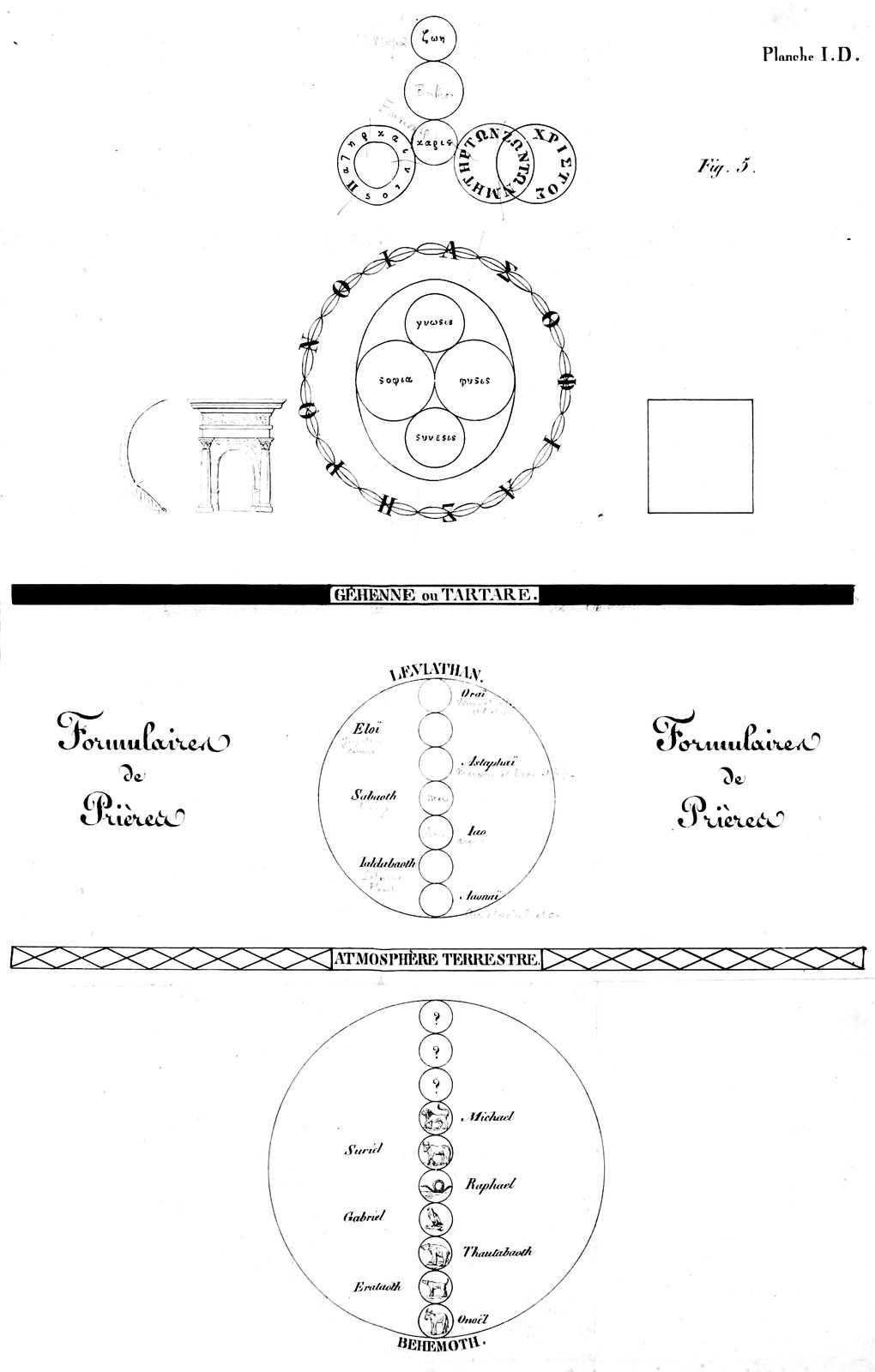
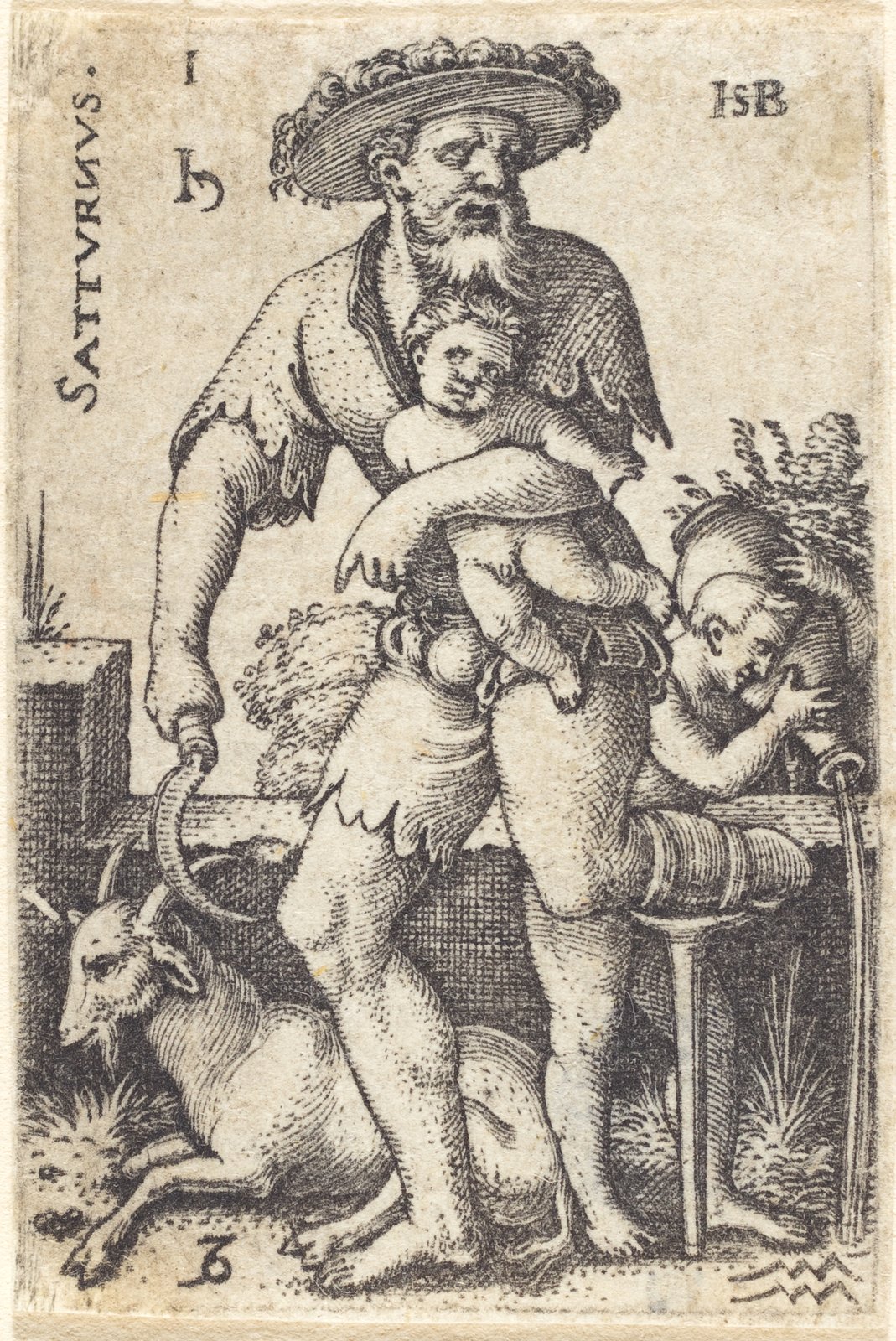
In the later second century the Platonist Celsus attacked Christianity in a work called The True Word, and among his weapons was a diagram used by a group that Origen, answering him around 248, identifies as Ophites. Origen obtained a copy himself and describes it in Against Celsus VI 24–38: ten circles held together by a single circle called the soul of all things and Leviathan, Behemoth placed beneath the lowest circle, a thick black line said to be Gehenna, and gates and barriers between the regions. The seven ruling demons of the diagram have animal forms: Michael is like a lion, Suriel like a bull, Raphael like a serpent, Gabriel like an eagle, Thauthabaoth like a bear, Erathaoth like a dog, and Onoel, also called Thartharaoth, like an ass (VI 30). Origen adds that the star Phaenon, Saturn, is in sympathy with the lion-like ruler. In VI 31 he quotes the formulas the soul must speak as it passes each gate: to Ialdabaoth, first and seventh, born to command with confidence; to Iao, who shines by night; to Sabaoth, governor of the fifth realm; and to Adonaios, Astaphaios, Ailoaios and Horaios in turn, each time naming the ruler and showing a symbol before passing on. Celsus set the scheme beside the Mithraic ladder of seven gates for the seven planets (VI 22). The diagram is the clearest ancient witness to the archons as gatekeepers on a map the soul had to learn by heart.
Toll Collectors at the Gates
In the Gospel of Mary, preserved in the Berlin Codex 8502, the soul rises past four powers — darkness, desire, ignorance and wrath, the last with seven forms — and answers each one's challenge until it is free of what bound it. In the First Apocalypse of James (Nag Hammadi Codex V,3, with a second copy in the Codex Tchacos) Jesus warns James that three of the powers sit there as toll collectors, who not only demand toll but take away souls by theft, and teaches him what to answer: I am a son, and I am from the Father — from the Pre-existent Father, and a son in the Pre-existent One. The same text explains that the rulers are twelve hebdomads, not seven, with seventy-two heavens beneath them. Behind these scenes stands the ancient idea of heimarmene, fate imposed by the stars. In the Apocryphon of John the rulers beget bitter fate through their union with Sophia, binding gods, angels, demons and humans in measures, times and seasons, and from it come every sin and the chain of forgetfulness; souls that do not know where they belong are handed over after death to the authorities, who bind them and cast them into prison again. The Pistis Sophia, in the Askew Codex of the third or fourth century, shows Jesus rising through the spheres, taking away a third of the power of the rulers of the aeons and turning their sphere so that it faces left for six months and right for six months, confounding the reckonings of the astrologers. To know the names and the answers is to know the way out.
Seven and Twelve: Mandaeans and Manichaeans
The Mandaeans of southern Iraq and Iran, whose great book is the Ginza Rba, speak of the Seven and the Twelve — the planets and the signs of the zodiac — as children of the spirit Ruha; they belong to the world of darkness, lead people astray and must be passed by the soul on its way to the world of light, at the watch-houses, the maṭarata, that guard the road. Mani (216–274 or 277) told of a primeval war in which the powers of darkness swallowed particles of light. In his myth the Living Spirit defeats the archons, fashions the heavens from their skins and fastens them in the firmament; the Third Messenger then shows himself to them in beautiful male and female form, and in their desire the archons release the light they hold, while what falls from them becomes plants and animals. Augustine quotes this scene from the seventh book of Mani's Treasure in On the Nature of the Good 44. In both religions the rulers are not merely wardens but holders of stolen light.
Plotinus and the Divine Stars
The most serious ancient objection came from Plotinus, who in the 260s wrote against Gnostics in his own Roman circle the treatise that Porphyry placed in the Enneads as II 9, Against the Gnostics. He answers their talk of hostile cosmic powers directly: the heavenly bodies, he insists, are ordered and beautiful beings, far nobler than the people who despise them, and it is absurd to refuse the stars the name of brothers while granting it to the basest of men (II 9,18). He mocks the chants and formulas addressed to the higher powers and the claim to drive out diseases as demons (II 9,14). For Plotinus the cosmos is an image of the intelligible world, and its rulers are not jailers but gods. His reply marks the deepest divide in the history of the archons: whether the visible heavens are a work of order or the walls of a prison.
Modern Rulers and Esoteric Readings
In the twentieth century the archons left the history of religion. Carl Gustav Jung, from Wandlungen und Symbole der Libido (1912) onward, read the soul's ascent through the planetary powers as an image of psychic transformation; Philip K. Dick, after the visionary experiences of February and March 1974, wrote in VALIS (1981) of a Black Iron Prison and of an Empire that never ended. New Age and conspiracy authors such as John Lamb Lash, in Not in His Image (2006), and David Icke went further and declared the archons parasitic or reptilian beings that control the earth. These are modern constructions without basis in the ancient texts, which know nothing of extraterrestrials or reptiles. Esoteric and luciferian readings start from the ancient texts themselves: the rulers are the fate, compulsion and forgetfulness that bind the soul, and knowledge is the word that opens their gates. Some luciferian authors add that the serpent who brought knowledge in paradise, whom the Hypostasis of the Archons calls the Instructor, stands against the rulers rather than with them — a modern identification, not an ancient one.
Where the Vault Leaves It
What the sources attest can be stated briefly. Archōn was an ordinary word for a ruler; Paul and John used it for the powers of this age and this world; Christian Gnostic texts of the second and third centuries made the rulers the offspring of Yaldabaoth, twelve in the Apocryphon of John, seven over the heavens and five over the abyss, with 365 angels, the faces of beasts, the names of the God of Israel and a hand in making the human body; the Ophites, the Gospel of Mary and the First Apocalypse of James set them at the gates of the ascent; Mandaeans and Manichaeans gave them their own forms; Plotinus called the stars gods instead. Whether the archons are a polemic against the God of Israel, a mythic picture of astral fate, names for inner compulsions or real powers is a matter of reading, not of record. The Vault reads them as the image of every authority that rules by keeping its subjects from knowing where they come from, and records the historical, esoteric and luciferian readings side by side, as each is held, without deciding between them.
Appearance
In the Apocryphon of John seven kings with the faces of a sheep, a donkey, a hyena, a seven-headed serpent, a dragon and an ape, and one with a face of shining fire; in the Hypostasis of the Archons androgynous rulers with a blind chief; in the Ophite diagram of Origen a lion, a bull, a serpent, an eagle, a bear, a dog and an ass. The texts give no single portrait: the rulers are known by their faces, their names and their stations
Powers
- Governing the seven heavens and the abyss
- Binding souls through fate and the stars
- Forming the soul-body of Adam
- Guarding the ascent and exacting toll
- Imposing the chain of forgetfulness
- Holding the stolen light
Also Known As
Archontes, Rulers, Authorities (Exousiai), World-Rulers (Kosmokratores), Rulers of This Age, The Seven and the Twelve, Toll Collectors
Attributes
- Rule
- Fate (heimarmene)
- Envy
- Guarding the gates
- Forgetfulness
- Number and measure
Symbolic Correspondences
- Elements: Fire (Sabbede's shining face, the flaming circle of the Ophite diagram), darkness and the abyss; matter and the four elements of the mortal body — earth, water, fire and wind (Apocryphon of John)
- Colours: The sources name almost none: the shining fire of Sabbede's face, the darkness of the abyss and the thick black line of the Ophite diagram
- Numbers: Twelve authorities, seven over the heavens and five over the abyss; 365 angels; the seven of the week and of the planets; twelve hebdomads and seventy-two heavens (First Apocalypse of James); the Seven and the Twelve of the Mandaeans
- Associations: Yaldabaoth, Sabaoth, Sophia, the seven heavens, the planets and the zodiac, heimarmene, the soul's ascent, passwords and seals, toll collectors, Leviathan and Behemoth, Ephesians 6:12, Plotinus, the Black Iron Prison
The Figure, Symbol by Symbol
- The Name: Archōn: An ordinary word for a magistrate. The Gnostic rulers are officials before they are monsters: they hold offices, keep records and collect dues. The myth turns the experience of being governed into a picture of the cosmos.
- The Faces of Beasts: Sheep, donkey, hyena, serpent, dragon, ape; in Origen's diagram lion, bull, serpent, eagle, bear, dog and ass. The animal face shows a power that has rule but not reason, and reminds ancient readers of the animal-headed gods of Egypt.
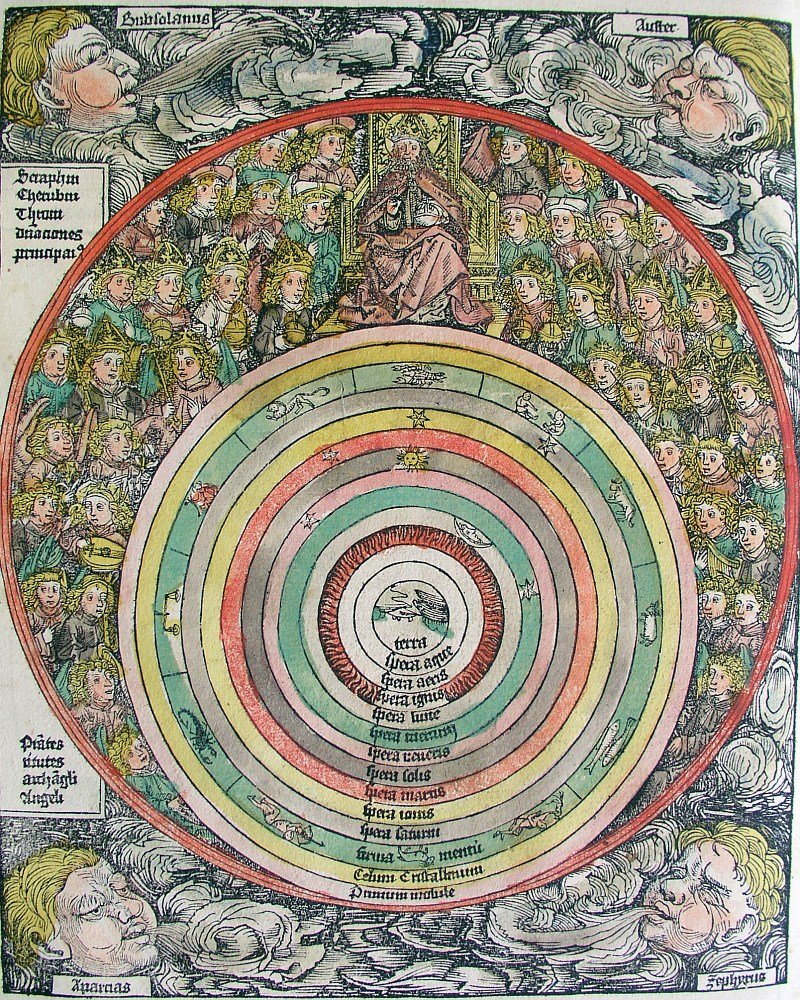
- Seven and Twelve: Seven for the planets and the days of the week, twelve for the months and the zodiac. The rulers are time itself made into a government: every day and every season has an official who watches over it.
- The 365 Angels: The number of the days of the year. In the Apocryphon of John the same host builds the body of Adam part by part, so that the year and the human frame are counted by the same officials.
- The Stolen Names: Iao, Sabaoth, Adonaios, Eloaios: the rulers bear forms of the names of the God of Israel. The borrowing is deliberate polemic; the names of the highest are worn by those who only rule.
- The Gates and the Passwords: In Origen's diagram and the First Apocalypse of James the soul passes each ruler with a formula and a symbol. Knowledge here is not abstract: it is the right answer at the right gate.
- Sabaoth's Repentance: In the Hypostasis of the Archons one ruler turns, condemns his father and is set over the seventh heaven. The system is not sealed; even a power of the prison can learn where the light comes from.
Reading the Whole
Read as a whole, the archons are not a single figure but an administration. They have offices, numbers, names, faces and stations; they keep the calendar, build the body, assign fate and check the papers of every soul that tries to leave. The image draws on the oldest experiences of rule — the magistrate, the tax collector, the border guard — and projects them onto the sky, so that the planets become officials and the year a schedule of duties.
That is why the figure has outlived the communities that drew the diagrams. Each age has found its own rulers in the image: the stars of late antiquity, the complexes of the psyche, the prison of Philip K. Dick, the systems and networks of the present. Beneath all of them lies the same structure, a power that governs by keeping its subjects from knowing their origin, and the readings recorded here are the record of how each age has named it.
Theological Significance
The archons give a theological answer a political form. Where orthodox Christianity spoke of one Creator who governs the world through his providence, the Gnostic myth places between God and the human being a whole hierarchy of rulers who govern on their own account, and makes the cosmos itself the place of captivity.
Fate as a Prison
Late antiquity was preoccupied with heimarmene, the fate written in the stars. Astrology, Stoic philosophy and the mystery cults each offered their own answer. The Gnostic texts accept that the stars rule human life, but deny that their rule is legitimate: fate is the work of the archons, begotten in the Apocryphon of John through their union with Sophia, and its bonds are measures, times and seasons. Salvation is therefore not a better life under the stars but release from their jurisdiction.
The Rulers of Scripture
The archons carry the names of the God of Israel and the titles of the Pauline powers. Their makers read scripture against its grain: the jealous God of the commandments becomes Yaldabaoth, the hosts of Sabaoth become his officials, and Paul's rulers of this age become the cosmic jailers. Modern scholars speak of protest or inverse exegesis, and Jewish and Christian critics have noted that it turns the God of Israel and his angels into the enemy.
Knowledge as Passport
Because the rulers are guards, the answer to them is knowledge: of their names, of their stations, of the words to speak and of one's own origin. The formulas in Origen, the answers taught to James and the questions put to the soul in the Gospel of Mary all treat salvation as an ascent in which the soul proves where it belongs. The repentance of Sabaoth adds a second note: the rulers are not beyond change.
Practical Application
The archons have no place in the classical grimoires and no tradition of evocation; no seal, enn or rite of conjuration is attached to their names. The ancient Gnostics did not worship them. Their rites, as far as they are known, were meant to pass the rulers by: the formulas of the Ophite diagram, the answers taught in the First Apocalypse of James and the dialogue of the soul in the Gospel of Mary are protections for the ascent, not invocations. Within the Vault the archons are therefore approached as a subject of study and contemplation, not as spirits to be called.
As a contemplative figure the archons serve as a map of the compulsions that rule a life without being seen: habits, fears, routines and authorities that one obeys because no one has asked where they came from. The reflection asks which rulers one has accepted, what each one demands as toll, and what one would answer at each gate if asked where one belongs. Readers who follow Jung treat this as work on the complexes; readers who follow the Gnostic texts treat it as remembering a forgotten origin. Either can be carried out in a journal, in meditation or in conversation without any ritual at all.
Modern Interpretations
Since the twentieth century the archons have been read as psychological forces, political systems and literal entities. The readings below are recorded as their proponents hold them.
Complexes of the Psyche
In the tradition of Jung the archons are inner powers: complexes and compulsions that govern a person as long as they remain unconscious, and lose their hold when they are named. The ascent through the planetary spheres becomes a picture of individuation, and the passwords become the work of recognising each power in turn. Hans Jonas, writing as a historian rather than a psychologist, read the same myth as the expression of a feeling of being a stranger in a hostile cosmos.
The Black Iron Prison
Philip K. Dick gave the archons their most influential modern image without making them characters. In VALIS (1981) the world is a Black Iron Prison and the Empire never ended; reality is a counterfeit maintained by powers that keep human beings asleep. Films such as The Matrix (1999) are widely read in the same Gnostic light, as stories of a manufactured world, its wardens and a messenger who brings knowledge.
Systems of Control
In political and cultural criticism the word has become a metaphor for any system that claims total authority while serving itself: bureaucracies, markets, media and technologies that set the terms of life and collect their toll in attention, labour and obedience. In this reading the archons need no planets; they are the impersonal administration of the present.
Parasites and Reptilians
In parts of the New Age and conspiracy literature the archons are taken literally, as inorganic parasites feeding on human fear, as the greys and reptilians of abduction reports or as an inter-dimensional race controlling the earth, in the work of authors such as John Lamb Lash and David Icke. These ideas are modern; they have no basis in the ancient texts, and the Vault records them as a contemporary phenomenon without adopting them.
Across these readings one thread holds: the archons name the suspicion that the order which governs human life is not the highest order, and that its rulers depend on not being recognised for what they are.
Sources & Historical Texts
- New Testament — 1 Corinthians 2:6–8; Ephesians 2:2; 6:12; John 12:31; 14:30; 16:11
- Aristotle — Constitution of the Athenians 55–59 (the nine archons, 4th c. BCE)
- Apocryphon of John — Nag Hammadi Codices II,1; III,1; IV,1; Berlin Codex 8502,2 (composed 2nd c. CE)
- Hypostasis of the Archons — Nag Hammadi Codex II,4
- On the Origin of the World — Nag Hammadi Codices II,5 and XIII,2
- Gospel of Mary — Berlin Codex 8502,1
- First Apocalypse of James — Nag Hammadi Codex V,3; Codex Tchacos
- Pistis Sophia — Askew Codex, British Library (3rd–4th c. CE)
- Irenaeus of Lyon — Against Heresies I 29–30 (c. 180 CE)
- Origen — Against Celsus VI 22–38 (c. 248 CE)
- Epiphanius of Salamis — Panarion 40, on the Archontics (c. 375 CE)
- Plotinus — Enneads II 9, Against the Gnostics (260s CE); Porphyry — Life of Plotinus 16
- Augustine — On the Nature of the Good 44 (c. 405 CE)
- Ginza Rba — the Mandaean Treasure
- C. G. Jung — Wandlungen und Symbole der Libido (1912)
- Hans Jonas — Gnosis und spätantiker Geist (1934); The Gnostic Religion (1958)
- Philip K. Dick — VALIS (1981); The Exegesis (2011)
- John Lamb Lash — Not in His Image (2006)
- David Icke — The Perception Deception (2013)