Sophia

- Category
- Gnostic Aeon
- Origin
- Hebrew wisdom literature (Proverbs, Job, Sirach, Wisdom of Solomon) and Hellenistic Judaism (Philo of Alexandria); Christian Gnosticism of the second to fourth centuries CE (Apocryphon of John, the Valentinians, Pistis Sophia); Eastern Orthodox tradition, Christian theosophy and Russian sophiology
History & Lore
Sophia is the Greek word for wisdom and the name of one of the most changeable figures in the history of religion. In the Hebrew wisdom books she is God's companion at the creation of the world, calling at the city gates; in Paul she is a name for Christ; in the Gnostic myths she is the youngest of the aeons, who reached for what she could not grasp and gave birth to the blind creator of this world, the Demiurge, before repenting and being redeemed. Byzantium dedicated its greatest church to Holy Wisdom, Jakob Böhme courted her as a heavenly virgin, and Russian theologians built a doctrine around her that was condemned as heresy in 1935.
Sophia is the Greek word for wisdom, and for most of its history it meant only that. In a handful of Jewish texts written between roughly the fifth and the first century BCE, wisdom began to speak in the first person, as a woman who stood beside God when the world was made. A few centuries later Christian Gnostics told her story as a drama in heaven: the youngest of the divine aeons, who reached for what she could not grasp, gave birth to a blind creator and spent the rest of the age repairing the damage. The same name crowns the greatest church of Byzantium, the visions of a Silesian shoemaker and the theology of a Russian priest accused of heresy. To follow Sophia is to follow a single word as it becomes a person, a goddess, a fallen mother and an icon — and to keep track of which of these the sources actually say.
Wisdom at the Beginning of His Way
The oldest portrait is in the book of Proverbs. In chapters 1 to 9, which most scholars date to the Persian or early Hellenistic period, Wisdom — Hebrew chokmah, a feminine noun — cries aloud in the streets and at the city gates and calls the simple to learn. In Proverbs 8:22–31 she describes herself as the first of God's works, set up from everlasting before the depths and the mountains, present when he marked out the heavens, and beside him as an amon — a word read as master craftsman, as nursling or as faithful one — rejoicing before him daily and delighting in the children of men. In Proverbs 9:1 she has built her house and hewn out its seven pillars, and she sets a table for anyone who will turn in. Job 28 strikes a different note: no mine can say where wisdom is found; only God knows the way to it, and for humans the fear of the Lord is wisdom. Around 180 BCE the book of Sirach, or Ecclesiasticus, let her speak again: in chapter 24 she comes forth from the mouth of the Most High, covers the earth like a mist, seeks a resting place among all peoples and is told to pitch her tent in Jacob — until in verse 23 she is identified with the book of the covenant, the Law of Moses.
The Breath of the Power of God
The Wisdom of Solomon, written in Greek in Alexandria, probably in the first century BCE, gives her the language of philosophy. In the words of the King James Version (7:25–26), she is the breath of the power of God, and a pure influence flowing from the glory of the Almighty, and, after a clause on her purity, the brightness of the everlasting light, the unspotted mirror of the power of God, and the image of his goodness. The speaker, in the guise of Solomon, sought to make her his bride (8:2); she sits beside God's throne (9:4); and chapter 10 retells sacred history from Adam to the Exodus as her work. Philo of Alexandria, in the early first century CE, went a step further: in On Flight and Finding 109 he calls God the father of the divine Logos and Wisdom its mother, through whom the universe came into being; elsewhere he treats Wisdom and Logos almost as one. Emanation, radiance, mirror and image: the vocabulary that both Christian theology and the Gnostic systems would use for their heavenly beings was ready before either existed.
Christ, the Wisdom of God
The first Christians inherited this figure and gave her role to Jesus. Paul calls Christ the power of God and the wisdom of God (1 Corinthians 1:24) and says that he became wisdom for us (1:30). In the Gospels wisdom is justified by her children (Matthew 11:19; Luke 7:35). The prologue of John describes a Word who was with God in the beginning, through whom all things were made and who pitched his tent among humans — the pattern of Proverbs 8 and Sirach 24 — and Colossians 1:15 and Hebrews 1:3 call Christ the image of the invisible God and the radiance of his glory, borrowing the language of Wisdom 7:26. Scholars speak of a Wisdom Christology. The feminine figure became a title of the Son and receded from mainstream doctrine as a person in her own right — except among those who kept her as a separate being in heaven.
The Fall in the Apocryphon of John
The Gnostic systems of the second century imagined the highest God as utterly unknowable, surrounded by the Pleroma, the fullness, in which eternal emanations called aeons stand in male and female pairs, the syzygies. In such a heaven nothing should come into being except in a pair and with the consent of the whole. The Apocryphon of John, preserved in four Coptic copies, three of them from Nag Hammadi, and summarised by Irenaeus around 180 CE (Against Heresies I 29), tells the story most fully. Sophia, the last aeon, belonging to the fourth light, Eleleth, conceived a thought from herself and wanted to bring forth a likeness without the consent of the Spirit and without her consort. Because of the power in her, the thought did not remain idle: something imperfect came forth, unlike her, in the form of a lion-faced serpent with eyes like flashing lightning. She cast it away, wrapped it in a luminous cloud, set a throne in the middle of the cloud so that none of the immortals might see it, and named it Yaltabaoth.
The child took a great power from his mother, made rulers for himself and proclaimed that he was a jealous God and there was no other. Then the mother began to move to and fro, not as the spirit over the waters in Genesis, the Saviour explains, but because she saw her son's wickedness and theft, and her light grew dim. She repented with much weeping; the whole Pleroma prayed for her, the holy Spirit poured over her, and she was raised not to her own aeon but above her son, to the ninth, until she has corrected her deficiency. Later in the text it is she who recovers the stolen light: Yaltabaoth is persuaded to breathe into the face of Adam and so passes on his mother's power without knowing it. The Saviour calls her our sister Sophia, who came down in innocence to put right what she lacked, and names her Life, the mother of the living.
Upper Sophia and Achamoth
The school of Valentinus, active in Rome in the middle of the second century, told the fall with greater subtlety. In Irenaeus's account of the system of Ptolemy (Against Heresies I 1–8), the Pleroma holds thirty aeons, and Sophia is the youngest of the last twelve. She rushes forward apart from the embrace of her consort Theletos, seized by a passion: the desire to comprehend the greatness of the Father. She would have been absorbed and dissolved into his depth had she not met Horos, the Limit, who restrains her and brings her back to herself (I 2,2). Her intention and her passion are separated from her and cast out, the aeons are steadied by a new pair, Christ and the Holy Spirit, and the whole Pleroma brings forth the Saviour Jesus as its common fruit. Outside, the cast-out intention becomes a second, lower Sophia, called Achamoth after the Hebrew chokmah, formless like an untimely birth (I 4,1). Her suffering becomes the stuff of the world: from her tears the moist substances, from her laughter light, from her grief and perplexity the bodily elements, and from her longing to return to the one who gave her life every soul, the Demiurge's included (I 4,2). The Saviour comes to her with his angels and frees her from her passions, and at the end of time she will enter the Pleroma as his bride, with the Pleroma itself as the bridal chamber (I 7,1).
Pistis Sophia and the Thirteen Repentances
The longest surviving Gnostic work about her is preserved in a single manuscript, the Codex Askewianus, which the British Museum bought in 1785 from the heirs of the physician Anthony Askew. Written in Sahidic Coptic and translated from Greek, the text is usually dated to the third century and the copy to the fourth century or later. The risen Jesus, eleven years after his resurrection, teaches his disciples on the Mount of Olives and tells them how Pistis Sophia, dwelling in the thirteenth aeon, saw a light below and took it for the Light of Lights. It was the lion-faced power of Authades, the Self-willed, and following it she fell into chaos, where his emanations tormented her. From there she sings thirteen repentances to the true light. After each one a disciple, most often Mary Magdalene, explains it by a Psalm or one of the Odes of Solomon, until Jesus leads her out of chaos.
Helena, Zoe and the Thunder
Several other figures repeat the pattern. Justin Martyr (First Apology 26) and Irenaeus (Against Heresies I 23,2) report that Simon Magus of Samaria travelled with a woman named Helena, whom according to Irenaeus he had bought out of slavery in Tyre, calling her his Ennoia, his first Thought, the mother of all. She had leapt forth from him, brought forth the angels who made the world, and been held captive by them, passing from body to body — she had been Helen of Troy — until she became the lost sheep that Simon came to redeem. She is not called Sophia, but the outline is the same: a divine thought fallen into the world she made, a prisoner of her own creatures, sought by a saviour from above. In the Hypostasis of the Archons from Nag Hammadi, Zoe, the daughter of Pistis Sophia, answers the creator's boast with the words You are mistaken, Sakla, and her breath becomes a fiery angel that binds him and casts him into Tartarus, while his son Sabaoth repents and is set over the seventh heaven by Sophia and Zoe. The Thunder, Perfect Mind (Nag Hammadi Codex VI,2), in which a female voice calls herself the whore and the holy one, is often read beside the Sophia texts; it never names her.
Mother of the Demiurge
Across these systems Sophia is the hinge between the Pleroma and the world: her deficiency is the reason there is a material world at all. The Demiurge — Yaltabaoth or Saklas in the Apocryphon, the soul-born craftsman of the Valentinians, whose story the Vault tells in the entry on the Demiurge — is her son. In the Apocryphon he is her failed likeness and a thief of her power. In the Valentinian account Achamoth forms him from soul-substance; he builds the world believing himself its only author, while she works through him unseen (I 5,1–3), and at the end he will ascend to her place in the middle region (I 7,1). The mother is not the villain, and the son is often less evil than blind. The two mirror each other: she errs by reaching beyond her limit towards what is above her, he by not knowing that anything is above him at all. Plotinus, writing against the Gnostics in Rome in the third century (Enneads II 9,10), ridiculed the idea that a soul and a certain wisdom had declined downward to make the world.
Holy Wisdom in the East
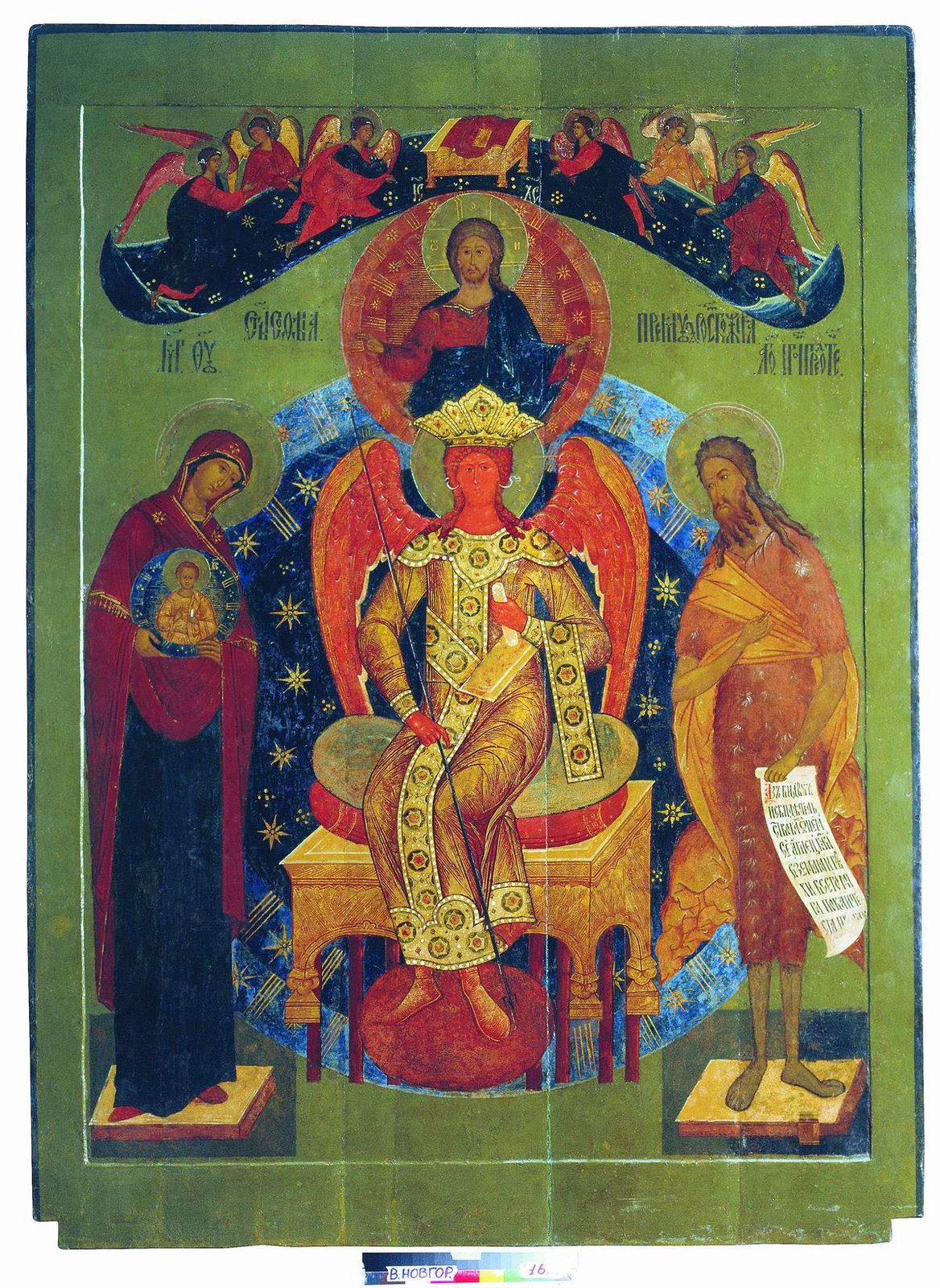
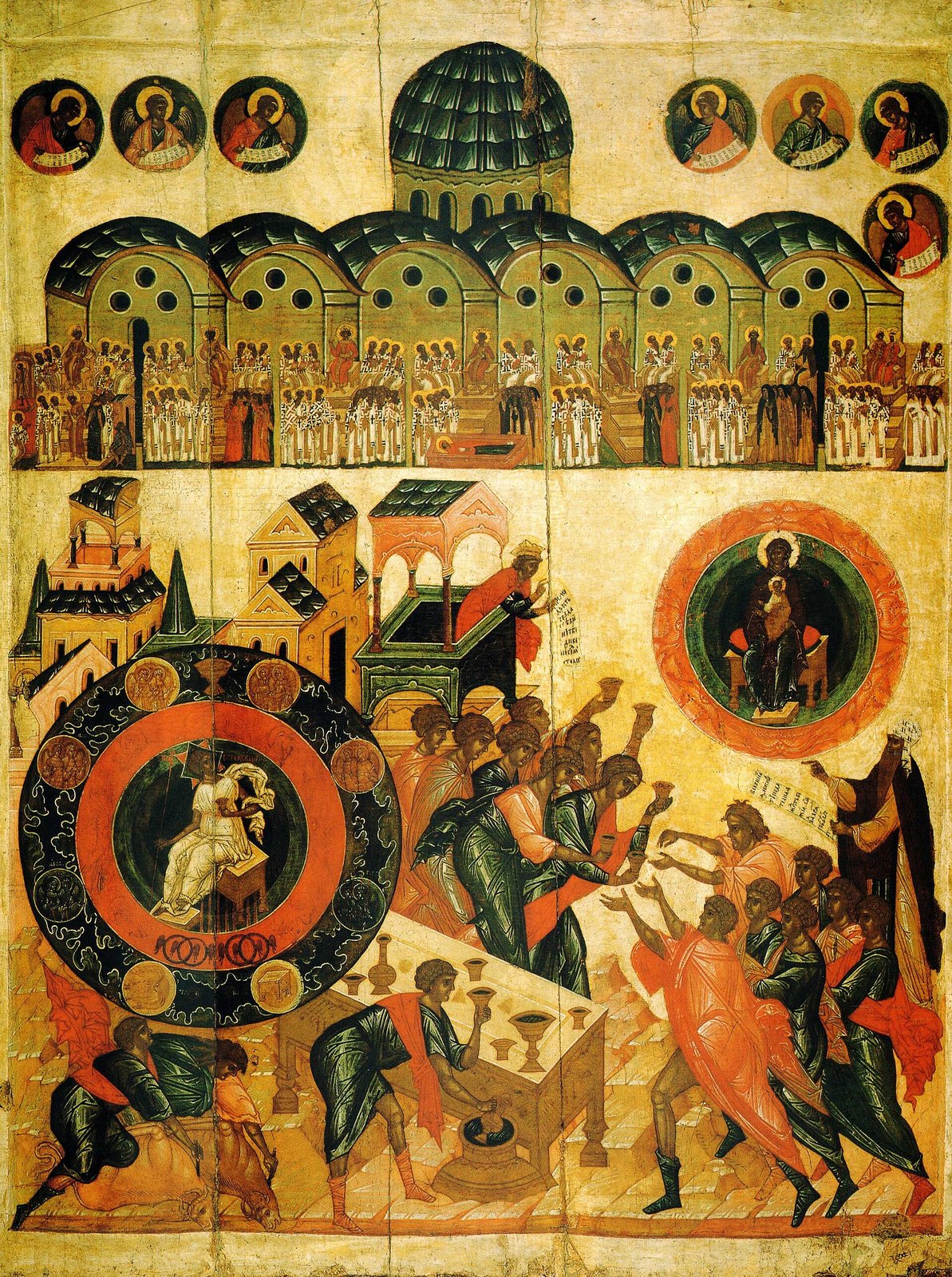
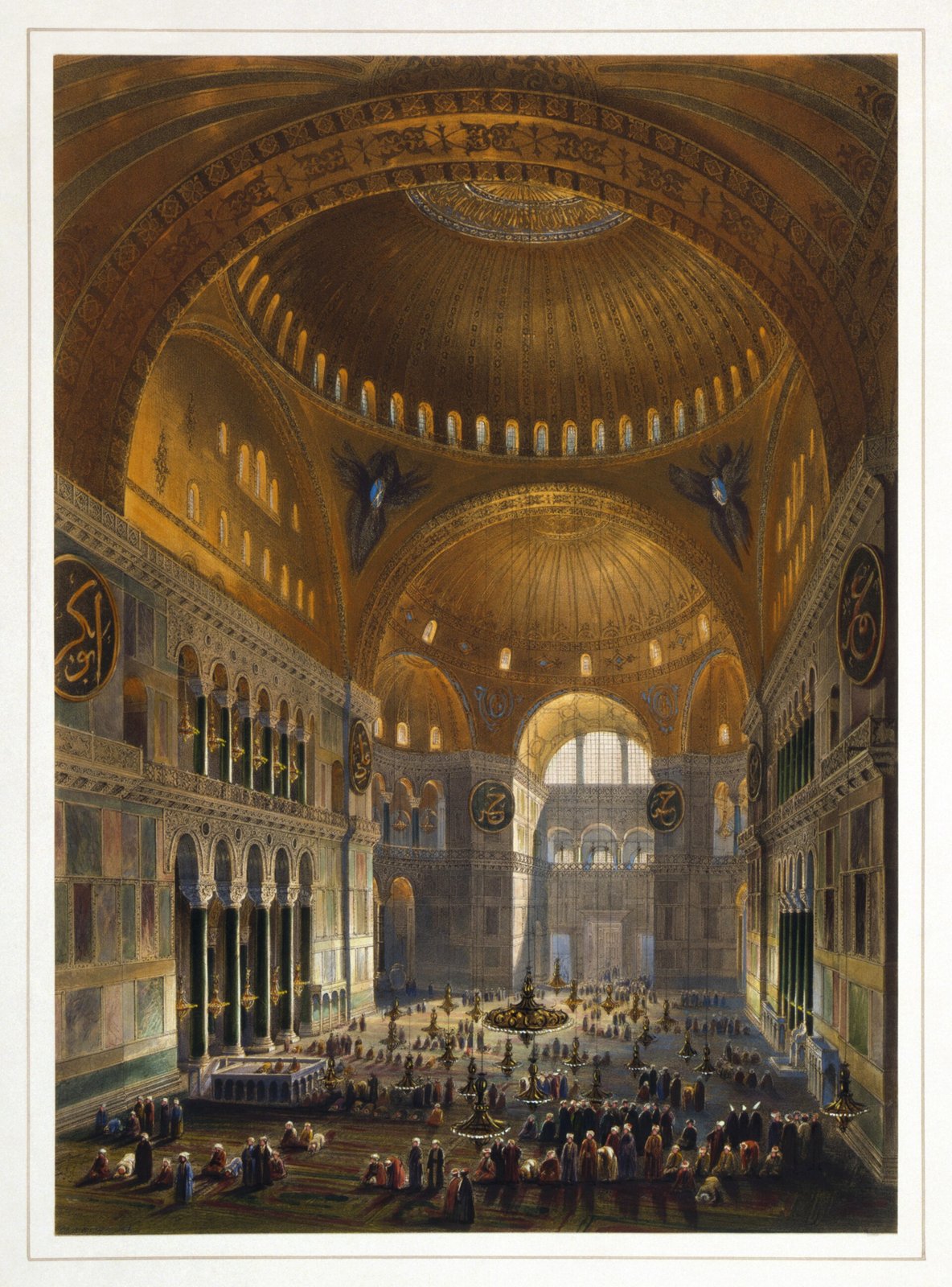
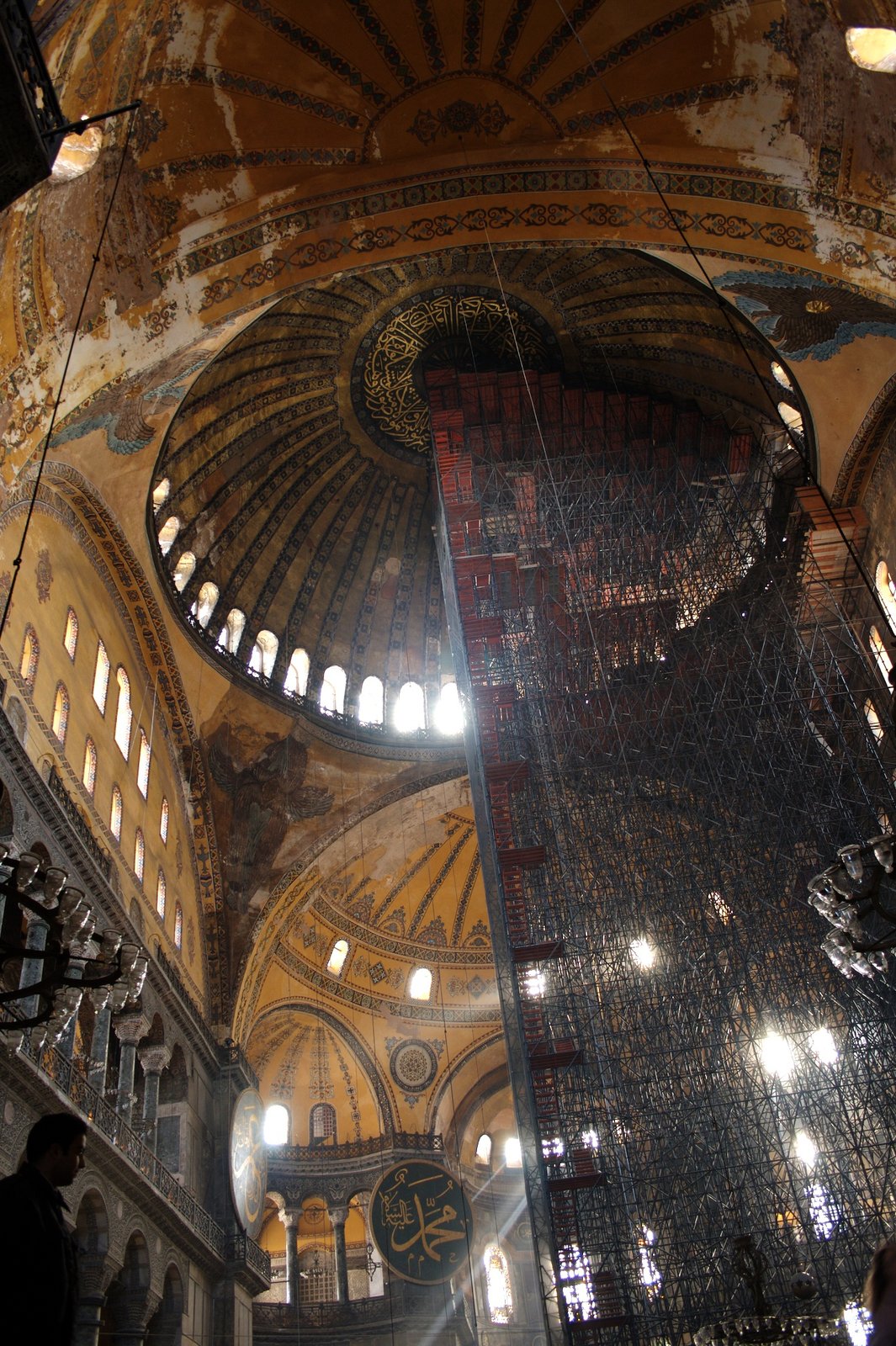
The Orthodox East kept the name and gave it to Christ. Hagia Sophia in Constantinople, rebuilt by Justinian after the Nika revolt of 532 to designs by Anthemius of Tralles and Isidore of Miletus, was dedicated on 27 December 537. It was consecrated not to a saint called Sophia but to the Holy Wisdom of God, understood as the divine Logos, the Christ of 1 Corinthians 1:24; it became a mosque in 1453. In Kyiv and in Novgorod the eleventh-century cathedrals took the same dedication, and in fifteenth-century Novgorod a new icon type appeared: a crowned, winged figure with a fiery red face, enthroned between the Mother of God and John the Baptist. Whether this angelic Wisdom is Christ as the Angel of Great Counsel, the Church, or something of its own is still debated.
The Virgin Sophia
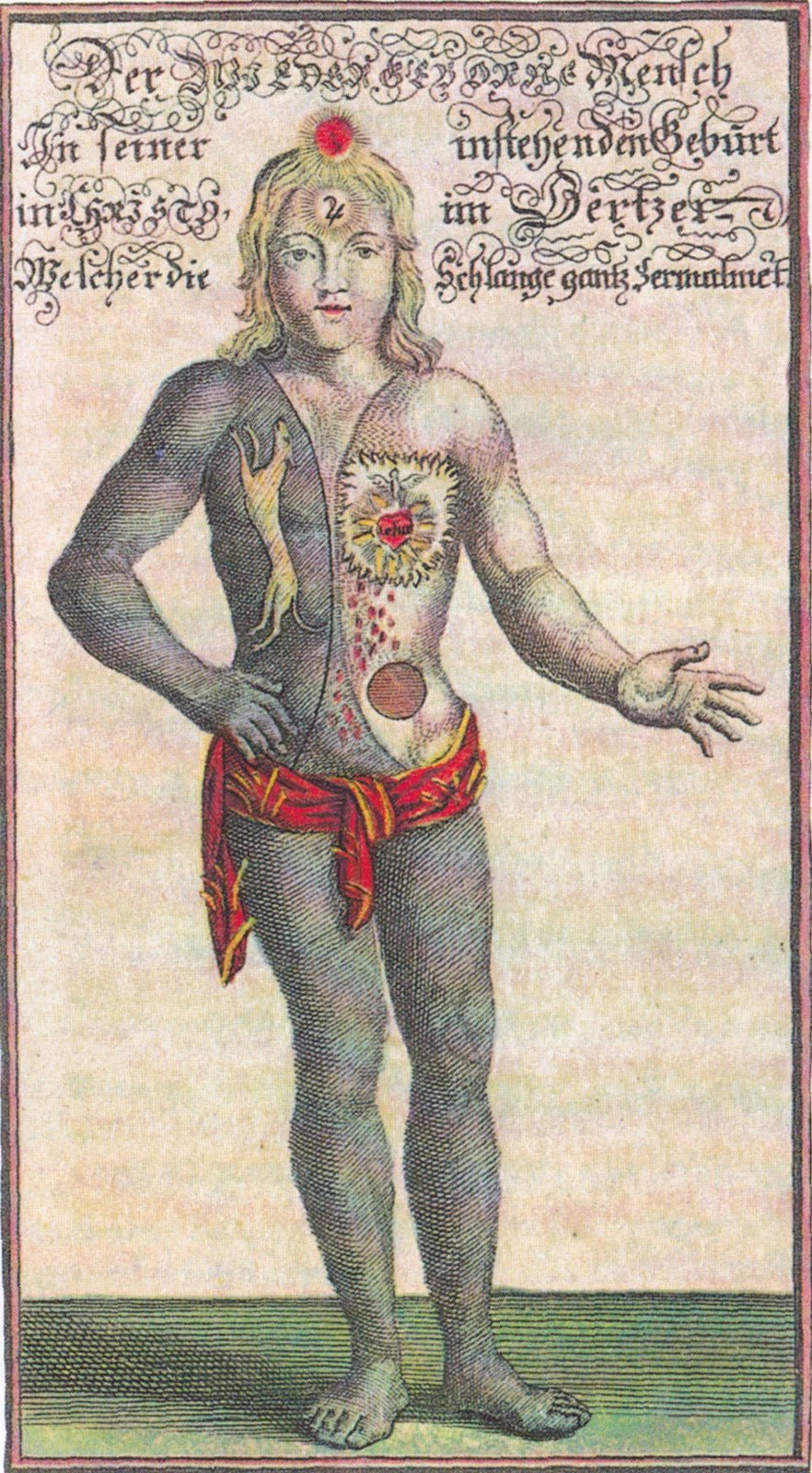
In the Protestant north she returned as a bride. Jakob Böhme (1575–1624), a shoemaker of Görlitz, described the noble Virgin Sophia as the mirror of God's wisdom. In his reading of Genesis the first Adam was whole and bore his heavenly virgin within him; in his fall he lost her, Eve was formed in her place, and the soul's longing for Sophia is the longing for that lost wholeness, which Christ restores. In London the visionary Jane Leade (1624–1704) recorded visions of the Virgin Sophia from 1670 onward and later led the circle that became the Philadelphian Society. Johann Georg Gichtel, who published Böhme's collected works in Amsterdam in 1682, lived a celibate life as one betrothed to her. In 1700 the Pietist historian Gottfried Arnold published in Leipzig Das Geheimnis der göttlichen Sophia oder Weisheit, in which wisdom is the true bride of the spiritual person.
Sophiology in Russia
In Russia Sophia became the centre of a theology. Vladimir Solovyov (1853–1900) described in his poem Three Meetings (1898) three visions of her: as a boy of nine during a liturgy in Moscow, in 1875 in the reading room of the British Museum, and soon after in the desert near Cairo. In his Lectures on Godmanhood (1878–1881) she is the world-soul and the ideal unity of creation in God. Pavel Florensky made her a central theme of The Pillar and Ground of the Truth (1914). Sergei Bulgakov (1871–1944), a priest teaching in exile in Paris, distinguished a divine and a creaturely Sophia, the nature of God and the same nature in the world. In 1935 Metropolitan Sergius in Moscow and the bishops of the Russian Church Abroad at Sremski Karlovci condemned his sophiology as heretical; a commission appointed by his own bishop, Metropolitan Evlogy, did not uphold the charge, and the dispute has never been fully settled.
A Fall for the Sake of Knowing
Modern Gnostic, esoteric and Luciferian readers often set Sophia beside the light-bearer of the fall myths. Both fall from heaven, and both falls are bound up with knowledge: the Valentinian Sophia wants to comprehend the Father, and in the Apocryphon of John her light, hidden in Adam, is what makes humans greater than their makers. The serpent of Eden is often read with her: an Ophite group described by Irenaeus (I 30,15) held that Sophia herself became the serpent and gave knowledge to humans against the will of their creator, and in the Apocryphon the Saviour appears as an eagle on the tree of knowledge, which is the Epinoia of light, to awaken Adam and Eve. Read this way, Sophia is the original of the rebel who brings light, fallen for love of knowing rather than for pride. The differences matter as much. No ancient text identifies her with Lucifer, a name that comes from the Latin translation of Isaiah 14:12. Her fall is a passion, not a revolt, ends in repentance rather than defiance, and her son, not she, is the one who says there is no other god.
Where the Vault Leaves It
What the sources show is a single word moving through many hands. The Hebrew wisdom books personify God's wisdom as a woman at his side; Hellenistic Judaism makes her his radiance and mirror; the New Testament gives her role to Christ; the Gnostics of the second to fourth centuries tell of an aeon who fell through desire, bore the Demiurge, repented and was redeemed; Byzantium, Böhme and the Russian sophiologists each found her again in their own way. Whether she is an attribute of God, a hypostasis, a goddess, a fallen mother, an archetype or the hidden twin of the light-bringer is answered differently by each tradition, and the Vault records every one of these readings as it is held, without deciding between them.
Appearance
In Proverbs a woman calling at the city gates and building a house of seven pillars; in the Gnostic texts no fixed form, only light that dims and is restored; in Russian icons from the fifteenth century on a crowned, winged figure with a fiery face enthroned between the Mother of God and John the Baptist; in Böhme and Solovyov a heavenly virgin, in Solovyov's vision shining in golden azure
Powers
- Ordering the world as God's companion at the creation
- Bringing forth without a consort
- Hiding light in the material world
- Awakening knowledge in humankind
- Return through repentance and redemption
Also Known As
Chokmah, Hagia Sophia, Holy Wisdom, Lady Wisdom, Sapientia, Achamoth, Pistis Sophia, Prunikos, Virgin Sophia, Mother of the Living
Attributes
- Wisdom
- The desire to know
- Error and repentance
- Motherhood
- Light in exile
Symbolic Correspondences
- Elements: Air (the breath of God) and light
- Colours: Gold and azure, the fiery red of the Novgorod icon
- Numbers: Seven — the pillars of her house; thirty — the Valentinian aeons, of which she is the last; thirteen — the aeon of Pistis Sophia and her repentances; nine — the heaven where she waits in the Apocryphon of John
- Associations: The Pleroma and the aeons, the syzygy, the Demiurge (Yaltabaoth), Achamoth, Horos the Limit, the Logos, Christ as Saviour and bridegroom, Mary Magdalene, Helena and Simon Magus, Isis, Hagia Sophia, the Novgorod icon, Böhme, Solovyov, the anima
The Figure, Symbol by Symbol
- The Seven Pillars: In Proverbs 9:1 Wisdom builds a house on seven hewn pillars and invites the simple to her table. Read later as the days of creation, the planets or the gifts of the Spirit, the image says above all that wisdom is something one can enter and dwell in.
- The Breath and the Mirror: Wisdom 7:25–26 calls her the breath of God's power and the unspotted mirror of his working. She is not God and not separate from him: a reflection that shows the source without being it. Gnostic and Christian theology both drew their language of emanation from this verse.
- The Missing Consort: In the Gnostic heavens every aeon has a partner, and Sophia acts without hers. The absent consort is the shape of her error: creation without agreement, a thought that does not wait for its answer.
- The Lion-Faced Child: What she brings forth alone in the Apocryphon of John is a lion-faced serpent with lightning eyes: power without understanding. That the creator of the world should be wisdom's unrecognised child is the central irony of the myth.
- Horos, the Limit: In the Valentinian story only the Limit stops Sophia from dissolving into the Father. The figure turns a boundary into a saving power: the desire to know needs a limit not to be destroyed by what it seeks.
- The Thirteen Repentances: In the Pistis Sophia she climbs out of chaos through thirteen songs of repentance, each one interpreted by a Psalm or an Ode of Solomon. The fall is undone not by force but by recognition, spoken aloud and interpreted.
- The Fiery Angel of Novgorod: The Russian icon shows Wisdom as a crowned, winged figure with a red face, enthroned between Mary and the Baptist. Whether Christ, the Church or Wisdom herself, it is the image through which Orthodoxy kept her visible.
Reading the Whole
Read as a whole, the symbolism of Sophia is the story of how a quality becomes a person. The wisdom books give her a voice, a house and a place beside the throne; the Alexandrian philosophers make her a breath, a radiance and a mirror; the Gnostics give her a partner she does not wait for, a child she cannot look at, a limit that saves her and a long road home; the Byzantines give her a church and the Russians a face of fire. Beneath all of them lies the same structure: wisdom as the point where the divine touches the world, and the risk that this point can be lost, darkened or misused.
That is why the figure moves so easily between theology, myth and psychology. Each age has asked of her what it most needed to know about knowledge itself — where it comes from, what it costs and whether it can be recovered — and the readings recorded here are the record of those questions.
Theological Significance
In the Bible Sophia is not a second god but the way the texts speak of God's own wisdom as present in the world: at the creation, in the order of nature, in the Law and in the life of the wise. The figure answers a question every monotheism faces — how a transcendent God can be near — and each tradition that received her gave its own answer. Judaism identified her with the Torah, as Sirach 24 already does; Christianity identified her with the Son; the Gnostics made her an aeon whose error explains the world.
Wisdom and the Word
The Christian identification of Wisdom with Christ shaped the great doctrinal conflicts of the fourth century. Proverbs 8:22 in the Greek of the Septuagint says that the Lord created Wisdom at the beginning of his ways, and Arius and his followers used the verse to argue that the Son was a creature. Athanasius and the Nicene party answered that the verse refers to the incarnate Christ, not to his eternal being. The debate shows how closely the figure of Wisdom was bound to the question of who Christ is, and why, once the Son had taken her titles, little room remained for her as a feminine person.
An Error Inside the Divine
The Gnostic myth places the origin of the material world neither in the rebellion of an angel nor in human sin but in a passion inside the divine fullness itself. Redemption accordingly is not the punishment of a rebel but the restoration of wisdom: the light scattered by Sophia's fall is gathered back, and those who carry it recover knowledge of where they came from. For Irenaeus this was blasphemy against the goodness of the one Creator; for its adherents it was an honest answer to the question of why a world made by a divine power can be so full of suffering and ignorance.
Wisdom as the Bridge
In the Russian sophiology of Solovyov and Bulgakov Sophia becomes the bridge between God and the world: the divine nature that is also the ground of creation, so that the world is neither God nor separated from him. Critics accused Bulgakov of making her a fourth person beside the Trinity, which he denied; his defenders saw in his work an attempt to take the goodness of creation more seriously than scholastic theology had done. The quarrel of 1935 was in this sense a return of the old question of the wisdom books in modern dress.
Practical Application
Sophia has no seal, no enn and no place in the grimoires of conjuration, and she has never been a spirit that is summoned. Where she is honoured today, it is in liturgy and contemplation: the Orthodox liturgy announces the readings with the deacon's call Wisdom, let us attend; modern Gnostic churches such as the Ecclesia Gnostica in Los Angeles address her in their prayers, and some Christian feminist and Goddess-oriented groups use her name in worship. Within the Vault she is approached as a figure of study and contemplation; no rite is attributed to her here that the sources do not attest.
As a contemplative figure Sophia serves as a mirror for the desire to know: what a person reaches for beyond their limits, what is brought into the world without waiting for an answer, what is lost in the process and how it may be recovered through recognition rather than force. Reading Proverbs 8, Wisdom of Solomon 7 and the Apocryphon of John side by side, or keeping a journal on the questions they raise, is a way of working with the figure that needs no ritual at all.
Modern Interpretations
Since the nineteenth century Sophia has been rediscovered by psychologists, theologians, esotericists and novelists, often in direct dialogue with the Gnostic texts that were then being published for the first time. The readings below are recorded as their proponents hold them.
The Anima and the Answer to Job
Carl Gustav Jung read Sophia as an image of the psyche. In The Psychology of the Transference (1946) he named four stages of the anima, the feminine image in a man's soul, after Eve, Helen, Mary and Sophia, with Sophia as the highest, the wisdom that goes beyond devotion. In Answer to Job (1952) he went further: Yahweh, in his dealings with Job, had forgotten his own Sophia, the feminine wisdom that was with him at the creation, and her remembrance leads to the incarnation. Jung saw the proclamation of the dogma of the Assumption of Mary in 1950 as a sign that the feminine was returning to the image of God.
Sophia in Feminist Theology
From the 1980s feminist theologians turned to Wisdom as a biblical, female image of God. Elisabeth Schüssler Fiorenza, in In Memory of Her (1983), read the earliest Jesus tradition as a movement of Sophia's prophets; Elizabeth A. Johnson, in She Who Is (1992), spoke of Spirit-Sophia, Jesus-Sophia and Mother-Sophia. At the Re-Imagining conference in Minneapolis in November 1993, worship addressed to Sophia set off a fierce controversy in several American Protestant churches, whose critics saw in it the worship of a goddess and whose organisers denied the charge.
Neo-Gnosis and the Esoteric Sophia
The theosophical movement took its name from divine wisdom, and G. R. S. Mead, who translated the Pistis Sophia in 1896, was a Theosophist. Rudolf Steiner spoke in Dornach at Christmas 1920 of the search for the new Isis, the divine Sophia, and modern Gnostic churches have made her a central figure of their liturgy. In fiction Philip K. Dick's VALIS (1981) gives the name Sophia to a child in whom wisdom returns to the world. In these currents she is the exiled divine feminine whose recovery is also the recovery of a lost knowledge, and many of them read her together with the light-bringer of the Luciferian tradition.
Across these readings one thread holds: Sophia is understood less as a being to be worshipped than as the name for knowledge that has been lost and is sought again — and each reading places that loss somewhere different, in heaven, in the soul, in the Church or in history.
Sources & Historical Texts
- Hebrew Bible — Proverbs 1–9, especially 8:22–31 and 9:1
- Hebrew Bible — Job 28
- Sirach (Ecclesiasticus) 24 (c. 180 BCE)
- Wisdom of Solomon 7–9, especially 7:25–26 (1st c. BCE)
- Philo of Alexandria — On Flight and Finding 109 (1st c. CE)
- New Testament — 1 Corinthians 1:24, 30; Matthew 11:19; John 1:1–14; Colossians 1:15; Hebrews 1:3
- Justin Martyr — First Apology 26 (c. 155 CE)
- Irenaeus of Lyon — Against Heresies I 1–8, 23, 29–30 (c. 180 CE)
- Apocryphon of John — Nag Hammadi Codices II, III, IV; Berlin Codex 8502
- Hypostasis of the Archons — Nag Hammadi Codex II,4
- The Thunder, Perfect Mind — Nag Hammadi Codex VI,2
- Plotinus — Enneads II 9 (Against the Gnostics, 3rd c. CE)
- Pistis Sophia — Codex Askewianus, British Library Add. MS 5114 (3rd–4th c. CE)
- Jakob Böhme — Aurora (1612); Mysterium Magnum (1623)
- Jane Leade — A Fountain of Gardens (1696–1701)
- Gottfried Arnold — Das Geheimnis der göttlichen Sophia oder Weisheit (1700)
- Vladimir Solovyov — Lectures on Godmanhood (1878–1881); Three Meetings (1898)
- Pavel Florensky — The Pillar and Ground of the Truth (1914)
- Sergei Bulgakov — The Lamb of God (1933); Sophia, the Wisdom of God (1937)
- C. G. Jung — Answer to Job (1952)
- Elisabeth Schüssler Fiorenza — In Memory of Her (1983)
- Elizabeth A. Johnson — She Who Is (1992)