The Watchers
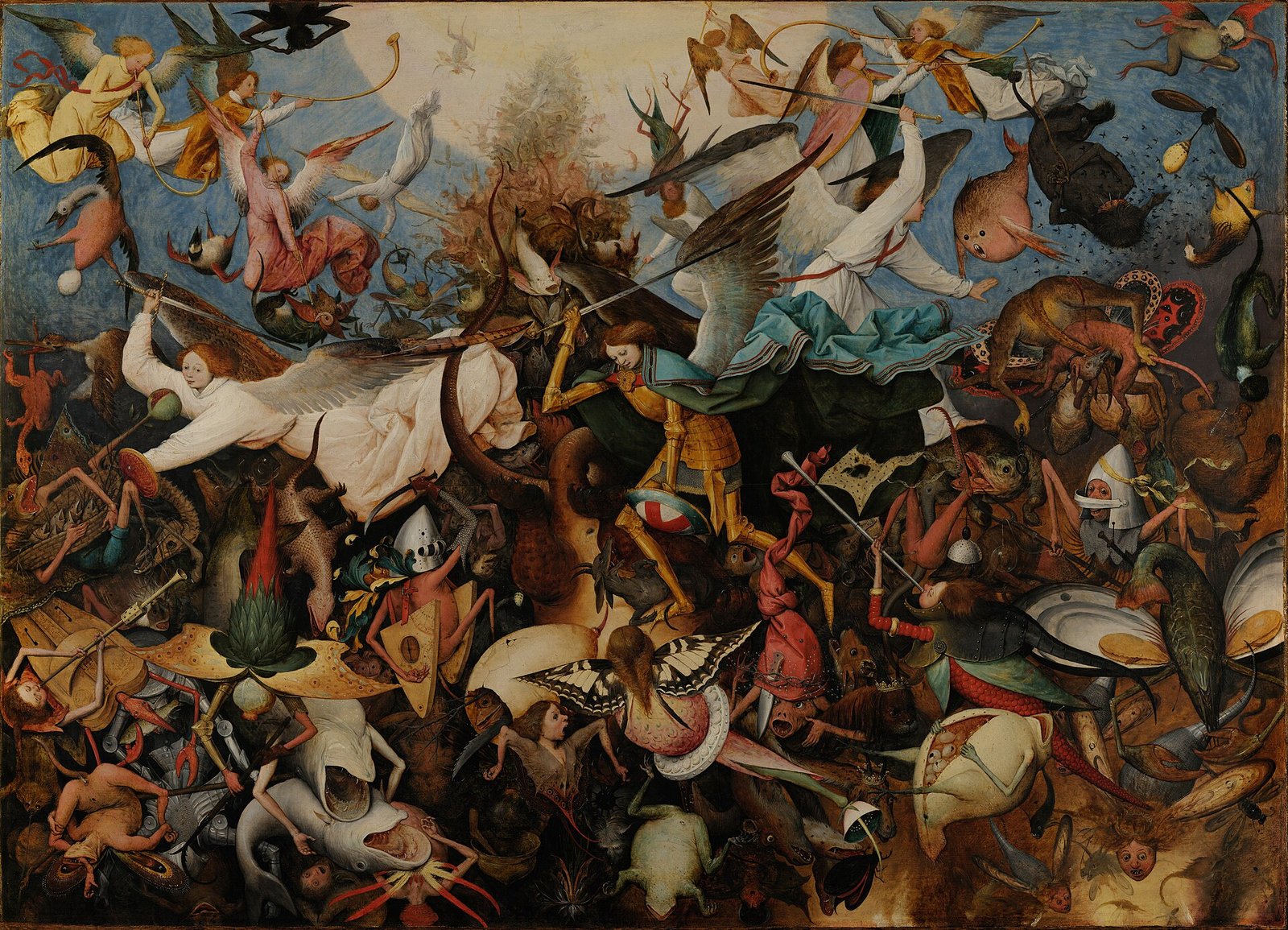
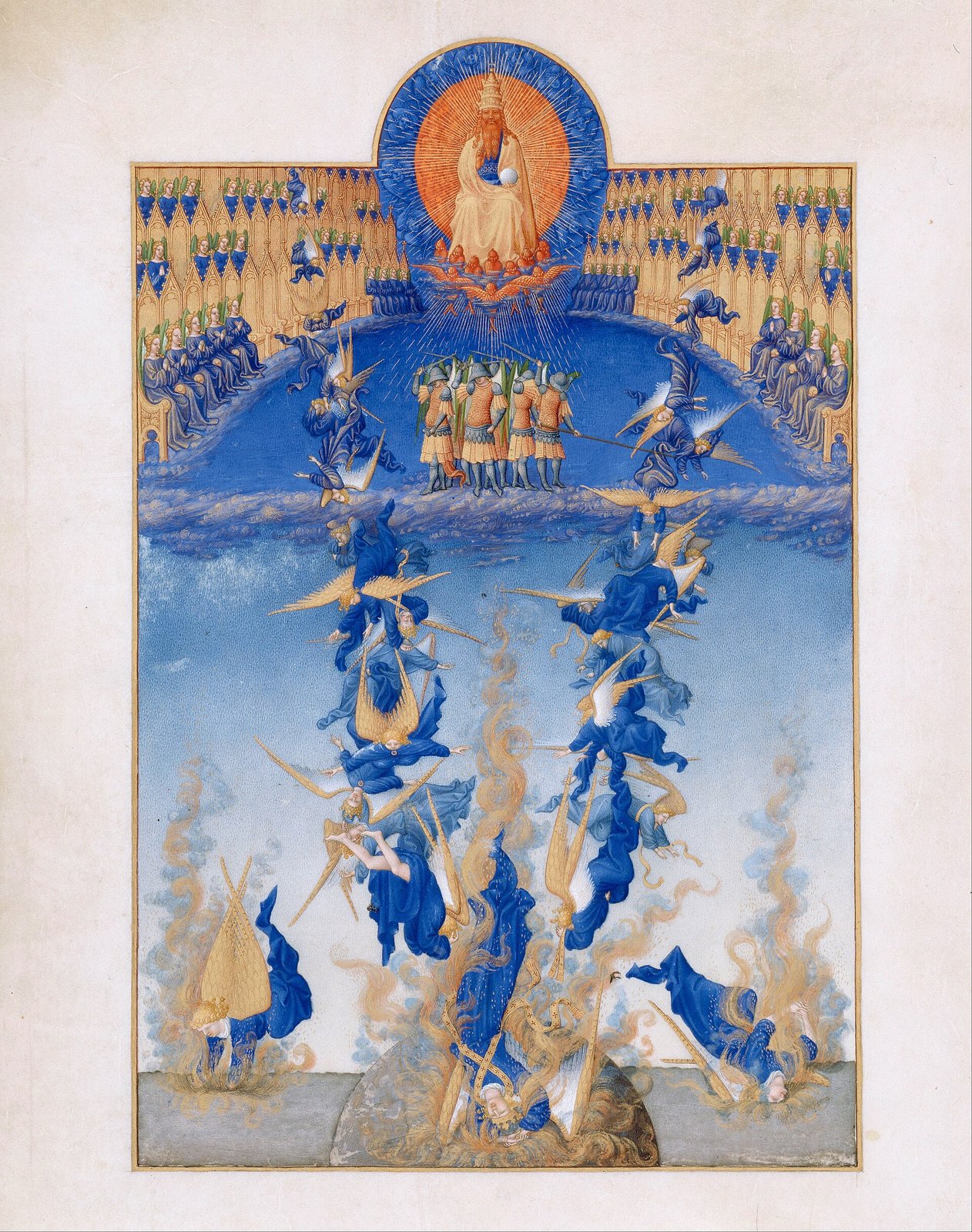
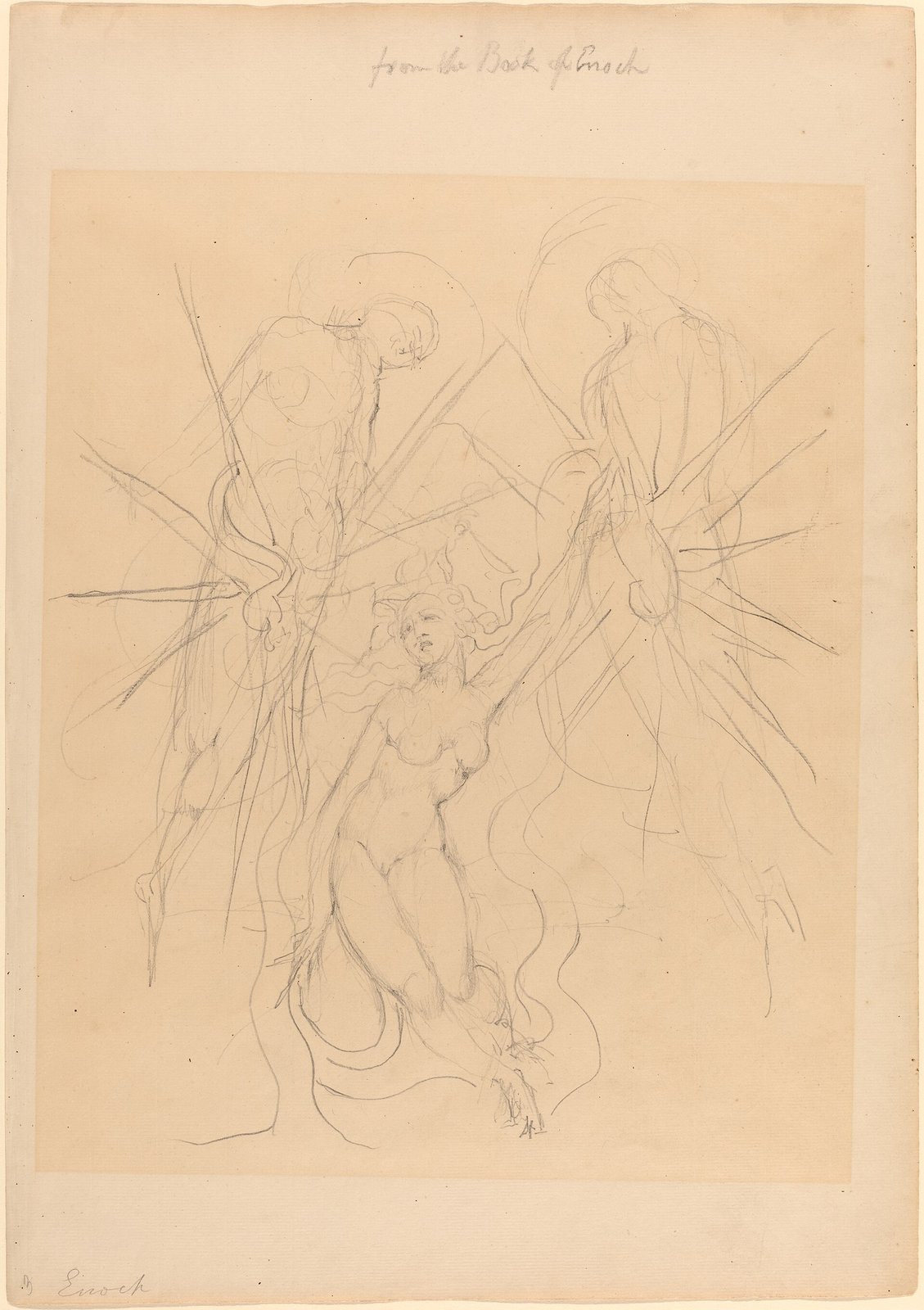
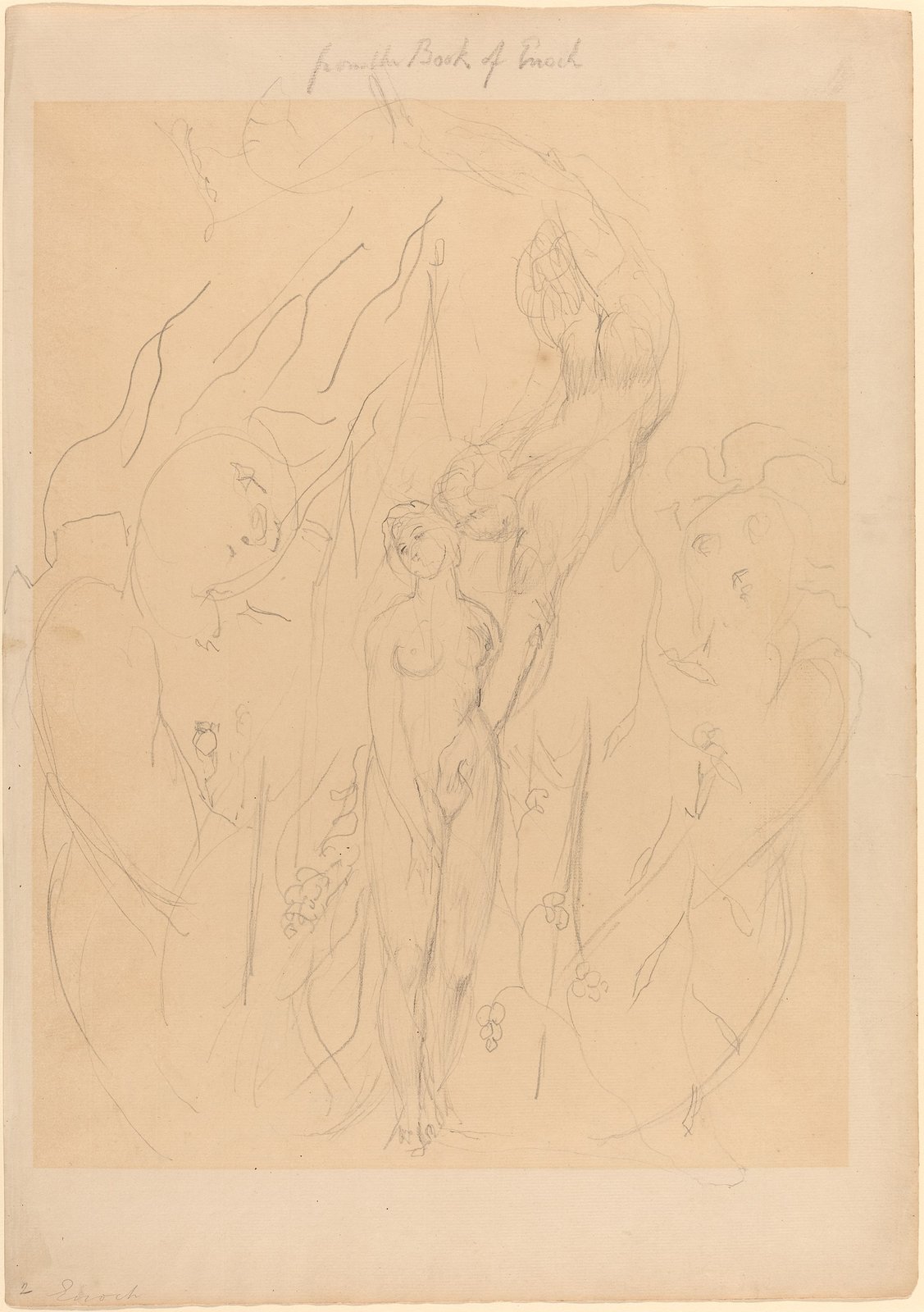

- Category
- Fallen Angels
- Origin
- The Aramaic chapters of Daniel (4:13, 17, 23; 4:10, 14, 20 in the Aramaic text); Genesis 6:1–4; the Book of the Watchers (1 Enoch 1–36, 3rd century BCE), preserved in Aramaic at Qumran, partly in Greek and complete only in Ge'ez; the Book of Jubilees; early Jewish and Christian tradition
History & Lore
The Watchers are the angels who, according to the Book of the Watchers in 1 Enoch, swore an oath on Mount Hermon, came down to earth two hundred strong, took human wives and taught humankind the arts of metal and weapons, ornament and cosmetics, spells, roots and the signs of the stars. Their leaders Shemihazah and Asael were bound beneath the earth by the archangels, and their sons, the giants, brought the world to the Flood. Read as scripture by some ancient Jews and Christians, quoted in the Letter of Jude and later pushed out of most canons, the story survived complete only in Ethiopia and has since become one of the oldest myths of forbidden knowledge.
The Watchers stand at the beginning of one of the oldest answers to the question of where evil, and dangerous knowledge, came from. Genesis offers only four obscure verses about sons of God who took human wives before the Flood. A Jewish writer of the third century BCE turned those verses into a complete story: two hundred angels who swore an oath on a mountain, came down to earth, took wives, fathered giants and taught humankind the working of metal, the arts of adornment, spells, herbs and the reading of the sky, until heaven intervened, bound them beneath the earth and sent the Flood. That story, the Book of the Watchers, was read as scripture by some Jews and early Christians, quoted in the New Testament, then set aside by most churches and lost in the West for more than a thousand years, surviving complete only in Ethiopia. This entry follows the angels themselves; their sons, the giants, have their own entry under the Nephilim.
The Watchful Ones
The name comes from Aramaic. In the fourth chapter of Daniel, King Nebuchadnezzar dreams of a great tree and sees a watcher and a holy one come down from heaven and order it cut down (Daniel 4:13 in English Bibles, 4:10 in the Aramaic text); the sentence is called the decree of the watchers (4:17), and the figure returns in 4:23. The word is ʿir, plural ʿirin, from a root meaning to be awake: a watcher is one who does not sleep, a heavenly being on permanent guard. In Daniel the watchers are holy and obedient. Greek translators rendered the word as egrēgoros, the wakeful one, and from the Greek comes the Slavonic Grigori of Second Enoch (2 Enoch 18). In the Enochic writings the same word covers both the angels who stayed and those who fell, and it is the fallen ones whom later tradition simply calls the Watchers.
Sons of God in Genesis 6
The seed of the story lies in Genesis 6:1–4. When humankind began to multiply, the sons of God, bene ha-elohim, saw that the daughters of men were beautiful and took wives from among them; the Nephilim were on the earth in those days, and afterwards too, when the sons of God went in to the daughters of men and they bore them the mighty men of old, the men of renown. The passage never explains who the sons of God were, never calls their act a sin and never links it explicitly to the Flood. Elsewhere in the Hebrew Bible the same phrase means members of the heavenly court (Job 1:6; 2:1; 38:7), and this is how the oldest interpreters read it here. The Book of the Watchers fills each of these silences.
The Book of the Watchers
First Enoch is not one book but a collection of five, attributed to Enoch, the seventh patriarch from Adam, who walked with God and was not, for God took him (Genesis 5:24). The Book of the Watchers forms its first thirty-six chapters: an opening oracle of judgment (1–5), the story of the angels' descent (6–11), Enoch's mission to the fallen Watchers (12–16) and his journeys through the hidden places of the cosmos (17–36). Most scholars date it to the third century BCE, making it one of the oldest Jewish writings outside the Hebrew Bible. Within chapters 6–11 they distinguish two interwoven strands: one centred on Shemihazah, in which the sin is the union with women and the birth of the giants, and one centred on Asael, in which the sin is the teaching of forbidden arts.
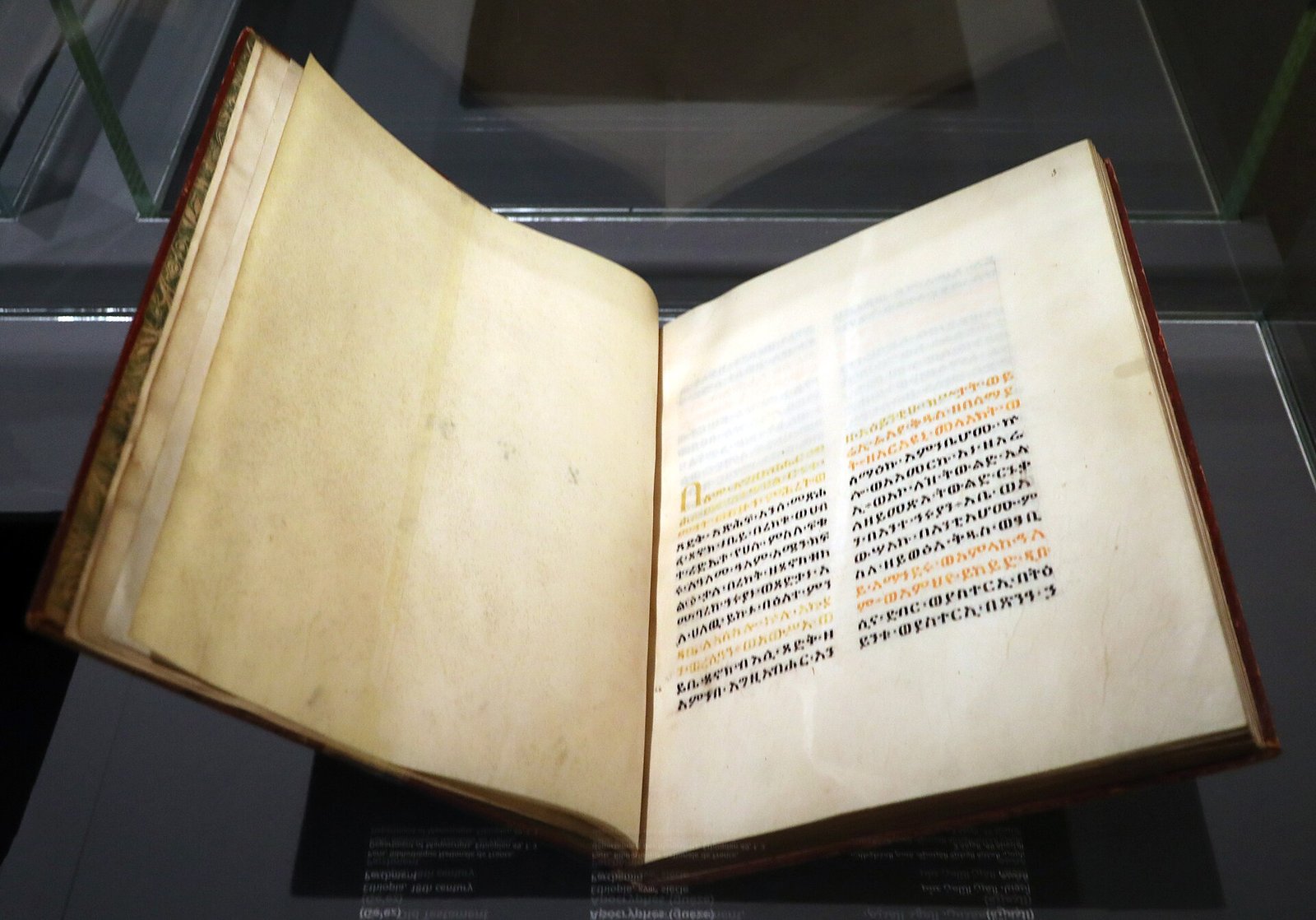
The survival of the text is a story of its own. It was written in Aramaic, and fragments of the original were found among the Dead Sea Scrolls in Cave 4 at Qumran from 1952 onwards; J. T. Milik published them in 1976 as The Books of Enoch: Aramaic Fragments of Qumrân Cave 4, dating the oldest Enochic manuscripts by their script to the late third or early second century BCE. Greek portions survive in the excerpts of George Syncellus (c. 800 CE) and in the Akhmim manuscript, the Codex Panopolitanus, found in Egypt in 1886–87. The whole of 1 Enoch survives only in Ge'ez, the classical language of Ethiopia, where it belongs to the biblical canon of the Ethiopian Orthodox Tewahedo Church. Richard Laurence published the first English translation in 1821 from manuscripts that James Bruce had brought to Europe in 1773; the standard older English version is that of R. H. Charles (1912).
The Oath on Mount Hermon
Chapter 6 tells the descent. When the children of men had multiplied, the angels, the children of heaven, saw their daughters, desired them and said to one another: let us choose wives from among the children of men and beget children. Their leader Shemihazah, Semjaza in the Ethiopic, feared that he alone would have to pay for so great a sin, so all of them swore an oath and bound themselves by mutual curses not to abandon the plan. They were two hundred, and they came down in the days of Jared on the summit of Mount Hermon, which the text explains by the oath, the Hebrew herem meaning a ban or a thing devoted under curse; Jared's own name was read as a play on yarad, to descend.
The text then names the leaders, whom it calls the chiefs of tens: twenty over the two hundred. The list differs between the witnesses. In Charles's translation of the Ethiopic it reads Semjaza their leader, Arakiba, Rameel, Kokabiel, Tamiel, Ramiel, Danel, Ezeqeel, Baraqijal, Asael, Armaros, Batarel, Ananel, Zaqiel, Samsapeel, Satarel, Turel, Jomjael and Sariel; chapter 8 gives some of the same angels in other forms, such as Araqiel and Shamsiel, and the Aramaic fragments preserve older spellings, among them Shemihazah, Kokabel, Baraqel and Shamshiel. Many of the names are transparent: kokab is star, baraq lightning, shemesh sun.
What the Watchers Taught
Chapter 7 says that the Watchers took wives, each choosing one, and taught them charms and enchantments, the cutting of roots, and made them acquainted with plants. Chapter 8 specifies the rest. Azazel, as the Ethiopic now names Asael, taught men to make swords, knives, shields and breastplates, made known to them the metals and the art of working them, and showed them bracelets and ornaments, the use of antimony and the beautifying of the eyelids, all kinds of costly stones and all colouring tinctures. Godlessness, fornication and corruption followed. Then each of the others taught his own art: Semjaza enchantments and root-cuttings, Armaros the resolving of enchantments, Baraqijal astrology, Kokabel the constellations, Ezeqeel the knowledge of the clouds, Araqiel the signs of the earth, Shamsiel the signs of the sun and Sariel the course of the moon.
The catalogue reads like an inventory of civilisation: war and metalwork, adornment and luxury, medicine and magic, divination by the heavens. Yet the Enochic writings do not condemn knowledge as such. In the Astronomical Book (1 Enoch 72–82) Enoch himself receives the laws of the sun, moon and stars from the archangel Uriel, and he is praised for it. What the Watchers did wrong was to reveal what was not theirs to reveal, to the wrong people and to ruinous effect. The verdict in chapter 16 makes the point: they had been in heaven, but the hidden things had not been revealed to them; they knew only a worthless mystery, and this, in the hardness of their hearts, they made known to the women.
Enoch Between Heaven and the Fallen
In chapter 9 the archangels Michael, Uriel, Raphael and Gabriel (some witnesses name Sariel in place of Uriel) look down from heaven, see the blood shed on the earth and bring the cry of humankind before the Most High: Asael has taught all unrighteousness and revealed the eternal secrets that were kept in heaven, and Shemihazah has taught spells.
Chapters 12–16 then make Enoch, the scribe of righteousness, the go-between. Sent to announce their judgment to the fallen Watchers, he is begged by them to write a petition for forgiveness. He sits by the waters of Dan, south-west of Hermon, reads it until he falls asleep and is carried in a vision into a house of crystal and fire, before the throne of the Great Glory (chapter 14). The answer he must carry back is a reversal: the Watchers ought to intercede for men, not men for them (15:2). The spirits of their sons will roam the earth as evil spirits (15:8–12). The final word is short: you have no peace (16:4).
Asael Bound in Dudael
Chapter 10 carries out the sentence. An angel is sent to Noah to warn him of the Flood. Raphael is told to bind Asael hand and foot and cast him into darkness, to make an opening in the desert in Dudael and throw him in, to lay rough and jagged rocks upon him and cover his face so that he may not see the light, and on the great day of judgment to cast him into the fire (10:4–6). The next lines lay a heavy burden on him: the whole earth has been corrupted through the works he taught, and to him all sin is to be ascribed (10:8). Gabriel is sent against the giants to make them destroy one another; Michael is to bind Shemihazah and his companions for seventy generations in the valleys of the earth until the day of judgment, and then lead them to the abyss of fire (10:9–13). On his later journeys Enoch learns that their spirits, taking many forms, have led humankind to sacrifice to demons as to gods (19:1).
The giants born of the Watchers' unions consumed the labour of humankind and then humankind itself (7:3–5). Their story, the separate Book of Giants found among the Dead Sea Scrolls and their afterlife as evil spirits belong to the Vault's entry on the Nephilim.
Azazel and the Goat for the Wilderness
On the Day of Atonement, Leviticus 16:8, 10 and 26 prescribe that lots be cast over two goats, one for the Lord and one for Azazel; the second, laden with the sins of Israel, is sent away into the wilderness. What Azazel means has been disputed since antiquity. William Tyndale, reading it as the goat that goes away, coined the English scapegoat in 1530; the Babylonian Talmud (Yoma 67b) and Rashi understand a steep and rugged place; many modern scholars see the name of a wilderness demon. The Aramaic Asael, God has made, is a different name, but Greek and Ethiopic copyists drew the two together. Asael too is driven into the desert and buried under rocks, and Dudael has been connected with Beth Hadudo, the place to which the goat was led according to the Mishnah (Yoma 6:8). The same Talmud passage explains that the goat atones for the deed of Uzza and Azael.
Jubilees and the Teachers Sent Down
The Book of Jubilees, a retelling of Genesis from the middle of the second century BCE, changes the story at its root. In the days of Jared, it says, the angels of the Lord, called the Watchers, came down to earth to instruct the children of men and to do judgment and uprightness on the earth (4:15). Only on earth did they fall, by taking wives, and they were bound in the depths of the earth (5:1–11). Generations after the Flood, a descendant of Noah named Kainam finds an inscription carved on a rock containing the teaching of the Watchers about the omens of the sun, moon and stars, copies it and sins thereby (8:3). In this version the Watchers were teachers before they were transgressors, and their knowledge outlives their punishment, which is the form of the story that later esotericists would value most.
From Scripture to Apocrypha
For several centuries the Enochic story was common property. Second Peter 2:4 says that God did not spare the angels who sinned but cast them into Tartarus and committed them to chains of darkness until the judgment; Jude 6 speaks of the angels who did not keep their own domain but left their proper dwelling, kept in eternal chains under darkness for the judgment of the great day; and Jude 14–15 quotes Enoch, the seventh from Adam, by name, citing 1 Enoch 1:9.
The early Church Fathers took the story over and explained the pagan world with it. Justin Martyr, around 150 CE, wrote in his Second Apology (5) that angels, captivated by love of women, begot the children called demons, who enslaved humankind through magical writings, fears and the teaching of sacrifices. Tertullian, in On the Apparel of Women (I.2–3), says that the angels who rushed down to the daughters of men brought them metals, herbs, enchantments and astrology, and gave women their jewellery and the black powder for the eyelids; he also defends the Book of Enoch as scripture. Lactantius, early in the fourth century, describes in his Divine Institutes (II.14–15) angels sent by God to guard humankind and drawn by the devil into intercourse with women, so that there came to be two kinds of demons, heavenly and earthly.
Then the reading turned. Julius Africanus, in the early third century, proposed that the sons of God were the pious descendants of Seth and the daughters of men the line of Cain. Augustine adopted the Sethite reading in The City of God (XV.23), doubted that angels could have done what the story says and set the Book of Enoch aside as apocryphal because of its uncertain origin. In rabbinic Judaism, Genesis Rabbah (26:5) reports that Rabbi Shimon bar Yochai read the sons of God as the sons of judges and cursed anyone who called them sons of God, although the Targum Pseudo-Jonathan on Genesis 6:4 still names Shemhazai and Azael as angels who fell from heaven. In the Greek and Latin churches the book fell out of use and was lost; only Ethiopia kept it whole.
Poets, Magicians and Ancient Astronauts
John Dee and Edward Kelley called the angelic language they recorded in the 1580s Enochian, after the patriarch who knew the secrets of heaven; Dee could not read 1 Enoch, which was lost in his day, and his system has nothing to do with the Watchers beyond the name. After Laurence's translation the Romantics took up the story at once. Lord Byron wrote Heaven and Earth: A Mystery in 1821, published in 1823 in The Liberal, in which the angels Samiasa and Azaziel love the mortal women Aholibamah and Anah as the Flood rises. Thomas Moore's The Loves of the Angels (1823) has three fallen angels tell how they lost heaven for love of mortal women. Éliphas Lévi, in Le Grand Arcane (written in 1868, published in 1898), called the Watchers égrégores, after the Greek, and later occultists turned the word into a term for the collective mind of a group.
In the twentieth century the Watchers were read as bringers of civilisation punished for sharing what they knew, in a clear parallel to Prometheus, who stole fire for humankind and was chained to a rock (see the Vault's entry on Prometheus); scholars such as George Nickelsburg had already compared Asael's teaching and binding with the Greek Titan. Erich von Däniken's Chariots of the Gods? (1968) and Zecharia Sitchin's The 12th Planet (1976) read the descending angels as visitors from space. These are modern readings without support in the ancient sources, which speak of angels, not of travellers.
Where the Vault Leaves It
What can be said with confidence is this: a Jewish author of the third century BCE expanded four verses of Genesis into the story of two hundred angels who descended on Hermon, took wives and taught forbidden arts, and that story shaped Jewish and Christian ideas of evil and demons for centuries before it was set aside. Whether it was meant as a myth of the origin of evil, a critique of priests or kings of its own time, or a memory of older Near Eastern tales of sages and culture bringers is debated. The Vault reads the Watchers, by its own choice, as the first full myth of forbidden knowledge in the Jewish and Christian tradition: a story that asks who may know what, who may teach it and at what price. It records the other readings as their proponents hold them, without deciding between them.
Appearance
Almost never described. Daniel shows a watcher only as a holy being coming down from heaven; the Animal Apocalypse of 1 Enoch (86) pictures the fallen as stars dropping from the sky among cattle; Second Enoch (18) describes the Grigori as larger than giants, with withered faces and mouths in perpetual silence. Later tradition shows them bound in chains under rocks and darkness
Powers
- Teaching metallurgy and the making of weapons
- Teaching ornament, cosmetics and the colouring arts
- Teaching enchantments, root-cutting and the release of spells
- Revealing the signs of the stars, sun, moon, clouds and earth
- Begetting the giants with human women
Also Known As
Grigori, Irin (ʿirin), Egregoroi, The Sons of God, The Fallen Angels of Enoch, Egregores
Attributes
- Forbidden knowledge
- Transgression of boundaries
- Desire
- The oath
- Teaching
- Judgment and binding
Symbolic Correspondences
- Elements: Earth and metal (the arts they taught), the sky and its stars (their names and their astrology), fire (the judgment that awaits them)
- Colours: The sources give none. By their teaching they are linked with the black of antimony eye-paint and the gleam of worked metal and precious stones, by their punishment with the darkness of Dudael
- Numbers: Two hundred who descended; twenty chiefs of tens; seventy generations of binding (1 Enoch 10:12); four archangels sent against them, seven in the list of 1 Enoch 20
- Associations: Mount Hermon, Jared, the waters of Dan, Dudael, Enoch the scribe, Shemihazah and Asael/Azazel, the Nephilim, the Flood, Leviticus 16, Tartarus, Michael, Gabriel, Raphael and Uriel, Prometheus; Enochian magic by name only
The Figure, Symbol by Symbol
- The Wakeful Eye: ʿIr means one who stays awake. In Daniel the watchers' vigilance is the order of heaven keeping guard over the world; in Enoch the same gaze turns downward and becomes desire. The figure holds both possibilities: the observer who protects and the observer who wants.
- The Oath on Hermon: The two hundred bind themselves with mutual curses so that no one can turn back, and the mountain takes its name from the ban. It is the first conspiracy in the literature of angels: a collective decision, sealed so that guilt is shared and no one can stand alone before the judge.
- The Descent: Jared's name was read as descent, Hermon is the place of landing, and the Animal Apocalypse turns the angels into falling stars. Descent is the core image of the myth: heaven's knowledge comes down, and with it the boundary between the realms gives way.
- The Forge and the Blade: Asael's first gifts are swords, shields and the art of working metal. The craft that builds civilisation is presented first as the craft of killing, and the myth never lets the two be separated.
- Antimony and Ornament: Eye-paint, bracelets, jewels and dyes: the arts of beauty sit beside the arts of war in the same chapter. The text reads them as instruments of seduction and corruption; modern readers often see in this passage how strongly the story is bound to its own view of women.
- The Stars and Their Signs: Most of the chiefs bear names of sky, lightning, sun and moon, and they teach the signs of each. Knowledge of the heavens is not evil in Enoch, who receives it from Uriel himself; what the Watchers taught was the same sky read without permission.
- The Rocks of Dudael: Asael bound hand and foot in the desert, covered with jagged stones, his face hidden from the light until judgment. The image of the chained teacher links him to the wilderness goat of Leviticus 16 and to Prometheus on his rock.
Reading the Whole
Read as a whole, the Watchers are not a portrait of individual demons but a pattern: beings set to guard a boundary who cross it themselves, and who bring across with them what was meant to stay on the other side. Their story joins three things the later tradition kept apart: desire, knowledge and catastrophe. The giants are the visible result, but the lasting consequence is the knowledge that remains on earth after the Flood, in metal, in cosmetics, in spells and in the reading of the sky, as Jubilees makes explicit with its inscription on a rock.
That is why the figure has served such different readers. For the authors of Enoch it explained why the world was violent and corrupt; for the Church Fathers it explained the pagan gods; for the Romantics it told of love stronger than heaven; for modern esotericists it tells of teachers punished for teaching. The symbols recorded here are the points at which each of these readings takes hold.
Theological Significance
The Book of the Watchers offers an answer to the origin of evil that is very different from the more familiar one. In Genesis 3 evil enters the world through human disobedience in the garden; in Enoch it descends from heaven, brought by angels who broke their order, and humankind is as much victim as accomplice. For centuries, in early Judaism and early Christianity, this was at least as influential an account of why the world is violent and corrupt as the story of Adam and Eve.
An Origin for Evil
On the Enochic reading, evil has a history and a source outside human nature: the Watchers' transgression, the giants' violence and the evil spirits that remain after the Flood. This made demons explicable as the spirits of the giants, and it gave the coming judgment a cosmic dimension. It also shifted responsibility: the Watchers are condemned not only for what they did, but for what they taught others to do.
Knowledge Out of Place
The story does not treat knowledge as evil in itself. Enoch receives the secrets of the heavens lawfully; the Watchers reveal them unlawfully. The decisive question is not what is known but who reveals it, to whom and with what authority. This distinction between legitimate revelation and forbidden disclosure runs through later Jewish mysticism, Christian theology and Western esotericism, and it is one of the main reasons the Watchers remained relevant long after their book was lost.
Angels, Seth and the Canon
The later rejection was theological as much as textual. If angels could marry and beget, their nature was more bodily than later doctrine allowed; if the Book of Enoch was scripture, its account competed with the story of the fall in Genesis. The Sethite reading of Genesis 6 solved both problems by turning the sons of God into men, and Augustine's authority made it standard in the West. The Ethiopian church, which kept Enoch in its canon, preserves the older view to this day.
Practical Application
The Watchers have no established system of evocation in the classical grimoires, and no ancient source preserves a rite addressed to them. The Guardians or Lords of the Watchtowers called at the four quarters in modern Wicca and ceremonial magic derive from the Enochian watchtowers of John Dee and the Golden Dawn, not from the Book of the Watchers, although the two are often confused. Some modern luciferian and demonolatric currents work with Azazel as a teacher-spirit; these practices are modern and are recorded as such. Within the Vault the Watchers are approached chiefly as a subject of study and contemplation.
As a contemplative figure the Watchers serve as a mirror for the ethics of knowledge: what one is entitled to know, what one may pass on, and who bears the consequences when knowledge reaches people who are not ready for it, or when those who guard it keep it from those who need it. The story can be read alongside the myth of Prometheus and modern debates about dangerous technologies, and the reflection can be carried out in study, in a journal or in conversation without any ritual at all.
Modern Interpretations
Few figures of ancient apocrypha have been read in so many ways since their rediscovery. The Watchers appear in historical scholarship, in occult theory, in speculative history and in the literature of the left-hand path, and the readings below are recorded as their proponents hold them.
A Mirror of Its Own Time
Historians read the Book of the Watchers against the world in which it was written. George Nickelsburg suggested in 1977 that the violent giants mirror the wars of Alexander's successors, which ravaged the Levant in the third century BCE; David Suter argued in 1979 that the angels who defiled themselves with women are a veiled critique of priests who married outside the rules of purity. Others point to Mesopotamian traditions of the apkallu, the antediluvian sages who brought the arts to humankind. On these readings the myth is a response to its own crisis, told in the language of heaven.
The Teachers Punished
In much modern esoteric and luciferian writing the Watchers are read in reverse: not as corrupters but as benefactors who gave humankind its crafts, its sciences and its awareness, and who were punished by a jealous order for doing so. Asael becomes a figure like Prometheus or the serpent of the garden, and the story becomes evidence that knowledge was once withheld deliberately. Proponents point to Jubilees, in which the Watchers first came to teach.
Egregores and Group Minds
Through Éliphas Lévi the Greek word for the Watchers entered occult vocabulary as egregore. In later occultism, from the late nineteenth century onwards, the term came to mean a collective entity formed and sustained by the attention of a group, such as an order, a movement or a nation. Many who use the word today no longer know its Enochic origin.
Visitors From the Sky
Since the 1960s the Watchers have been a favourite of ancient astronaut literature, which reads the descent on Hermon as a landing, the forbidden arts as a transfer of technology and the giants as the result of genetic intervention. Erich von Däniken and Zecharia Sitchin popularised this reading; it has no support in the ancient sources or in scholarship, but it has made the Watchers known to a far wider public than the Book of Enoch ever reached.
Across these readings one thread holds: the Watchers are understood as the figures through whom knowledge crosses a boundary it was not meant to cross, and each reading decides differently whether that crossing was a crime, a gift or both.
Sources & Historical Texts
- Hebrew Bible — Genesis 5:18–24; 6:1–4
- Hebrew Bible — Daniel 4:13, 17, 23 (Aramaic text 4:10, 14, 20)
- Hebrew Bible — Leviticus 16:8, 10, 26
- 1 Enoch 1–36, the Book of the Watchers (3rd century BCE)
- 1 Enoch 72–82, the Astronomical Book; 1 Enoch 85–90, the Animal Apocalypse
- Aramaic Enoch fragments from Qumran Cave 4 — J. T. Milik, The Books of Enoch: Aramaic Fragments of Qumrân Cave 4 (1976)
- Greek Enoch — Codex Panopolitanus (Akhmim); George Syncellus, Chronography (c. 800 CE)
- Ethiopic (Ge'ez) Enoch — canonical in the Ethiopian Orthodox Tewahedo Church
- Book of Jubilees 4:15; 5:1–11; 8:3 (2nd century BCE)
- 2 Enoch (Slavonic Enoch) 18
- New Testament — 2 Peter 2:4; Jude 6, 14–15
- Justin Martyr — Second Apology 5 (c. 150 CE)
- Tertullian — On the Apparel of Women I.2–3
- Lactantius — Divine Institutes II.14–15
- Augustine — The City of God XV.23
- Genesis Rabbah 26:5; Babylonian Talmud Yoma 67b; Targum Pseudo-Jonathan on Genesis 6:4
- Lord Byron — Heaven and Earth: A Mystery (written 1821, published 1823)
- Thomas Moore — The Loves of the Angels (1823)
- Richard Laurence — The Book of Enoch the Prophet (1821); R. H. Charles — The Book of Enoch (1912)
- George W. E. Nickelsburg — 1 Enoch 1: A Commentary (2001)
- Annette Yoshiko Reed — Fallen Angels and the History of Judaism and Christianity (2005)