Standing clarification
Not the Opposite of Anything
Satanism is not anti-Christianity — and a Satanism that is only anti-Christianity has not left the church. It has moved to the other pew.
The most durable misconception about Satanism is that it is Christianity’s mirror image: that where they pray, we curse; where they love Jesus, we hate him; that the whole thing is a photographic negative of a church service. It isn’t, and the reason matters more than the correction.
A mirror image keeps the shape
If your position is simply the inversion of somebody else’s, then they set the terms and you filled them in — you are still standing exactly where they put you, just facing the other way. The first principle of the Left-Hand Path is that you are your own authority. You cannot be your own authority while your entire worldview is dictated, item by item, by what a church said first. That is not freedom. It is a leash held from the other end.
On Jesus
Most Satanists have no quarrel with him at all, and a great many regard the man in the Gospels with genuine respect: someone who told the powerful to their faces that they were whitewashed tombs, who broke the sabbath rules on purpose, who kept company with precisely the people the pious would not touch, and who was executed by an alliance of religious authority and state power for being inconvenient. Strip the theology off and that is not a bad life. More than a few Satanists would tell you that the institution built in his name would have had him arrested.
The quarrel — where there is one at all — is not with him. It is with coercion: with a doctrine that named the body, doubt, appetite and pride as sin and then sold itself as the cure; with the use of divine authority to make obedience into a virtue; with what has been done to people in that name. That is a quarrel with a structure. Not with a person, and certainly not with a rival god.
A supporting role in someone else's story
"Satan versus Jesus" is a Christian story, and in it Satan is a supporting character. He is the antagonist in someone else’s book — defined wholly by his function in a plot he does not own, the thing that has to lose so the hero can win. To take that duel up as your own is to accept the smaller of the two parts on offer. The theistic currents on this map mostly do not hold the Christian cosmology at all, and you cannot fight a war inside a story you do not live in. As for Lucifer: in the Luciferian reading he is not fighting anybody. He is carrying a light.
Where the images come from
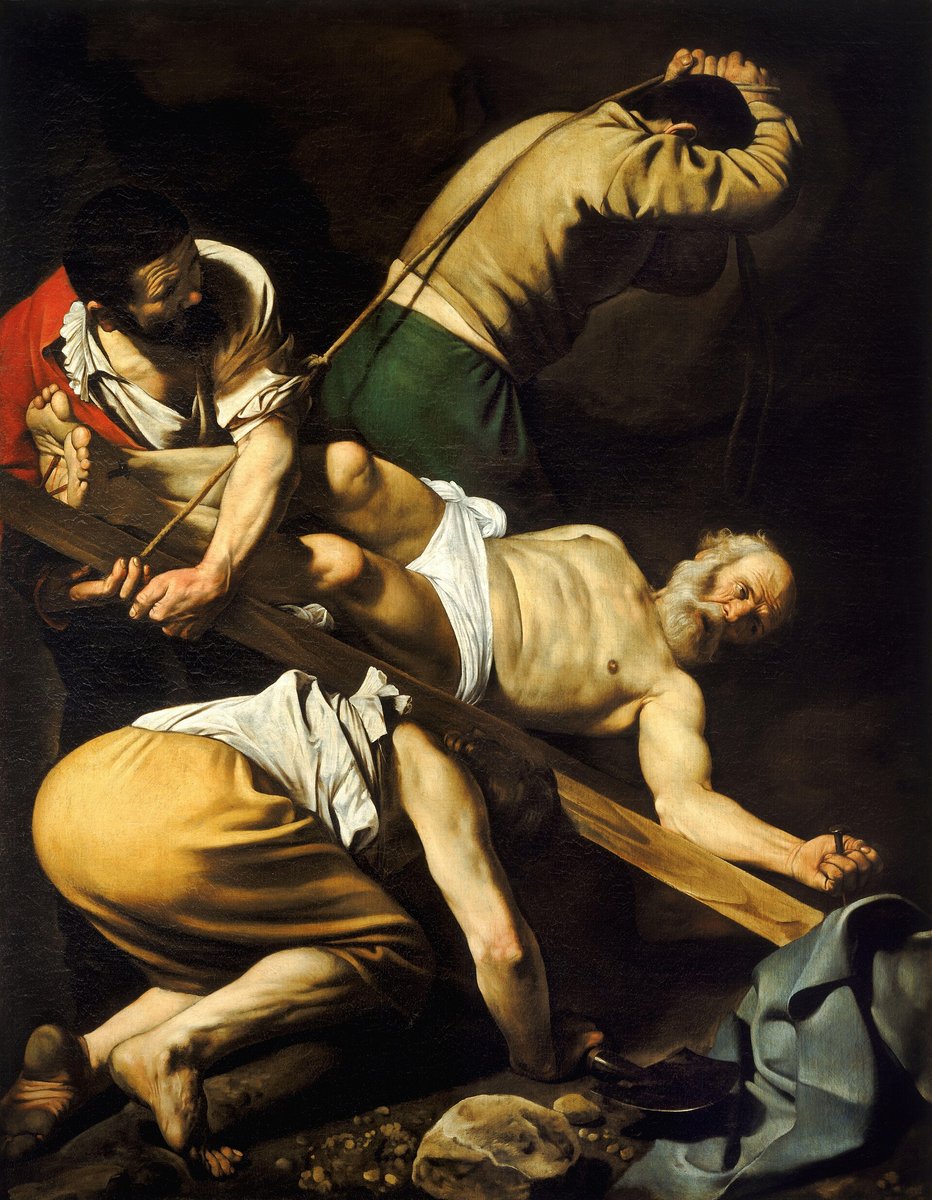
One small emblem of the whole confusion. The inverted cross — shorthand for Satanic menace on a thousand album covers — is the Cross of Saint Peter, a Christian symbol of humility. It comes from the tradition, first recorded in the apocryphal Acts of Peter in the late second century, that Peter asked to be crucified upside-down because he held himself unworthy of dying as his teacher had. It has appeared on the papal chair. It became "Satanic" because horror films needed a quick visual and nobody checked. Most of what the public believes it knows about Satanism has roughly that provenance.
And the human part, which matters most. A very large number of the people on this map were raised Christian. Leaving is not usually revenge; it is usually just leaving. The ones who never finish — who spend thirty years shouting at a building they walked out of — have not actually arrived anywhere. They are still in the pew, facing backwards.