Adjacent practice
Tarot
A fifteenth-century card game that acquired an occult career three hundred years later.
At a glance
- Italy, 1440, as a card game
- Occult reading from 1781
- Egyptian origin story: invented
- Waite-Smith deck, 1909
The historical record on tarot is unusually clear, and it is almost the opposite of what the popular account says.
Where the deck comes from
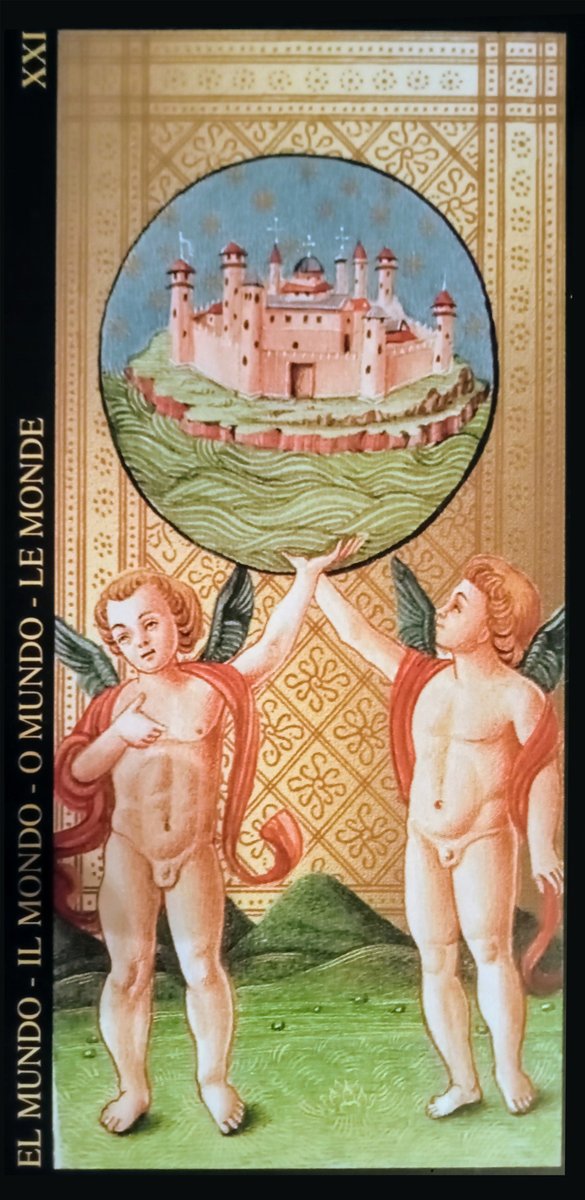
Tarot appears in northern Italy in the 1440s as carte da trionfi: an ordinary playing-card pack with a fifth suit of picture cards added as permanent trumps. The earliest record, from Florence in 1440, notes a pack of triumph cards made as a gift for the condottiere Sigismondo Malatesta. It was a trick-taking game, played for money, and it is still played as one in France, Italy and central Europe.
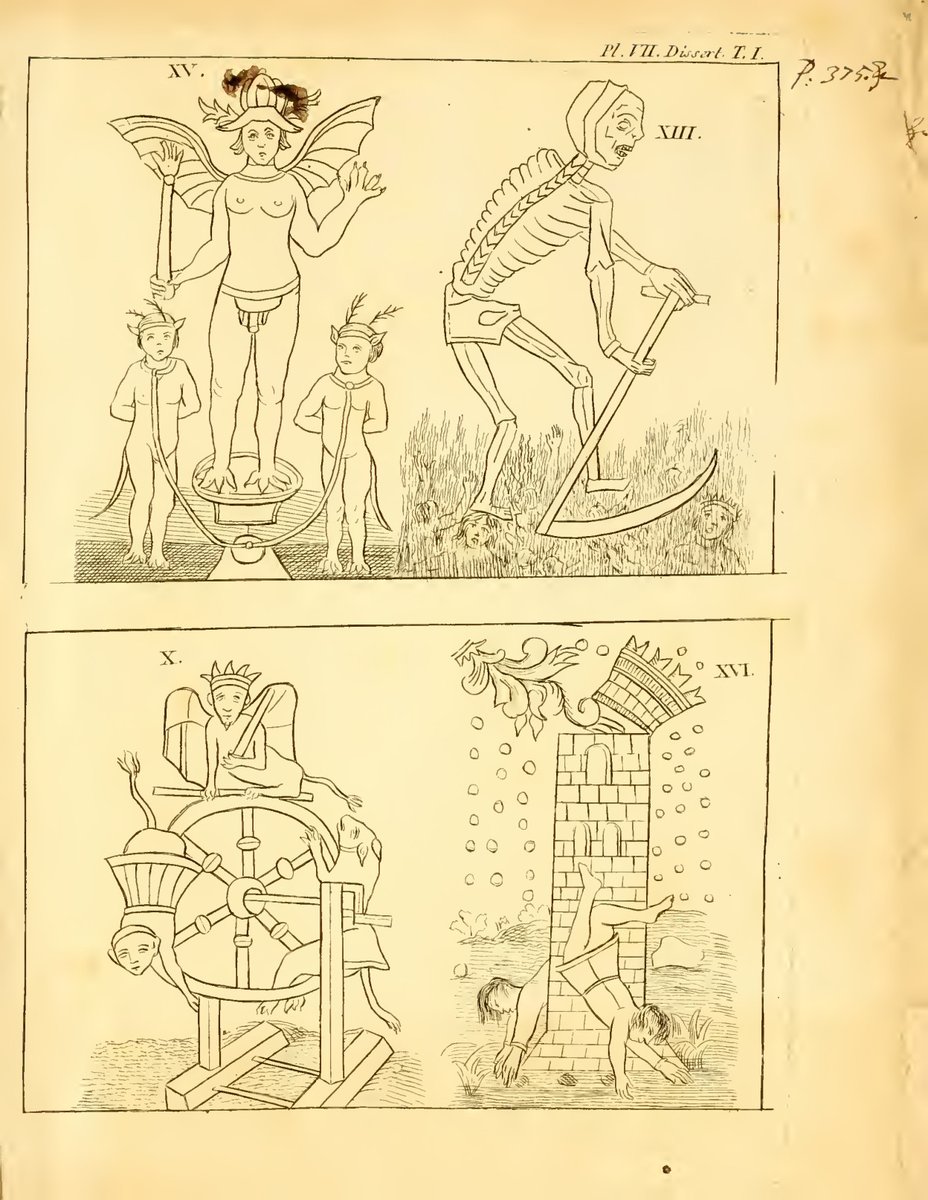
The trump images — Death, the Tower, the Wheel, the Hanged Man — are stock late-medieval allegory of exactly the kind found in church frescoes and triumph processions. Nothing in the fifteenth-century sources treats the pack as occult.
Where the occult reading comes from
It has a date: 1781, when Antoine Court de Gébelin, in his multi-volume Le Monde primitif, declared the deck a surviving fragment of Egyptian priestly wisdom, the Book of Thoth. He offered no evidence, and the Egyptian claim collapsed once Champollion deciphered the hieroglyphs in 1822, but the idea took.
Around 1789 Etteilla produced the first deck made specifically for divination; in the 1850s Éliphas Lévi attached the twenty-two trumps to the twenty-two Hebrew letters; the Golden Dawn systematised the whole correspondence; and in 1909 Arthur Edward Waite and Pamela Colman Smith produced the illustrated pack that shapes nearly every deck sold today. Smith’s fully pictorial minor arcana — with one fifteenth-century precedent, the Sola Busca deck, which she very likely studied — is the single reason modern reading works the way it does.
What that history does not do
It does not make the deck inert. A set of seventy-eight images covering most of what happens to people, drawn at random and read against a question, is a genuine instrument for getting at what you already suspect and have not said. Practitioners divide over whether anything is being contacted or whether the cards are a structured mirror, and the map draws that line as a real one. Tarot works either way, which is part of why it has outlasted every theory attached to it.
There is no Satanism in it, and the Devil card is not evidence of any. It is trump XV, it sits between Temperance and the Tower in a moral sequence, and in nearly every reading tradition it means bondage, compulsion or a bargain that has quietly become a cage — a warning about the thing, not a portrait of a patron.