Diagram
The Tree of Life
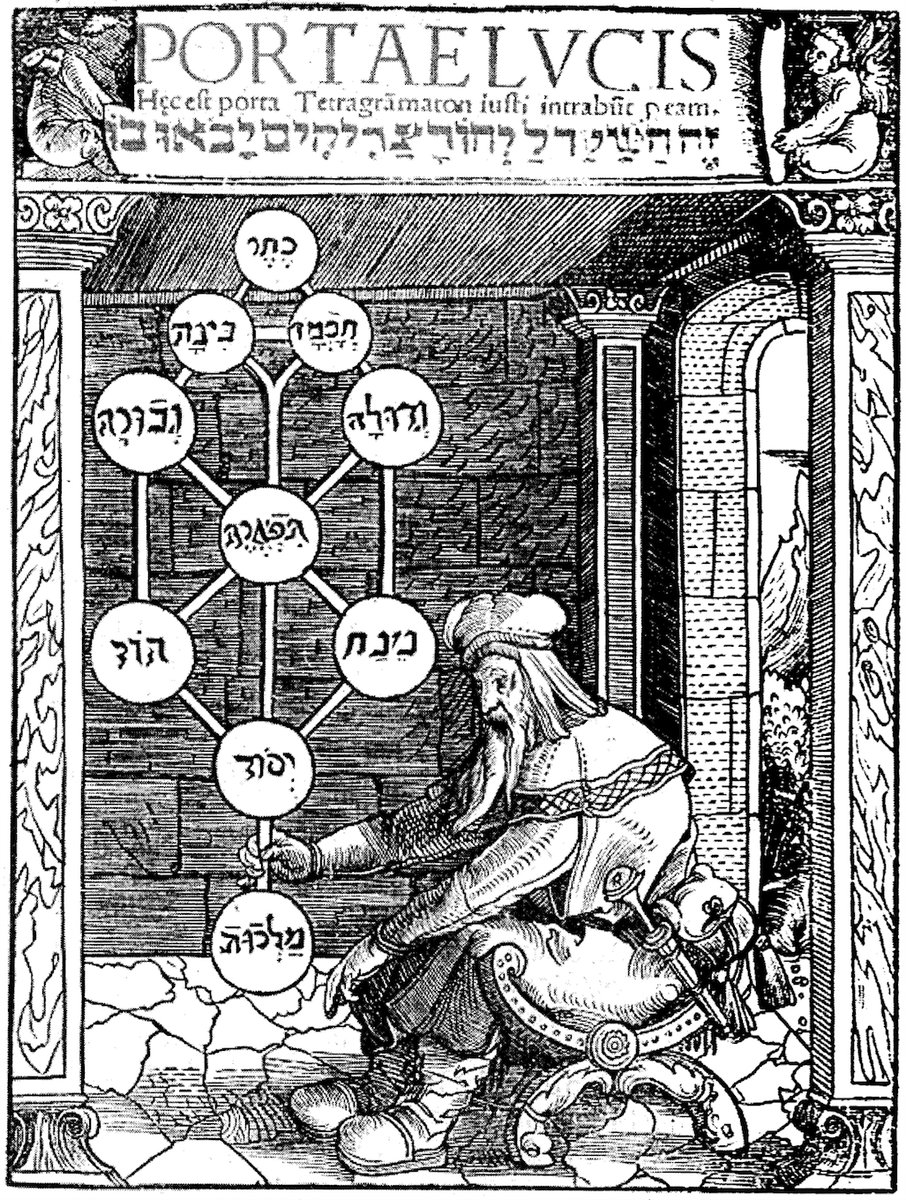
The sephirot; the Etz Chaim; the Kabbalistic Tree
A map of divine emanation from Jewish mysticism — borrowed by Western magic, worked in shadow by the Left-Hand Path, but never satanic at its root.
- Jewish mysticism
- Ten sephirot, 22 paths
- The Zohar and Isaac Luria
- The Golden Dawn borrowed it
The form
Ten circles — the sephirot — joined by twenty-two paths and arranged in three vertical columns, the Pillars of Severity, Mercy and the Middle. It is the same diagram this Vault uses to order the Nine Divinities, and it is read from the crown at the top down to the kingdom at the base, or climbed from the base back to the crown.
What it is
The Tree of Life is the central diagram of Kabbalah, the mystical tradition within Judaism systematised between the twelfth and sixteenth centuries — in the Sefer ha-Bahir, the Zohar of the late thirteenth century, and the school of Isaac Luria at Safed. The ten sephirot (Keter, Chokhmah, Binah, Chesed, Gevurah, Tiferet, Netzach, Hod, Yesod, Malkuth) are the emanations through which the infinite and unknowable Ein Sof brings the created world into being; the twenty-two paths answer to the twenty-two letters of the Hebrew alphabet.
How it left Judaism
From the Renaissance onward, Christian and then Hermetic scholars adapted the Tree into Western esotericism. The Hermetic Order of the Golden Dawn made it the master key of their whole system, mapping tarot, astrology, gods and angels onto its paths; Aleister Crowley built much of Thelemic magic on the same frame. Nearly every occult use of the Tree in the West descends from this borrowing, not from the Jewish source itself.
The shadow side
Behind the ten sephirot the tradition also describes the Qliphoth — the shells or husks, the unbalanced shadow emanations. The modern Left-Hand Path and Demonolatry work this reverse Tree deliberately, treating the Qliphoth as a map of exactly the powers the bright Tree keeps out, which is one reason the whole diagram is sometimes filed by outsiders as dangerous or ‘dark.’
Thirty-two, not ten
The Tree is usually described by its ten sephiroth, but the classical count is thirty-two: ten emanations and twenty-two paths connecting them, together the thirty-two paths of wisdom named in the Sefer Yetzirah. The twenty-two matter because they are the twenty-two letters of the Hebrew alphabet, so the diagram is also a map of language. When the Hermetic Order of the Golden Dawn took the Tree up in the nineteenth century it laid the twenty-two trumps of the tarot onto those same paths, one card per letter per path, and that single act is why tarot and Kabbalah are so tangled together in modern occultism. The pairing is a Victorian invention, not an ancient one.
Where the Vault stands
The Tree of Life is a map of divine emanation and one of the great achievements of Jewish mysticism; that is what it is, first and last. Western magic borrowed it and the Left-Hand Path works its shadow, but the diagram itself is not satanic, and calling it so mistakes the borrowers and the shadow for the source. When it appears here it is doing what it was made to do — ordering the divine into a shape a mind can climb.

- Kabbalah
- Sephirot
- Qliphoth