The Pleroma

- Category
- Gnostic Cosmology
- Origin
- Second-century Christian Gnosticism, above all the Valentinian school (Valentinus, Ptolemy) as reported by Irenaeus of Lyon (c. 180 CE) and Hippolytus of Rome, and the Sethian texts of the Nag Hammadi library; the word itself from the New Testament (Colossians, Ephesians, John)
History & Lore
The Pleroma, Greek for fullness, is the Gnostic name for the complete world of divine light that unfolds from an unknowable first principle. In the Valentinian system reported by Irenaeus it holds thirty aeons in male and female pairs, from Bythos the Depth and Sige the Silence down to Sophia, the youngest, whose passion at its edge sets the fall of the world in motion; the Sethian Apocryphon of John fills it instead with the invisible Spirit, Barbelo, the Self-Generated and four great lights with twelve aeons. Borrowed from the letters of Paul and recast as a heaven of named powers, the Pleroma stands opposite the kenoma, the emptiness, and returned in the twentieth century as Jung's image of an undivided wholeness.
The Pleroma is the name Gnostic teachers of the second century gave to the fullness of the divine world: the whole realm of light that unfolds from an unknowable first principle in a sequence of paired powers called aeons, and beyond which lies everything that is lacking, shadowed and made. Its importance for Gnostic thought is hard to overstate. Almost every other figure of the myth — Sophia who falls, the Demiurge who rules in ignorance, Barbelo who is the first thought of the invisible Spirit, the archons, the spark imprisoned in matter — is defined by its place inside, at the edge of, or outside the Pleroma. Yet there was never a single Pleroma. The Valentinian school counted thirty aeons arranged in pairs and found the number written in the Gospels; the Sethian texts of Nag Hammadi built a different heaven of a virginal Spirit, a first thought, a self-generated son and four great lights; the Pistis Sophia and Basilides drew other maps again. Nearly everything known about the oldest of these systems comes through the books of their opponents, above all Irenaeus of Lyon, and through the codices found near Nag Hammadi in 1945. This entry follows the word from the letters of Paul to the Gnostic schools, sets out the thirty Valentinian aeons in full, describes the Sethian alternative, and ends with the readings of the fullness from Plotinus to Jung.
The Word Before the System
The Greek plērōma comes from the verb plēroun, to fill, and means that which fills or the state of being full: the contents of a vessel, the crew of a ship, the complete number of something. The New Testament gives it theological weight. In the letter to the Colossians all the fullness was pleased to dwell in Christ (Colossians 1:19), and in him dwells the whole fullness of the deity bodily (Colossians 2:9); in Ephesians the church is his body, the fullness of him who fills all in all (Ephesians 1:23); the prologue of John says that from his fullness we have all received, grace upon grace (John 1:16). Paul also speaks of the fullness of time (Galatians 4:4) and calls love the fulfilling of the law (Romans 13:10). In none of these passages is the Pleroma a place or a population; it is the completeness of God present in Christ and, through him, in the community. The Gnostic teachers took this vocabulary — fullness, only-begotten, word, life, truth, grace, church — and turned it into the names of a heavenly world. Irenaeus complained that they did exactly this, reading the Gospels and the letters as a coded description of their aeons.
Valentinus and His School
Valentinus, born in Egypt around 100 CE and teaching in Rome from about 136 to 160, founded the most influential Gnostic school of the second century. His own writings survive only in fragments. The developed system of thirty aeons is known chiefly from the teaching of his followers, especially the circle of Ptolemy, with which Irenaeus of Lyon opens his Against Heresies around 180 CE (Book I, chapters 1–8). Hippolytus of Rome summarises a related version in the sixth book of his Refutation of All Heresies in the early third century, Tertullian retells Irenaeus with Latin names and much sarcasm in Against the Valentinians, and Clement of Alexandria preserves extracts from the Valentinian teacher Theodotus. Since 1945 the Nag Hammadi library has added writings from the Valentinian milieu itself, among them the Gospel of Truth and the Tripartite Tractate, which speak of the Pleroma in their own, more meditative language. Irenaeus stresses that the Valentinians did not agree among themselves; what follows is the version he presents first, together with the variants he and Hippolytus report.
The Unknowable Father and the Silence
At the head of the Ptolemaean system stands a perfect, pre-existent aeon dwelling in invisible and unnameable heights. It is called Proarche, the First Beginning, Propator, the Forefather, and Bythos, the Depth. Uncontainable and invisible, eternal and unbegotten, it remained in deep stillness and quiet through boundless ages. With it was Ennoia, Thought, who is also called Charis, Grace, and Sige, Silence. When Bythos resolved to emit from himself the beginning of all things, he deposited this emission like a seed in Sige as in a womb, and she conceived and brought forth Nous, Mind. Not every Valentinian accepted a consort for the first principle. Hippolytus reports that some held the Father to be without a female, unwedded and solitary, while others gave him Sige as his spouse; and Irenaeus records that Valentinus himself began with a first pair, one called Arrhetos, the Ineffable, and the other Sige (Against Heresies I 11,1). The Depth and the Silence are the two images on which the whole fullness rests: what cannot be grasped, and what cannot be said.
The Ogdoad: Eight Roots of the Fullness
Nous, also called Monogenes, the Only-Begotten, as well as Father and Beginning of All Things, is alone able to comprehend the greatness of the Father. Together with him Aletheia, Truth, was emitted. Bythos and Sige, Nous and Aletheia form the first Tetrad, the root of everything. Nous and Aletheia then emitted Logos, the Word, and Zoe, Life; Logos and Zoe in turn emitted Anthropos, Man, and Ekklesia, the Church. These four pairs make up the Ogdoad, the first eightfold. Ptolemy found them in the prologue of John, where Father, Grace, Only-Begotten, Truth, Word, Life, Man and Church are all named or implied, and Irenaeus quotes this exegesis at length (Against Heresies I 8,5). Each pair is a syzygy, a yoked couple of a male and a female aeon, and the pairing is not ornament. Within the Pleroma nothing exists alone; completeness is relation, and an aeon that acts without its partner begins a disaster.
Ten and Twelve: The Younger Aeons
To glorify the Father, Logos and Zoe emitted ten further aeons in five pairs, the Decad. Irenaeus names them as Bythios and Mixis, Ageratos and Henosis, Autophyes and Hedone, Akinetos and Synkrasis, Monogenes and Makaria: Of-the-Deep and Mingling, Ageless and Union, Self-Grown and Pleasure, Unmoved and Blending, Only-Begotten and Blessed. Latin and English versions write several of them as Bythius, Acinetos, Syncrasis and Macaria. The list reads like a slow descent through the Father's own attributes — depth, agelessness, self-origin, immobility — joined each time to a female power of connection or joy. That Monogenes appears both as a name of Nous and as the ninth aeon of the Decad belongs to the source, not to the copyists. Hippolytus gives the first name as Bythos rather than Bythios and assigns the Decad to Nous and Aletheia, noting himself that some say Nous and Aletheia emitted it and others Logos and Zoe.
Anthropos and Ekklesia emitted twelve aeons in six pairs, the Dodecad: Parakletos and Pistis, Patrikos and Elpis, Metrikos and Agape, Ainos and Synesis, Ekklesiastikos and Makariotes, Theletos and Sophia. In translation they are Advocate and Faith, Paternal and Hope, Maternal and Love, Praise and Understanding, Of-the-Church and Blessedness, Willed and Wisdom. Faith, hope and love stand side by side as the consorts of the first three pairs, an echo of the thirteenth chapter of First Corinthians that no reader of the time could miss. Latin versions spell several names as Paracletus, Patricos, Metricos and Ecclesiasticus; Hippolytus writes Aeinous, Ever-Mind, where Irenaeus has Ainos, and attributes the Dodecad to Logos and Zoe. The last of all the aeons is Sophia, Wisdom, the youngest and furthest from the source, paired with Theletos, the Willed or Desired. Her place at the very edge of the fullness is what makes the next part of the myth possible.
Why Thirty
Eight, ten and twelve make thirty aeons, and the Valentinians found the number written into the life of Jesus. According to Irenaeus (Against Heresies I 1,3) they took the thirty years before the Saviour appeared in public (Luke 3:23) as a sign of the thirty hidden aeons, and read the same number in the parable of the labourers in the vineyard (Matthew 20:1–16), whose workers are hired at the first, third, sixth, ninth and eleventh hours: one, three, six, nine and eleven add up to thirty. The Dodecad they saw in the twelve-year-old Jesus in the Temple and in the choice of the twelve apostles, and the passion of the twelfth aeon in the betrayal by Judas, the twelfth apostle, and in the woman healed after twelve years of suffering (I 3,2–3). Irenaeus spends much of his second book mocking this arithmetic. To its authors it was the point: the visible history of the Saviour was a script of the invisible fullness, and to read it correctly was already to be on the way back.
Sophia's Passion and the Limit
In the Ptolemaean account the trouble begins near the top and breaks out at the bottom. Only Nous could know the Father; the other aeons longed in silence to see their source. Sophia, the last of them, rushed forward without her consort Theletos, seized by a passion that Irenaeus describes as a desire to search into the nature of the Father (Against Heresies I 2,2). She would have been dissolved into the boundless substance had she not met a power that held her back and made her firm outside the unspeakable greatness: Horos, the Limit. Horos is also called Stauros, the Cross, Lytrotes, the Redeemer, Karpistes, the Emancipator, Horothetes, the Setter of Bounds, and Metagoges, the one who leads across (I 2,4). As Stauros he supports and makes firm; as Horos he divides and separates (I 3,5). Sophia was restored to her place, but her intention, her Enthymesis, together with her passion, was separated from her and cast out. Outside the fullness it became the lower Sophia called Achamoth, from the Hebrew word for wisdom, who suffers in places of darkness and emptiness (I 4,1) and from whose passions the world of soul and matter arises. The fuller story of Sophia, her fall and repentance and her many forms in other texts, belongs to the Vault's entry on Sophia.
Christ, the Holy Spirit and the Common Fruit
To keep any aeon from suffering as Sophia had, Monogenes, following the forethought of the Father, emitted a new pair: Christ and the Holy Spirit (Against Heresies I 2,5). Christ taught the aeons the nature of their union and that the Father can be comprehended only through the Only-Begotten; the Holy Spirit taught them to give thanks and brought them into true rest. Thus made equal to one another, the aeons in their joy each contributed what was best and most radiant in itself, and out of these gifts they produced, to the honour and glory of Bythos, a being of perfect beauty, the perfect fruit of the Pleroma: Jesus, also called Saviour and Christ, Logos after his fathers, and the All, because he came from all (I 2,6). With him angels of the same nature were emitted as his bodyguard. Christ and the Holy Spirit are therefore later aeons outside the count of thirty, and Jesus the Saviour is the common fruit of the whole fullness rather than one of its original powers. It is he who later goes out to Achamoth to give her form and to gather the spiritual seed. The Demiurge, formed by Achamoth from the substance of soul, never sees the Pleroma at all and believes himself to be the only god; his figure is described in the Vault's entry on the Demiurge.
The Sethian Fullness: Spirit and Barbelo
A second great map of the fullness comes from the texts modern scholars call Sethian, after Seth, the third son of Adam, whom they regard as the ancestor of the elect. Its best-known witness is the Apocryphon or Secret Book of John, which survives in four Coptic copies — three from Nag Hammadi (Codices II, III and IV) and one in the Berlin Codex 8502 — and whose opening myth Irenaeus already summarises in his chapter on the so-called Barbelognostics (Against Heresies I 29). Here the first principle is the Monad, the invisible virginal Spirit, beyond perfection and beyond being, known only in its own light. As it gazes into the luminous water that surrounds it, its thought becomes active and stands before it: Barbelo, the first thought, the Pronoia or Forethought of the All, the image of the invisible Spirit and the womb of everything, called also Mother-Father, the first Man and the thrice-male. At Barbelo's request the Spirit grants Foreknowledge, Indestructibility, Eternal Life and Truth, and with her they form what the text calls the pentad of the aeons of the Father, a fivefold that, counted in its male and female aspects, becomes a decad. Barbelo has her own entry in the Vault.
Autogenes and the Four Lights
Barbelo gazes into the Spirit and conceives a spark of light: the Only-Begotten, called the divine Autogenes, the Self-Generated, and identified with Christ. He is anointed with the Spirit's goodness and joined by Mind, Will and Word. From Autogenes come the four great lights, each attended by three aeons, twelve in all. Harmozel, the first, stands with Grace, Truth and Form; Oroiael, the second, with Conception, Perception and Memory; Daveithai, the third, with Understanding, Love and Idea; Eleleth, the fourth, with Perfection, Peace and Sophia. The names of the lights vary with the copy and the translator — Armozel, Oriel, Daveithe — but their order does not. In the first aeon, with Harmozel, stands the perfect Man, Adamas, whom the Spirit names Pigeradamas or Geradamas, a name whose meaning is disputed; in the second, with Oroiael, his son Seth; in the third, with Daveithai, the seed of Seth, the souls of the saints; in the fourth, with Eleleth, the souls of those who did not know the Pleroma at once and repented only later. Sophia is the last of the twelve aeons of the lights. When she conceives a thought of her own without the consent of the Spirit and without her consort, her work becomes Yaldabaoth, and the Sethian fall begins where the Valentinian one does: at the outermost edge of the fullness.
Other Maps of the Fullness
Not every Gnostic text uses the word, and those that do disagree about what it contains. In the Pistis Sophia, a long Coptic dialogue between the risen Jesus and his disciples preserved in the Askew Codex, which the British Museum acquired in 1785, the highest region is the Treasury of Light, with still greater mysteries beyond it. Below lie the thirteen aeons. In the thirteenth dwelt Pistis Sophia, Faith-Wisdom, until she longed for the light above, was deceived by a false light sent by the arrogant power Authades, the Self-Willed, and sank into chaos, from which Jesus leads her back through her thirteen songs of repentance. Basilides of Alexandria, teaching in the reign of Hadrian, described in Irenaeus' account (Against Heresies I 24,3–7) an unbegotten Father from whom Nous was born, from Nous Logos, from Logos Phronesis, from Phronesis Sophia and Dynamis, and from these the powers, principalities and angels who made heaven after heaven until there were three hundred and sixty-five, governed by a ruler whose name holds that number: Abraxas, to whom the Vault gives an entry of his own. These systems share an idea rather than a list: a graded world of light, counted, named and ordered, between the source and the place where human beings now stand.
Fullness and Emptiness
The Pleroma is defined by what lies outside it. Gnostic language calls that outside kenoma, emptiness, or hysterema, deficiency: the realm where Achamoth suffers and the Demiurge builds, and from which the spiritual seed must be gathered back. The Gospel of Truth teaches that the deficiency came about because the Father was not known and will vanish when he is known, as darkness vanishes when light appears. Opponents seized on the image. Irenaeus asked in his second book what could possibly surround a fullness, and whether a Pleroma that had an outside was full at all. In the 260s Plotinus wrote the treatise that Porphyry placed in the second Ennead under the title Against the Gnostics (Enneads II 9). His target was not Valentinus but Gnostics in his own Roman circle who read revelations such as Zostrianos and Allogenes (Porphyry, Life of Plotinus 16). Plotinus objects that they multiply principles without need, invent a new vocabulary of sojournings, antitypes and repentances, despise the visible cosmos and its maker, and claim for themselves a place above the heavens. For the Platonist the intelligible world was one and the visible world its beautiful image; for the Gnostic the true fullness stood apart from a world that was its shadow.
From Jung to the Modern Gnostics
The Pleroma returned to modern thought through scholarship and through the unconscious. In 1916 Carl Gustav Jung privately printed the Septem Sermones ad Mortuos, the Seven Sermons to the Dead, under the name of Basilides in Alexandria. The first sermon begins with a nothingness that is the same as fullness: the Pleroma, in which every opposite is contained and cancelled, and which has no qualities because it has all of them. Against it stands Creatura, the created world, whose essence is distinctiveness; to be a creature is to differ, and to lose that difference is to dissolve. The later sermons name Abraxas as the god who stands above the god and the devil. The text appeared in 1962 as an appendix to the German edition of Jung's memoirs, Memories, Dreams, Reflections, and within the closing part of the Red Book published in 2009. Through Jung the pair passed to the anthropologist Gregory Bateson, while the French archivist Jules Doinel, who founded an Église Gnostique in 1890, and the Gnostic churches and authors who followed him made the aeons part of a living religious practice again.
Where the Vault Leaves It
What the sources allow is clear in outline and uncertain in detail. The word plērōma belongs to Paul and John before it belongs to the Gnostics; the thirty paired aeons of the Valentinian system are attested by Irenaeus and Hippolytus with small but real differences in names and parentage; the Sethian fullness of the invisible Spirit, Barbelo, Autogenes and the four lights stands in the Apocryphon of John in four copies that do not agree in every name; and other texts drew other maps. Whether the aeons were meant as beings, as attributes of God, as stages of contemplation or as an allegory of the soul cannot be decided from outside, and their authors may not have wanted it decided. The Vault records the fullness as each tradition counted it, sets the variants side by side, and leaves to the reader the question of what, if anything, the names describe.
Appearance
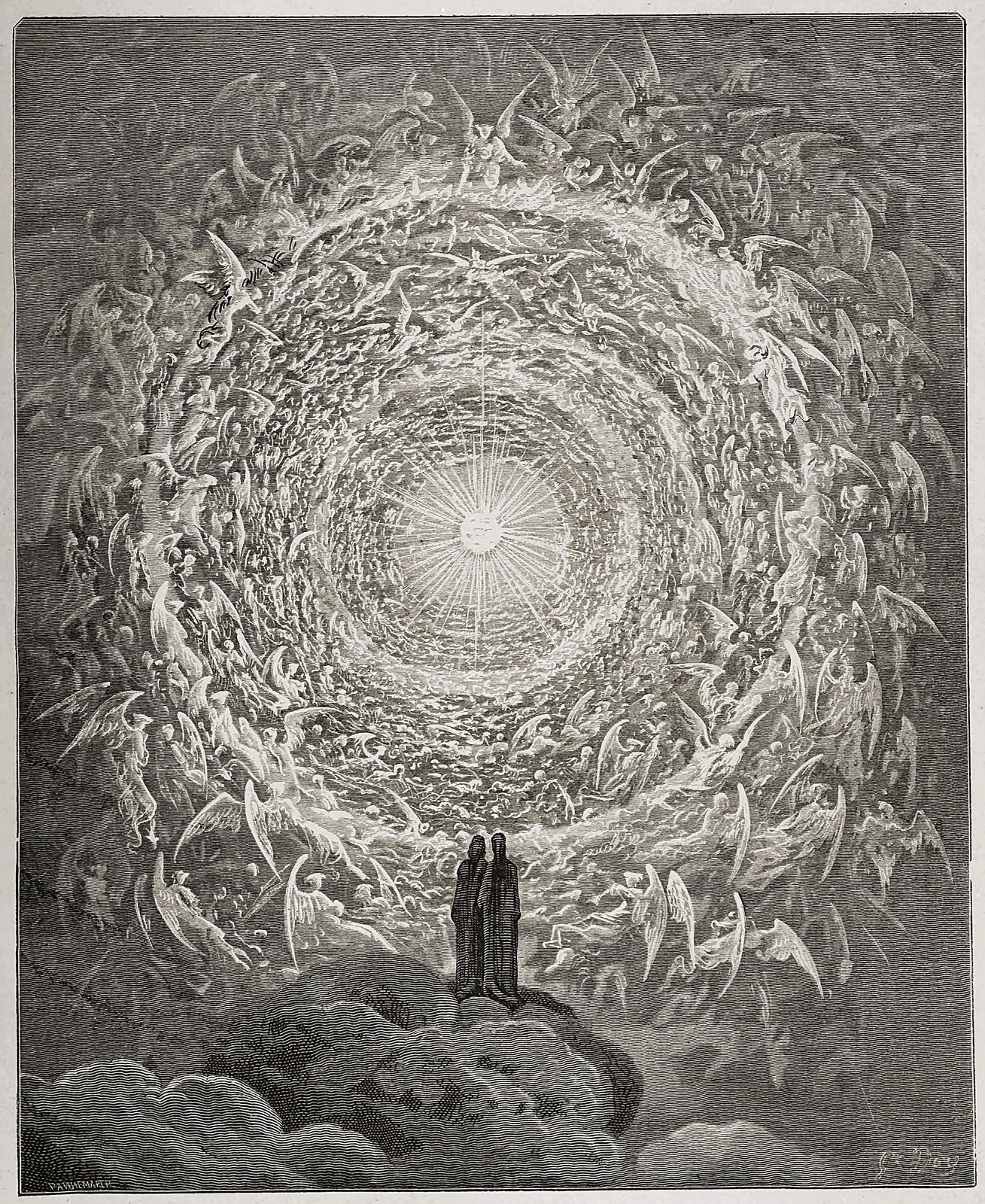
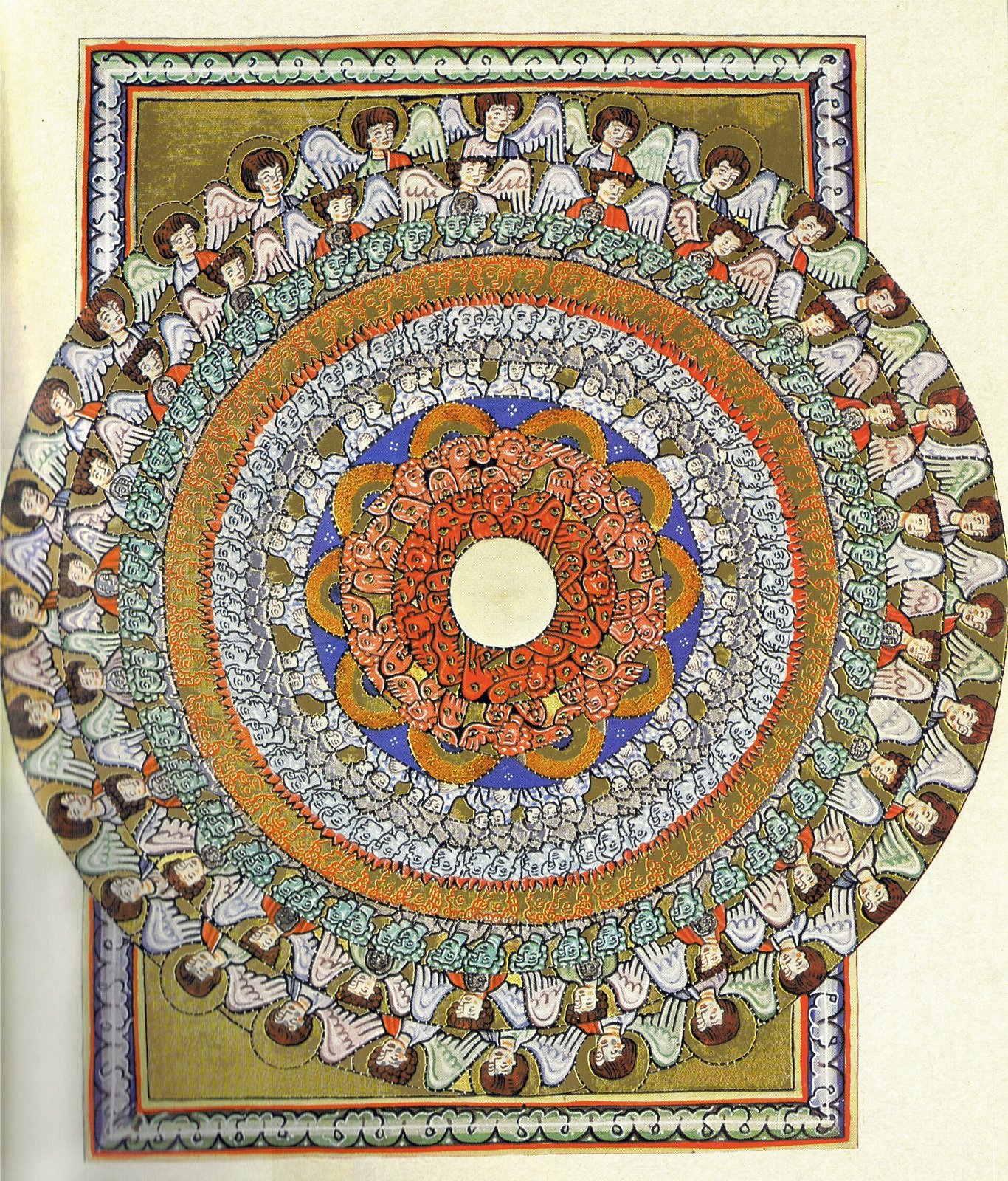
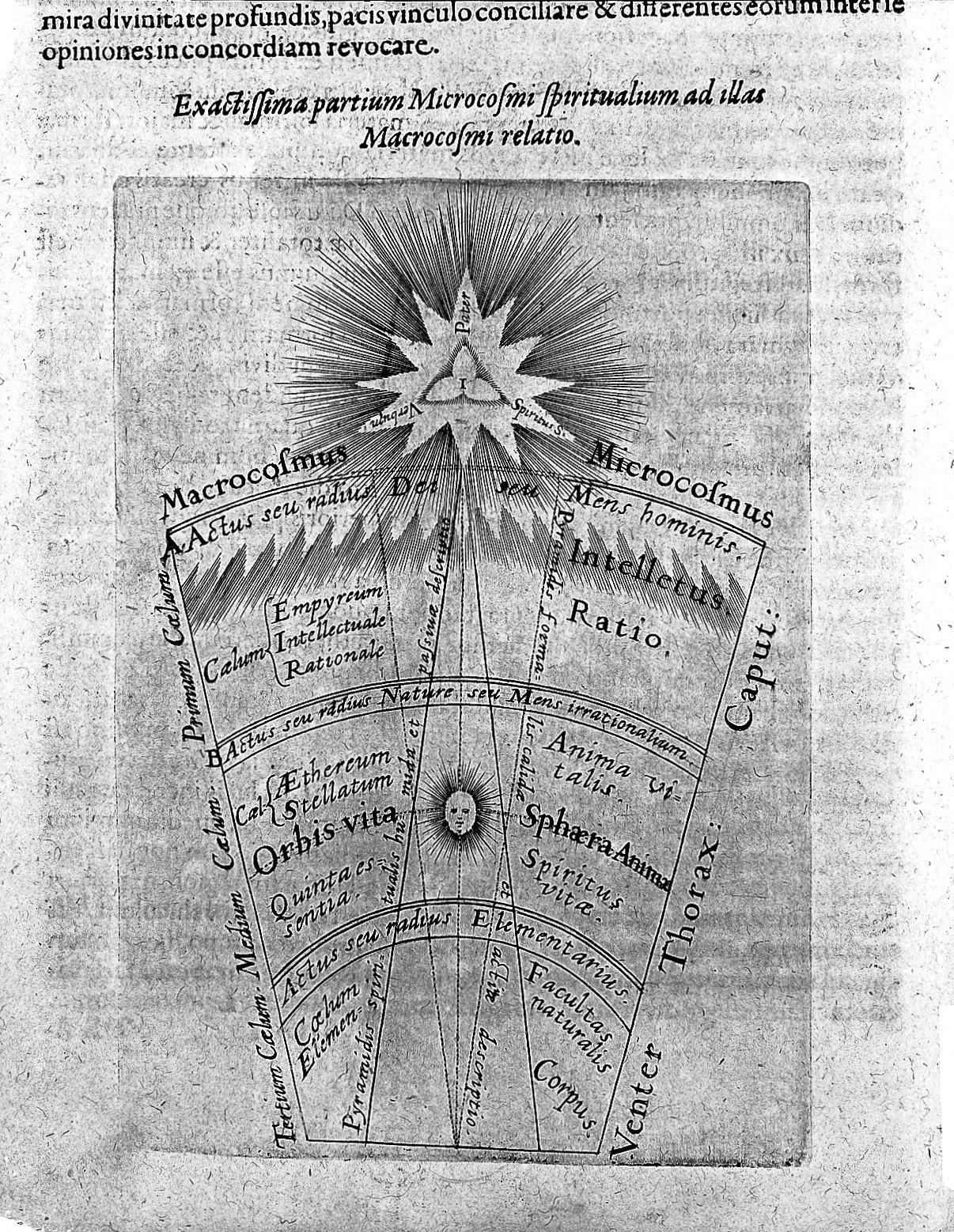
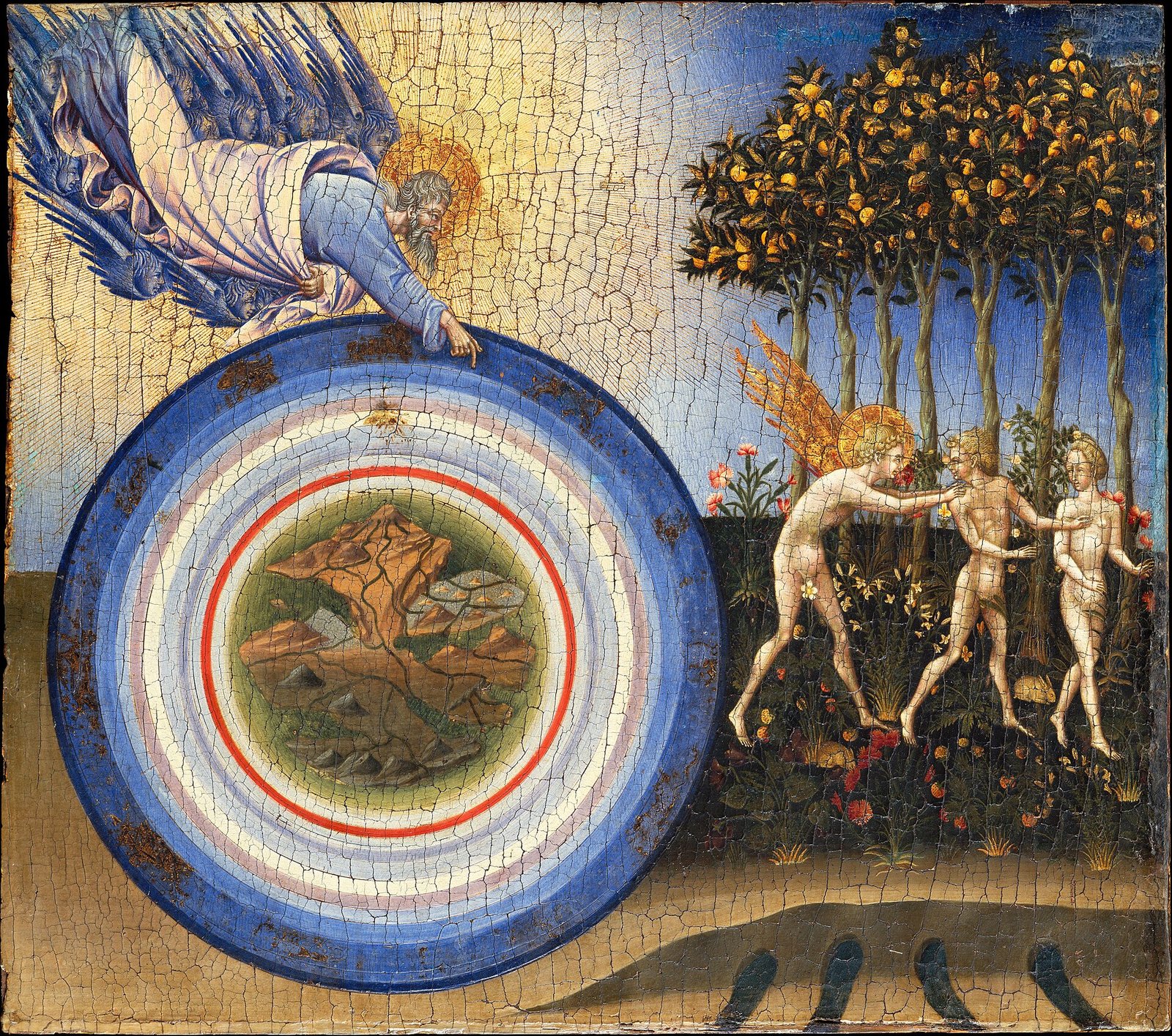
None in the strict sense: the Pleroma is invisible and beyond form. The texts describe it in images of light, depth and silence — a boundless realm of radiance around the unknowable Father, filled with paired aeons; in the Apocryphon of John the invisible Spirit is surrounded by luminous living water in which Barbelo appears as its reflected thought, and four great lights stand around the Self-Generated
Powers
- Containing the totality of the divine
- Emitting the aeons in pairs from the unknowable source
- Setting the Limit between fullness and emptiness
- Producing the Saviour as the common fruit of all the aeons
- Receiving back the spiritual seed at the restoration
Also Known As
Pleroma, Plērōma, The Fullness, The Fullness of the Godhead, The Aeonic Realm, The Thirty Aeons, The Treasury of Light
Attributes
- Fullness
- Light
- Emanation
- The syzygy
- Silence
- Return
Symbolic Correspondences
- Elements: Light and aether; water in the Sethian image of the Spirit's luminous spring
- Colours: Pure light without colour in the texts; in modern Gnostic and esoteric art usually white and gold against the darkness of the Depth
- Numbers: Thirty — the Valentinian aeons (eight, ten and twelve); eight — the Ogdoad; four lights with twelve aeons in the Sethian system; thirteen aeons in the Pistis Sophia; three hundred and sixty-five heavens in Basilides
- Associations: Bythos and Sige, Nous and Aletheia, the syzygy, Horos and Stauros, Sophia and Achamoth, Christ and the Holy Spirit, Barbelo, Autogenes, the four lights, the kenoma, the Treasury of Light, Abraxas, Plotinus, Jung's Pleroma and Creatura
The Figure, Symbol by Symbol
- Bythos, the Depth: The first principle is not a throne but an abyss: unfathomable, uncontainable, prior to every name. Calling the highest God the Depth puts the source of the fullness beneath all knowing rather than above it, and makes every aeon a step out of that depth into form.
- Sige, the Silence: Before anything is uttered there is silence, and in the Valentinian system the silence is the womb in which the first emission is conceived. The Word comes later, as the third pair. Speech about God begins, in this reading, with what cannot be spoken.
- The Syzygy: Every aeon has its partner, male and female yoked together. The pair is the basic unit of the fullness: completeness means relation, and Sophia's fall begins at the moment she acts alone. Redemption in Valentinian thought is accordingly imagined as a reunion, a marriage restored.
- The Number Thirty: Eight, ten and twelve make thirty, the years of Jesus' hidden life and the sum of the hours in the parable of the labourers. The number turns the Gospel into a cipher of heaven and the whole fullness into something that can be counted, learned and recited.
- Horos and Stauros: The Limit that holds Sophia back is also the Cross. As limit it separates the fullness from what does not belong to it; as cross it supports and makes firm. One figure carries both meanings of a boundary: what shuts out and what holds together.
- The Four Lights: Harmozel, Oroiael, Daveithai and Eleleth, each with three aeons, give the Sethian Pleroma a fourfold architecture in which the heavenly Adamas, Seth, his seed and the late-repentant souls each have their place. Humanity, in this map, is already housed in heaven before it is made on earth.
- Fullness and Emptiness: The Pleroma is only fully understood against the kenoma, the emptiness or deficiency outside it. The pair names the Gnostic experience of the world as a place of lack and of the spirit as a stranger from a fuller home.
Reading the Whole
Read as a whole, the Pleroma is less a picture than an ordering: a way of saying how an unspeakable source can become many without ceasing to be one, and how the many can fail. Its images are depth and silence at the top, pairs of powers in the middle, a limit at the edge and an emptiness beyond. The Valentinians gave this ordering thirty names and the Sethians four lights with twelve aeons; Basilides counted three hundred and sixty-five heavens and the Pistis Sophia thirteen aeons below the Treasury of Light. The details differ, but the structure is the same: a fullness, a breach at its outer rim, and a return.
That is why the Pleroma has outlived the schools that taught it. Jung read it as the undivided wholeness from which every individual must distinguish itself, Bateson as the world of forces against the world of information, the modern Gnostic churches as the home to which the spirit is called back. Each reading takes the same old map and finds on it the place where it believes the human being now stands.
Theological Significance
In Gnostic theology the Pleroma answers the question of how a perfect and unknowable God relates to an imperfect world without being its author. Between the two it sets a whole society of divine powers, each a little further from the source, so that the fault which produces the world arises at the edge of the divine rather than at its centre. The Pleroma is at once the true home of the spirit, the measure by which the visible cosmos is judged deficient, and the goal of redemption.
Emanation Instead of Creation
The aeons are not made from nothing; they are emitted, projected from the Father as a thought from a mind or a ray from light. Irenaeus attacked this language of emission in his second book as importing human passions into God. For the Valentinians it expressed the opposite: that everything in the fullness is of one substance with its source, that knowing the Father is the life of the aeons, and that the spiritual human being shares that substance and can return to it.
Pairs, Rest and Restoration
The syzygies make relation the basic form of divine life: nothing in the Pleroma acts alone, and Sophia's fall begins when she does. Redemption is therefore imagined as reunion — the spiritual seed with the angels of the Saviour, Achamoth with the Saviour as her bridegroom, the scattered with the whole — and the Gospel of Philip speaks of a sacrament of the bridal chamber that may have enacted it. The end is the restoration, when what was cast out is gathered in, deficiency ceases and the fullness is complete again.
Sophia, Barbelo and the Demiurge
Three figures with entries of their own in the Vault are defined by their place in the fullness. Sophia is its last and youngest aeon, whose desire to know the source breaks its order and whose repentance begins its healing. Barbelo, in the Sethian texts, is the first emanation of the invisible Spirit, the mother of the Pleroma and the image through which everything else comes to be. The Demiurge stands wholly outside: born from the passion of Sophia or Achamoth, he shapes the visible world in ignorance of the Pleroma and copies its order in his own lower heavens. Read together, they mark the beginning, the edge and the outside of the fullness.
Practical Application
The Pleroma is not a spirit and has no seal, enn or rite of evocation in any grimoire. In antiquity its names served teaching, scriptural exegesis and, among the Valentinians, rites of initiation whose details are only partly known, while Sethian texts such as Zostrianos and Allogenes describe visionary ascents through the aeons. Within the Vault the Pleroma is approached as a map for study and contemplation, not as a power to be summoned.
As a contemplative structure, the thirty Valentinian aeons can be read as a sequence of attributes from the unspeakable Depth down to Wisdom, and the Sethian lights as stations of descent and return. Practitioners on modern Gnostic and Jungian paths use such maps to reflect on the movement from undivided wholeness to individual distinction and back, in the spirit of Jung's contrast between Pleroma and Creatura. The work needs no ritual equipment and can be carried out through reading, journaling or silent meditation.
Modern Interpretations
Since the nineteenth century the Pleroma has been read as metaphysics, as psychology, as a model of information and as a living religious teaching, and the readings below are recorded as their proponents hold them.
Jung: Pleroma and Creatura
For Carl Gustav Jung the Pleroma became a name for the undifferentiated whole that precedes and surrounds every conscious individual. In the Seven Sermons to the Dead of 1916 it is the nothingness that is also fullness, where good and evil, light and darkness, force and matter cancel each other out; Creatura is the realm of distinction, and the human task is to remain distinct rather than sink back into the undivided. Jung's later psychology of individuation, and the publication of the Red Book in 2009, gave this early text a wide readership, and Stephan A. Hoeller's The Gnostic Jung and the Seven Sermons to the Dead (1982) read it as a modern Gnostic revelation.
Bateson: Difference as Information
The anthropologist and systems thinker Gregory Bateson took Jung's pair into the theory of communication. In the essays collected in Steps to an Ecology of Mind (1972) he used pleroma for the world of physical forces and impacts, in which there are no distinctions, and creatura for the world of mind and living organisation, in which effects are brought about by difference — a difference that makes a difference being his definition of information. The ancient word thus became a technical term in cybernetics and ecology.
The Gnostic Revival
In 1890 the French archivist Jules Doinel founded an Église Gnostique after visionary experiences, reviving Gnostic titles and the veneration of Sophia, and a number of Gnostic churches descend from that and later foundations, among them the Ecclesia Gnostica in Los Angeles, long led by Stephan A. Hoeller. The English edition of the Nag Hammadi library in 1977 made the Sethian and Valentinian texts widely available, and modern esoteric and neo-Gnostic writers have since taught the aeons as stations of the soul's ascent, the Pleroma as the soul's true home, and the visible world as the kenoma from which it is called back.
The Scholars' Fullness
Academic study read the Pleroma in changing ways. Hans Jonas, in Gnosis und spätantiker Geist (1934) and The Gnostic Religion (1958), saw in it the expression of an existential estrangement from the world. Hans-Martin Schenke in the 1970s defined Sethianism as a distinct tradition with its own fullness of Barbelo, Autogenes and the four lights. Michael A. Williams (1996) and Karen L. King (2003) then questioned whether Gnosticism was ever one religion at all, so that today the Valentinian and Sethian Pleromas are usually studied as separate constructions with shared roots in Platonism, Jewish wisdom speculation and early Christian exegesis.
Across these readings one thread holds: the Pleroma is understood as the wholeness from which the present world is somehow separated, and each reading locates that separation — and the way back — in a different place: in heaven, in the psyche, in information or in history.
Sources & Historical Texts
- New Testament — Colossians 1:19; 2:9; Ephesians 1:23; John 1:16
- Irenaeus of Lyon — Against Heresies I 1–8, 11, 24, 29 and Book II (c. 180)
- Hippolytus of Rome — Refutation of All Heresies, Book VI (early 3rd c.)
- Tertullian — Against the Valentinians (early 3rd c.)
- Clement of Alexandria — Excerpts from Theodotus
- Epiphanius of Salamis — Panarion 31 (c. 375)
- Gospel of Truth — Nag Hammadi Codex I,3
- Tripartite Tractate — Nag Hammadi Codex I,5
- Apocryphon of John — Nag Hammadi Codices II,1; III,1; IV,1; Berlin Codex 8502,2
- Pistis Sophia — Askew Codex (British Library, Add. MS 5114)
- Plotinus — Enneads II 9, Against the Gnostics (3rd c.)
- Porphyry — Life of Plotinus 16
- C. G. Jung — Septem Sermones ad Mortuos (1916)
- Hans Jonas — Gnosis und spätantiker Geist (1934); The Gnostic Religion (1958)
- Gregory Bateson — Steps to an Ecology of Mind (1972)
- Stephan A. Hoeller — The Gnostic Jung and the Seven Sermons to the Dead (1982)
- Michael A. Williams — Rethinking Gnosticism (1996)
- Karen L. King — What Is Gnosticism? (2003)