The Two Paths
The Left-Hand Path
The self as its own authority — self-deification, not submission.
At a glance
- A path, not a religion
- Name from Tantric vāmācāra
- Wider than Satanism
- The Vault walks it
The Left-Hand Path is a spiritual orientation, not a religion: a family of traditions defined by where they place authority. It is not a synonym for Satanism, and it is wider than it — but every current on this map with real philosophical weight walks it. Its defining move is the location of authority, and the Left-Hand Path puts it in the self.
Not “the self may do as it likes” — that is the caricature, and it is the opposite of the discipline the path actually asks for. The claim is that you are the one who decides, who tests, who is answerable, and who does not hand that responsibility to a book, a priest, or a god.
What the path holds
From that single move the rest follows. Self-deification: the goal is not to dissolve into the divine but to become divine — to keep and perfect the individual awareness rather than surrender it. Antinomianism: the deliberate breaking of received moral rules, not for the thrill but as a method, because a rule you have never questioned is a rule you have never actually held. Integration rather than transcendence: the body, the appetites, the shadow, the anger are not obstacles to escape but parts of a self to be known and included.
Where the name comes from
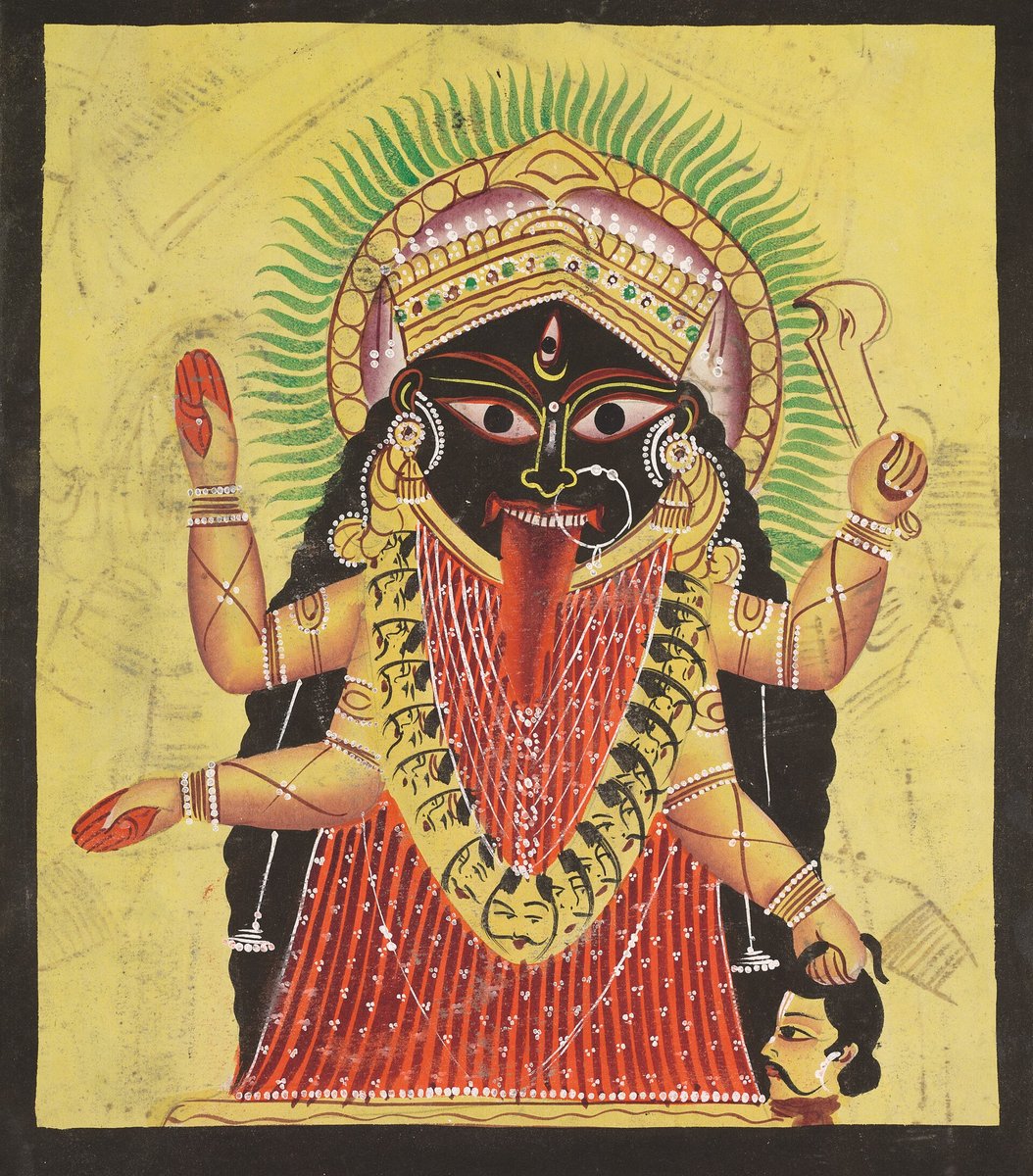
The name comes from the Sanskrit vāmācāra, “left-hand conduct”: a strand of Tantra that reversed the orthodox rules on purpose. Substances and acts forbidden to the pious — wine, meat, fish, sexual union — were taken up deliberately, as means of liberation rather than as lapses. Its counterpart was dakṣiṇācāra, the right-hand conduct that kept the rules intact.
The terms reached the West through Helena Blavatsky and Theosophy in the late nineteenth century, and picked up their sinister flavour in transmission: Theosophy used the Left-Hand Path as a name for black magic and cast its followers as sorcerers working against spiritual progress. The sense that survived the repainting is still the original one — a path that breaks the received rules on purpose, as method.
Who walks it today
In the twentieth century the name was reclaimed by the people it had been aimed at. Anton LaVey used it for the Satanism of his Church of Satan (1966); Michael Aquino's Temple of Set (1975) made it central to its initiatory teaching; the Swedish order Dragon Rouge (1989) built its system on it; and Stephen Flowers traced its history from Tantra to the modern orders in Lords of the Left-Hand Path. Today it also names a wide field of independent practitioners, demonolaters among them, who belong to no order at all.
And the honest part: it is harder than it sounds. It is far easier to be told what is good than to work it out yourself and then carry the answer. The Left-Hand Path removes the person you could blame.