The Region
Satan as Symbol
Atheistic Satanism — Satan is not a being but a banner.
At a glance
- Region: the left half
- Atheistic Satanism
- Church of Satan 1966 · Satanic Temple 2013
- Holds LaVeyan · TST · Aesthetic · Trend
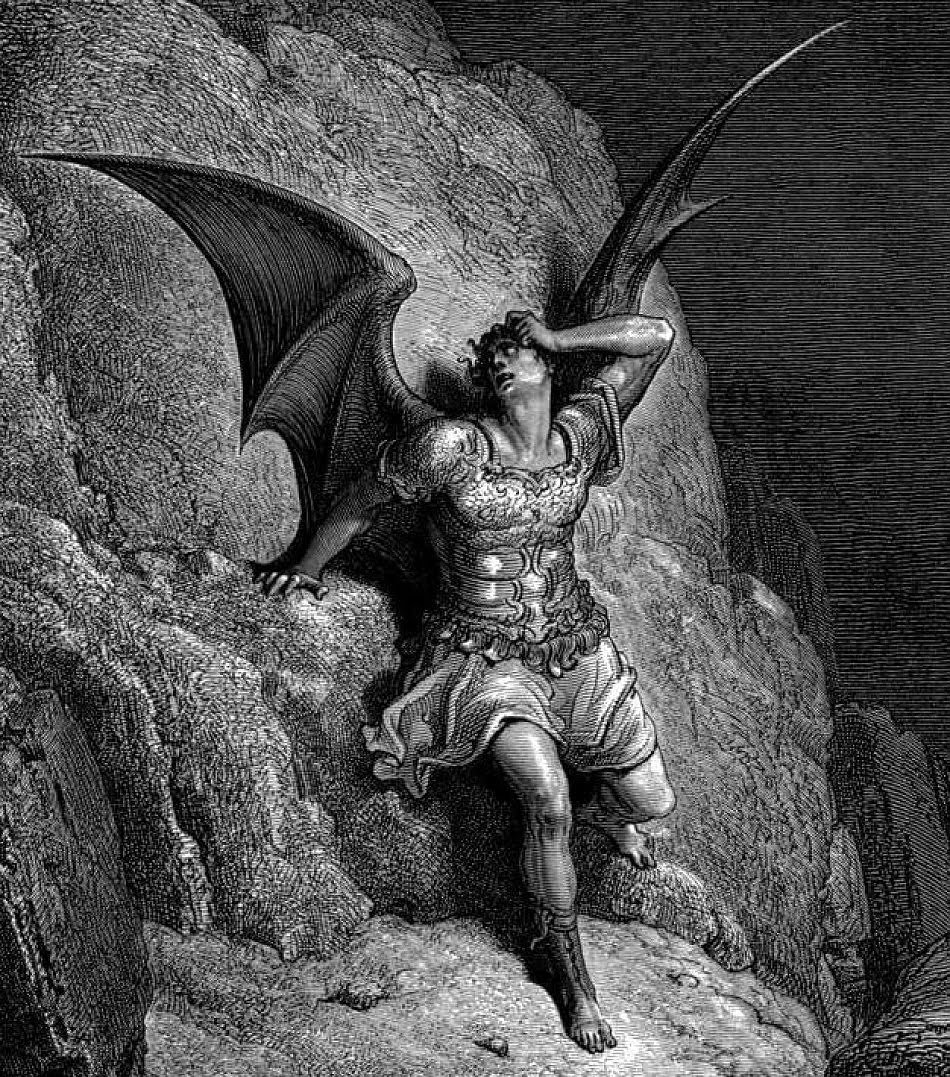
The whole left half of the field belongs to those for whom Satan does not exist and was never meant to. Here Satan is a symbol, a literary figure, a deliberate provocation — an emblem of exactly the qualities the accusing religions filed under sin: pride, appetite, questioning, the refusal to kneel.
The atheistic Satanist is, in the plainest terms, an atheist. They do not believe in Satan any more than they believe in God. What they take from the figure is a stance. The names vary — atheistic, symbolic, rationalist, non-theistic Satanism — but the position is the same.
Where it comes from
The stance is older than any Satanist organisation. Milton's Paradise Lost (1667) gave the West a Satan with the best speeches in the poem; the Romantics — Blake, Shelley, Byron — read him as the rebel against tyranny; nineteenth-century radicals and poets took him up as an emblem of freedom and of reason against the Church. None of them worshipped anything. They had found a figure that said no.
The organised form came in 1966, when Anton LaVey founded the Church of Satan in San Francisco and, in The Satanic Bible (1969), made Satan a symbol of human carnal nature. The Satanic Temple, founded in 2013 by Lucien Greaves and Malcolm Jarry, gave the same symbol an activist, political reading. Between them they make up most of what the public knows as Satanism; around them stand the aesthetic and the trend, which share the imagery but not always the thought.
Why this name
So why choose so loaded a symbol? Because it is loaded. To take the name your culture reserves for its worst fear and wear it on purpose is to refuse the frame that made it fearful — to say that the thing called wicked (self-trust, doubt, the body, the appetite, the hunger to know) was never wicked at all, and that the naming was the crime.
The strength of this half of the map is its honesty: it claims nothing supernatural and can be argued for in daylight, on the same terms as any other philosophy. It is also, almost entirely, the public face of Satanism — nearly everyone who believes they have met Satanism has met the left of this field and never learned there was more of it.
The objection from the other half
The Vault's quarrel with this half. It is a real one, and it should be stated rather than buried in a footnote. Declaring the question settled — there is nothing there, there was never anything there — is not the absence of a metaphysical claim. It is a metaphysical claim, made with no more evidence than the one it dismisses, and then treated as the neutral default because it happens to be the fashionable one.
The sharper version of the objection is about method: the atheistic Satanist has decided in advance what any experience is permitted to mean. When someone reports having met something, the answer is ready before the account is heard — it was your psyche, it was pareidolia, it was the ritual working on you. Any of that may be true. But an explanation that would be produced no matter what happened is not an explanation. It is a policy.
And there is one more thing, which this half of the map does not enjoy hearing. A Satan who is only a symbol is a symbol of the character Christianity wrote — the rebel, the tempter, the adversary, cast in the role they cast him in. You have kept their character and declined their cosmology, which is a strange half of the inheritance to accept. The other half of the field at least claims to have met someone.