Atheistic · Activist
The Satanic Temple
Founded 2013. Non-theistic and activist: Satan as the rebel against tyranny.
At a glance
- Lucien Greaves · Malcolm Jarry, 2013
- Non-theistic · activist
- The Seven Tenets
- Recognised as a church by the IRS, 2019
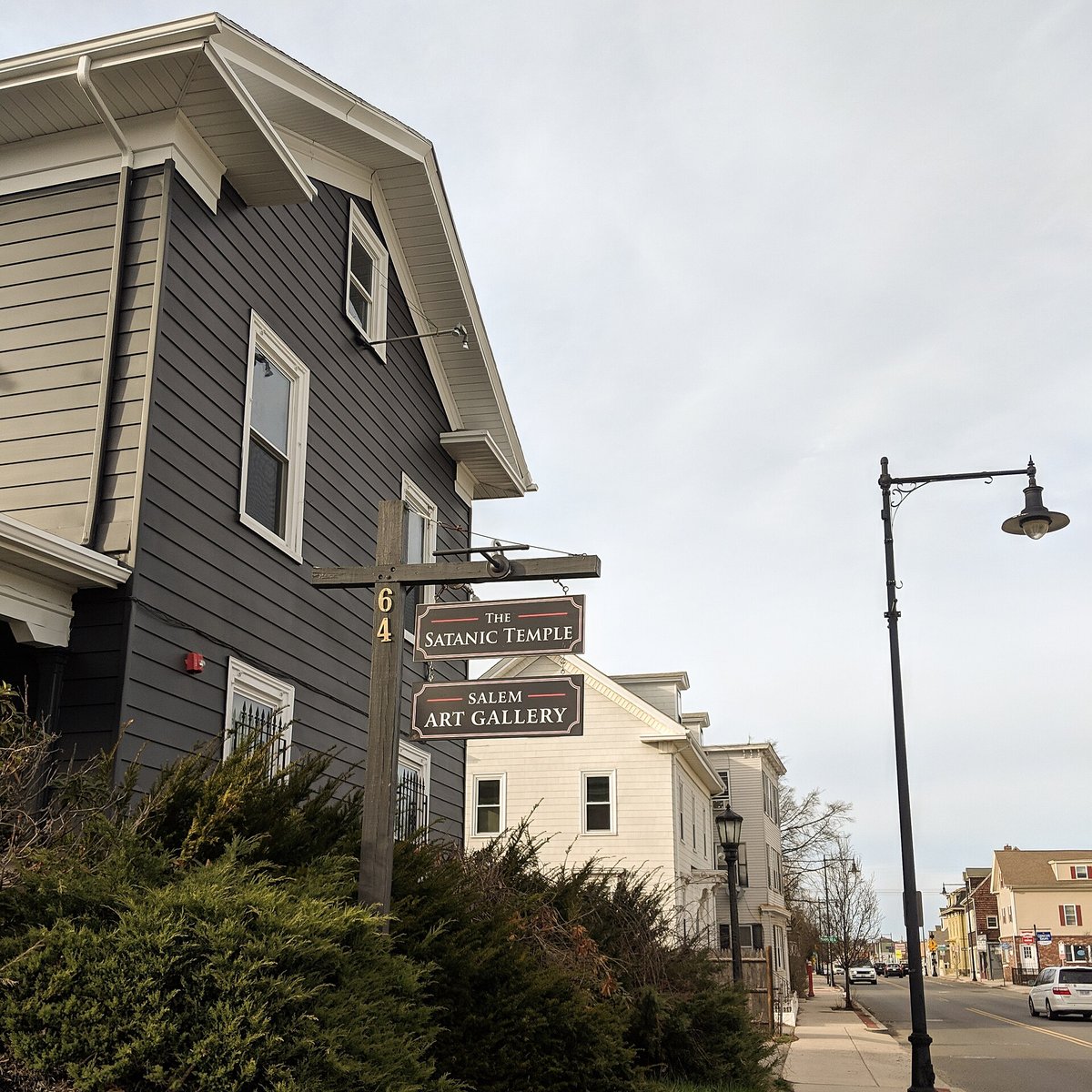
The Satanic Temple, founded in 2013 by Lucien Greaves and Malcolm Jarry — both names adopted for the work — and based in Salem, Massachusetts, is the most publicly visible Satanism of the present day. It is not an occult body at all. It is a religious-activist one, and almost everything people assume about it is wrong in a specific and checkable way.
It is explicitly non-theistic. Its Satan is the Miltonic and Romantic figure: the rebel who stands against arbitrary authority, the literary adversary of tyranny. Nobody at The Satanic Temple thinks he is there. What the Temple claims instead is that a religion does not need a supernatural being to be a religion — that a symbol, a community, a body of principles and a shared identity are enough — and it asks the law to treat it accordingly.
The Seven Tenets
Its Seven Tenets are its actual creed, and they are worth reading rather than assuming, because they are close to the opposite of what the name leads people to expect. One should strive to act with compassion and empathy toward all creatures, in accordance with reason. The struggle for justice is an ongoing and necessary pursuit. One's body is inviolable, subject to one's own will alone. The freedoms of others should be respected, including the freedom to offend.
Beliefs should conform to one's best scientific understanding of the world, and that understanding should never be bent to fit the belief. People are fallible, and when they err they should do their best to correct it and repair the harm. And the seventh tenet governs the rest: every tenet is a guiding principle rather than a commandment, and the spirit of compassion, wisdom and justice should always prevail over the written or spoken word.
Activism as practice
Its work is legal and political: the separation of church and state, reproductive rights, religious pluralism in public life. A bronze Baphomet, unveiled in 2015, is offered wherever a Ten Commandments monument stands on public ground; an After School Satan Club, launched in 2016, is offered wherever a religious club meets in a public school. That is the whole strategy, and it is routinely mistaken for a prank. They are not asking for a Satanic monument. They are asking whether the ground is really neutral, and making the answer expensive.
In 2019 the IRS, the US tax authority, recognised the Temple as a church — the same year the documentary Hail Satan? carried it to a wide audience. Its Satan now does his work in courtrooms and statehouses rather than ritual chambers, and that is exactly where the Temple means him to be.
Honest notes. The Satanic Temple and the Church of Satan are rivals, not allies, and each disputes the other's legitimacy loudly. The Temple has also drawn real internal criticism over its leadership and its handling of dissent — it is a young institution with a young institution's problems. And it should be said plainly that most people who despise it have never read the Tenets.