Adjacent practice
Alchemy
A laboratory science and a spiritual discipline that were never two separate things.
At a glance
- Hellenistic Egypt to early modern Europe
- Solve et coagula
- Newton left a million words on it
- No demons in the work
Alchemy is the ancestor of chemistry and the ancestor of depth psychology at the same time, and it did not experience that as a contradiction.
Where it comes from
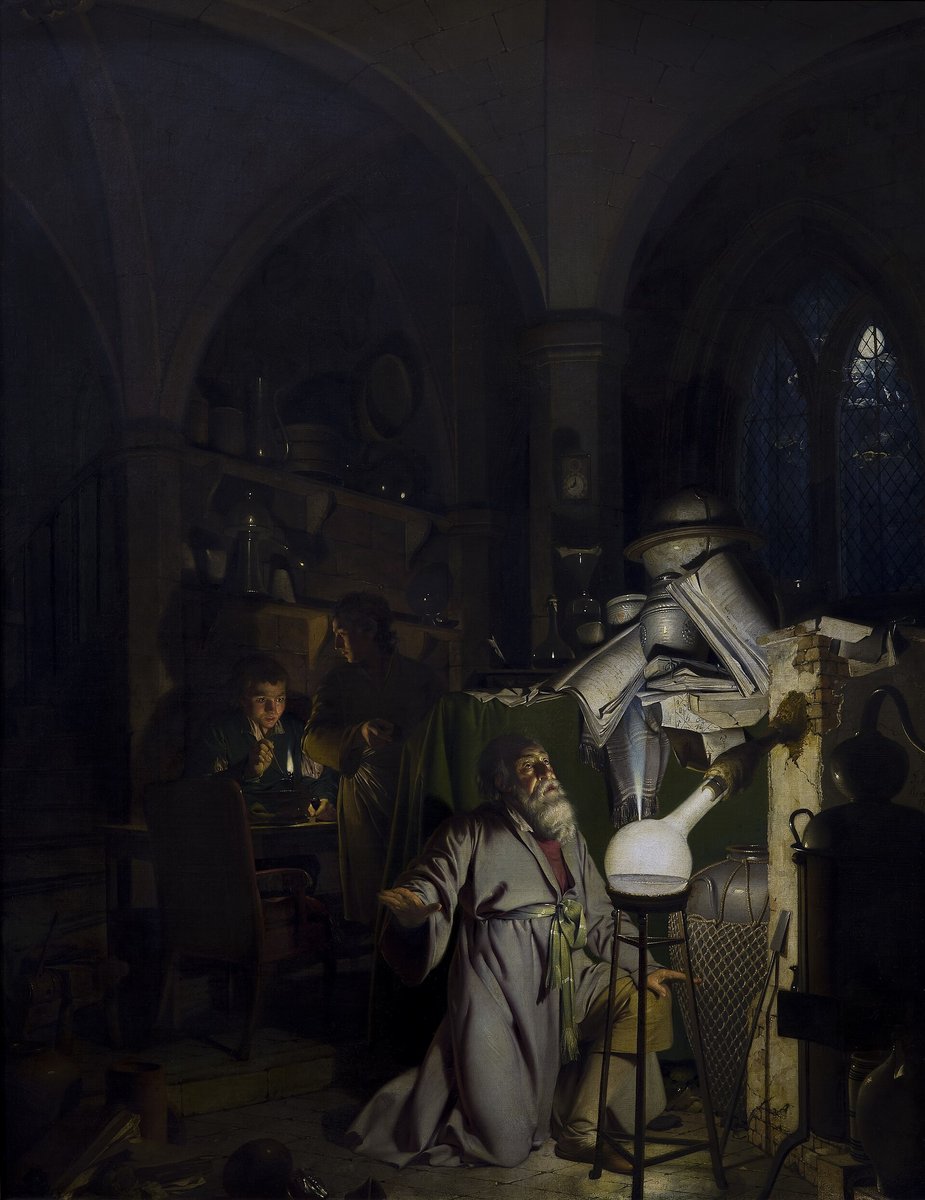
The tradition begins in Greco-Roman Egypt, where writers such as Zosimos of Panopolis, around 300 CE, already treat the work as both furnace practice and purification of the soul. It passed through the Arabic world — the vast corpus attributed to Jabir ibn Hayyan, the physician al-Razi — and entered Latin Europe in 1144, when Robert of Chester translated the Book of the Composition of Alchemy. Its stated goal is the transmutation of base metal into gold by way of the Philosophers’ Stone.
The work
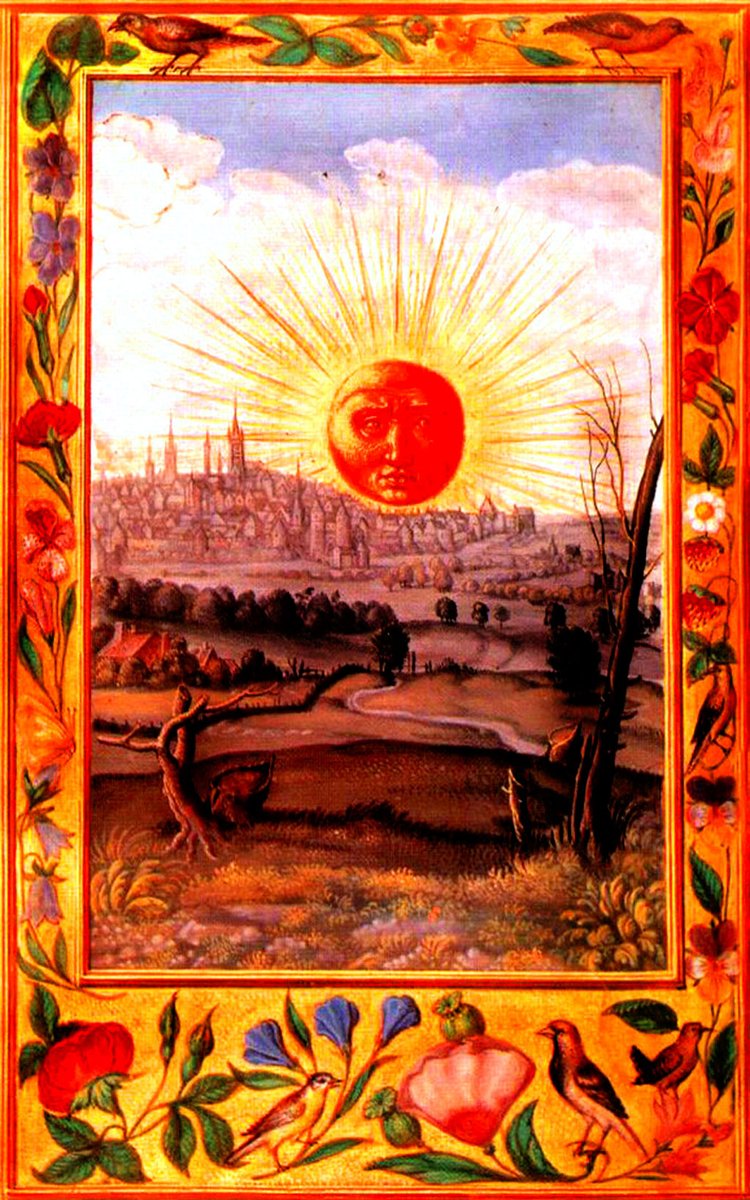
The method is a sequence of operations on matter, conventionally read through colour changes: nigredo, the blackening or putrefaction; albedo, the whitening or purification; citrinitas, the yellowing; and rubedo, the reddening in which the work completes. The governing formula is solve et coagula — dissolve and recombine. Break the thing down past its current form, then let it reassemble as something it could not have become while intact.
Alchemical texts are deliberately written to be read on two levels, and the practitioners said so. The furnace work is real chemistry — distillation, sublimation and the mineral acids come out of it, and modern laboratory glassware is its direct descendant. But the same operations describe an interior process, and the literature insists the operator is worked on alongside the material. Isaac Newton left around a million words of alchemical notes in his own hand. Carl Jung read the whole corpus as a projected map of individuation in Psychology and Alchemy (1944) and built a substantial part of his psychology on it.
Why it sits on this map
Because nigredo is the reason. The tradition states plainly that nothing transmutes without first being reduced to black rot, and that the operator who tries to skip that stage produces nothing. That is the same claim the Left-Hand Path makes about the descent, and the same one demonolatry makes about meeting what has been called shameful. Alchemy simply made a laboratory procedure of it and wrote it down centuries earlier.
There are no spirits in the operation and no pacts anywhere in it. Alchemy was pursued by monks, physicians, court chemists and at least one Holy Roman Emperor, Rudolf II in Prague. Where the Church objected, it objected to fraud rather than heresy: Pope John XXII's decretal of 1317 condemns alchemists for passing off false gold, not for consorting with demons. Its presence here is a matter of shared vocabulary and shared structure, not shared theology.