Mistaken for Satanism
The Illuminati
An Enlightenment order that ran for eleven years and was finished by 1787 — and the two-hundred-year afterlife of its name.
At a glance
- Adam Weishaupt, Ingolstadt, 1 May 1776
- Enlightenment rationalists, not occultists
- Banned 1784–1787, never revived
- No Satanism anywhere in it
The Illuminati existed. That surprises people, and it is where the documented history and the modern usage of the name part company. The real order was a short-lived society of Bavarian rationalists who wanted reason to outrank the Church. Everything else the word now carries — the pyramid, the world government, the pact with Lucifer — was attached to it after it was already dead.
The real order
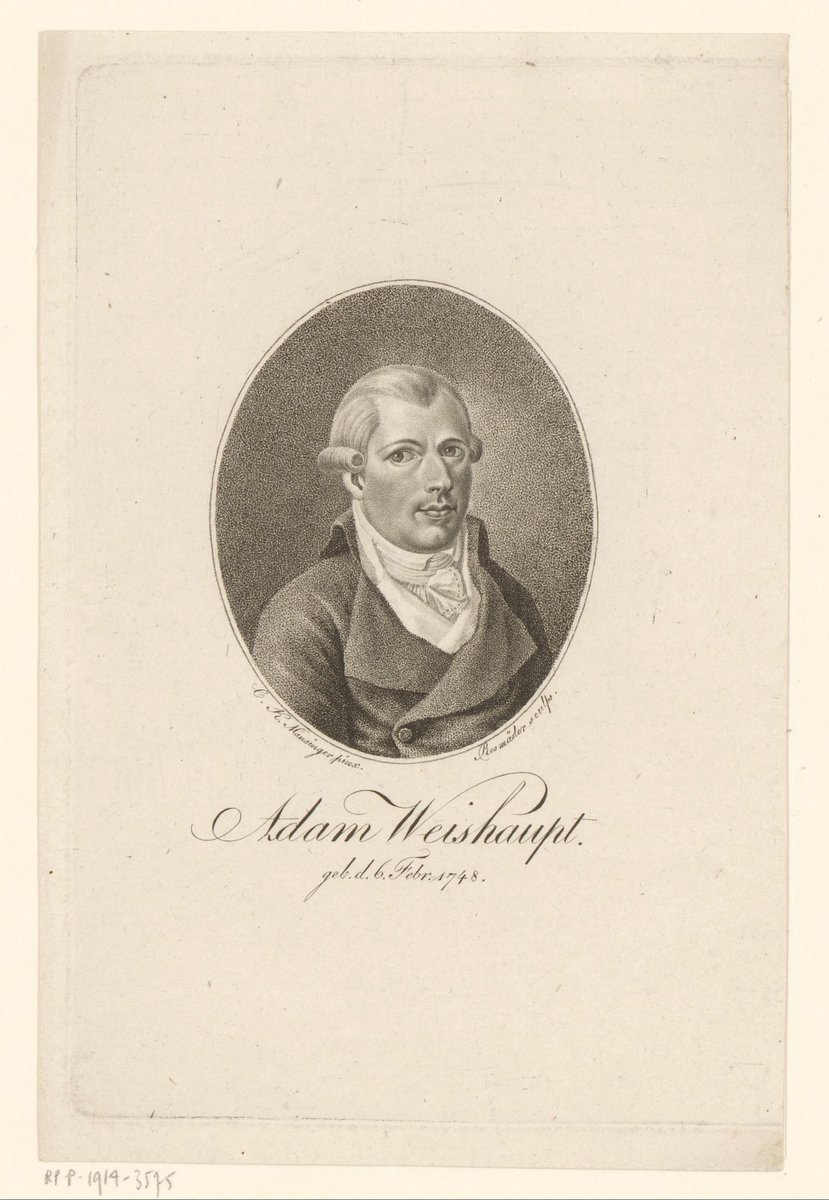
The Order of the Illuminati was founded on 1 May 1776 in Ingolstadt, Bavaria, by Adam Weishaupt, a young professor of canon law whose radicalism consisted of believing that reason should outrank revelation and that the Church should not be running the universities. He first called his circle the Perfectibilists. It was an Enlightenment secret society: rationalist, anticlerical, opposed to superstition and to the grip of throne and altar on public life.
It recruited by infiltrating Masonic lodges, because that is where the educated and discreet men already were, and it grew fastest after the Hanoverian nobleman Adolph Knigge joined in 1780 and gave it a working system of grades. At its height it had perhaps two thousand members, most of them civil servants, professors, clergy and officers; Goethe and Herder were among them.
And then it was crushed. Karl Theodor, Elector of Bavaria, banned all unauthorised societies by edict in 1784, and issued further edicts aimed at the order specifically in 1785 and 1787. Members were exposed, dismissed from their posts and exiled. Weishaupt lost his chair, fled Bavaria and lived out his life in Gotha under the protection of its duke. By 1787 the order was finished. It lasted eleven years, and it lost.
How the legend was built
The afterlife has a date. In 1797, two authors independently published books arguing that the order had secretly survived and engineered the French Revolution: Augustin Barruel in France (Mémoires pour servir à l'histoire du Jacobinisme) and John Robison in Scotland (Proofs of a Conspiracy). Neither presented documentary evidence of a surviving order, and none has surfaced since. What the two books did supply was a template: a hidden hand behind a public catastrophe, written about a body that had been dissolved for a decade.
The lineage from there is traceable in print. In 1806 Barruel receives, and passes on, a letter recasting the conspirators as a specific ethnic group. In the 1890s Léo Taxil manufactures an elaborate account of Satanic Masonic rites, then publicly confesses the hoax in 1897 — after which his material continues circulating regardless. In 1903 the Protocols of the Elders of Zion appear in Russia; The Times exposes them as a plagiarised forgery in 1921, and they remain the single most reproduced text in the genre.
The developed twentieth-century form — a hidden, immensely wealthy cabal steering nations, banks and media — carries the structure of that document, and “Illuminati” frequently occupies the slot the Protocols assigned elsewhere. That is the documented descent of the idea, set out so readers can trace it themselves.
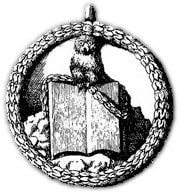
The pop-culture Illuminati owe as much to satire as to fear. Robert Shea and Robert Anton Wilson’s Illuminatus! trilogy (1975) played the whole conspiracy as a joke, and a generation took the joke seriously. The eye in the pyramid on the American dollar is the reverse of the Great Seal of the United States, designed in 1782 and printed on the one-dollar bill since 1935; it has no connection to Weishaupt’s order, and the 1776 at its base is the year of the Declaration of Independence.
Why it is not Satanism
On the Satanism claim specifically. The historical order left an extensive paper trail after the Bavarian seizures — statutes, correspondence, membership rolls, ritual texts, much of it printed by the Bavarian government itself in 1787 to discredit the order — and it contains no veneration, no magic and no deity. Weishaupt’s programme was rationalist and anticlerical, and its grades were pedagogical rather than theurgic. The Luciferian reading is a later addition, arriving by the route above: Barruel, then Taxil, then repetition.
The name carries no occult sense. Illuminati means “the enlightened,” from illumination by reason — the standard Enlightenment usage. The association with Lucifer as light-bringer is a later reading built on the shared metaphor of light, not on anything in the order’s own vocabulary.
One practical note. No continuing organisation of that name is documented. Websites offering membership, initiation or wealth for a fee are trading on the rumour; they follow the standard pattern of advance-fee fraud, and police and consumer agencies in several countries warn against them as such.