Mistaken for Satanism
Freemasonry
A fraternal order, not a religion and not occult — and the accusation of Satanism has a name and a confession date.
At a glance
- Fraternal order, first Grand Lodge 1717
- Not a religion
- The Taxil hoax, 1885–1897
- Confessed, and still circulating
Freemasonry is on this map for one reason: it is accused of Satanism more often than most actual Satanists are, and the accusation is not merely wrong. It is a known, confessed forgery — and it is worth knowing the confession date.
What Freemasonry is
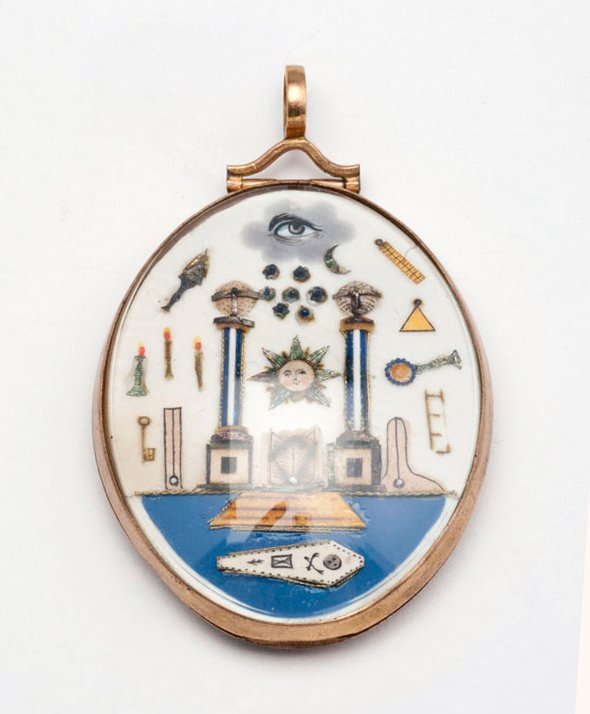
Freemasonry is a fraternal order descended from the stonemasons’ lodges of medieval and early modern Britain. It took its modern form in London in 1717, when four lodges joined to form the first Grand Lodge; its Constitutions followed in 1723. It teaches a moral system through allegory and ritual drawn from the building trade — the square, the compasses, the apron, the Temple of Solomon — across three basic degrees. Today it counts several million members worldwide, organised in independent national and regional Grand Lodges.
Most jurisdictions require a member to profess belief in a Supreme Being and then leave the rest deliberately unspecified — so a lodge could seat Christians, Jews, Muslims and deists at one table, which in its century was the entire point. A minority of continental lodges, led by the Grand Orient de France in 1877, dropped even that requirement. It is not a religion. It offers no salvation and has no cosmology to speak of. Its principal visible activity is charity, and its second is dinner.
The hoax and its confession
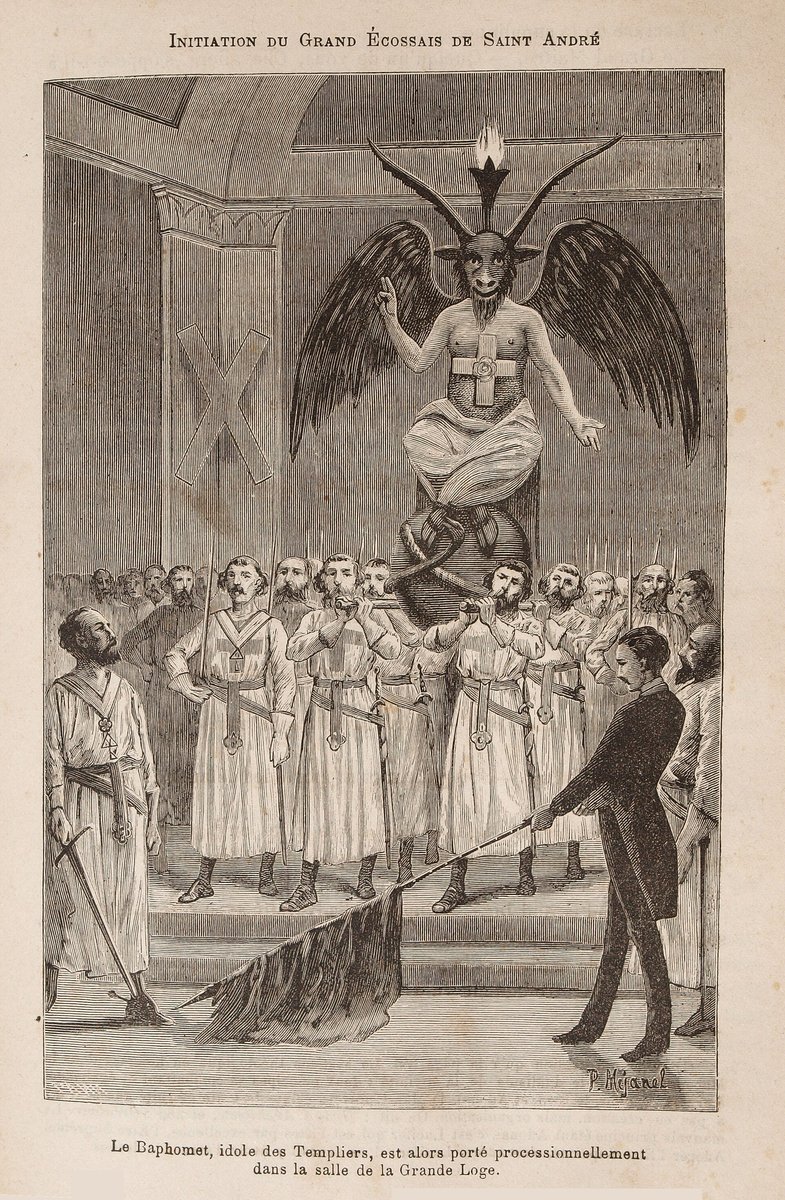
Now the hoax. In 1885 a French writer and former anticlerical pamphleteer, Gabriel Jogand-Pagès, who wrote as Léo Taxil, announced a dramatic conversion to Catholicism and began publishing exposures of Freemasonry. Across twelve years he invented an entire secret Satanic Masonic order called Palladism — complete with a high priestess named Diana Vaughan, demonic manifestations, and rites of worship offered to Lucifer. It was a sensation. The Catholic press carried it, Taxil was received in audience by Pope Leo XIII in 1887, and an anti-Masonic congress met at Trent in 1896 with his revelations in the air.
On 19 April 1897, having summoned the press to a hall in Paris to present Diana Vaughan in person at last, Taxil took the stage and announced that he had invented all of it. Every word. There was no Palladism and no high priestess; the name belonged to a typist in his employ who had lent it to the joke. He presented the whole affair as a prank on the Church and its anti-Masonic press. There was uproar.
It did not matter. Nearly every “Masons worship Lucifer” claim still in circulation today traces directly back to Taxil’s invention — including the notorious Albert Pike “Lucifer is God” quotation, a supposed instruction from the head of American Scottish Rite Masonry to councils that Taxil himself had made up. It first appeared in print in 1894, in a book by Abel Clarin de la Rive built on Taxil’s material, and it is still being reproduced well over a century after the hoax was confessed.
Pike’s real book, Morals and Dogma (1871), does contain a short rhetorical passage marvelling that the name of the light-bearer should be given to the spirit of darkness. Lifted out of more than eight hundred pages, it is quoted as a confession. Read in place, it is a nineteenth-century writer musing on a word, and nothing in Masonic ritual addresses Lucifer at all.
Why it belongs here
Which is why this card belongs on a page about Satanism. The lie has outlived its own confession by nearly a hundred and thirty years. That is the same fact as The Panic and the Lie, and the same fact as the witch trials, and it is quite possibly the most useful thing on this map: an accusation of Satanism does not need to be true in order to be permanent. Once it is in the water, retraction does nothing at all. Keep that in mind for everything else you have been told about the people on this map.