Adjacent practice
Wicca
A modern nature religion — no Satan in it anywhere, and structurally the other path.
At a glance
- Gerald Gardner, England, 1940s–50s
- Goddess and Horned God
- The Rede · the wheel of the year
- Not Satanism — genuinely
Wicca is a modern nature religion, and the thing on this map most often mistaken for Satanism. It has no Satan in it anywhere, and on the Vault’s map it sits, structurally, on the other path.
How Wicca began
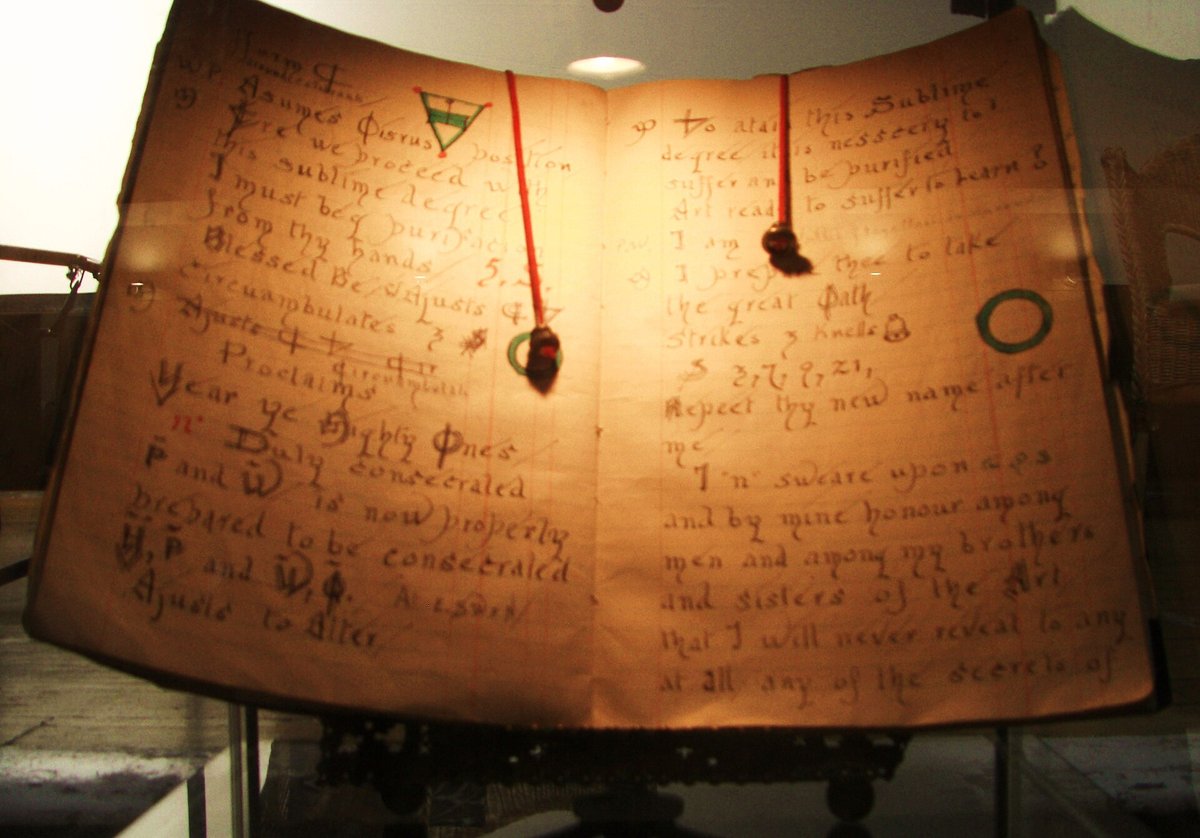
Wicca is a religion, and a young one: assembled by Gerald Gardner (1884–1964), a retired British colonial civil servant, in England across the 1940s and 50s out of folk practice, ceremonial magic, Freemasonry and a considerable amount of invention. Gardner said he had been initiated into a surviving witch coven in the New Forest in 1939; historians have found no evidence of an ancient unbroken cult behind it. He went public once Britain repealed its Witchcraft Act in 1951, and his Witchcraft Today (1954) was the first non-fiction book on the new religion.
Much of its liturgy was reworked by his high priestess Doreen Valiente, whose Charge of the Goddess is its best-known text. From Britain it spread to the United States in the 1960s and into many lineages — Gardnerian, Alexandrian, Dianic and a large eclectic and solitary branch — and an American federal appeals court treated it as a religion in 1986. The name comes from Old English wicca, a male witch.
Belief and practice
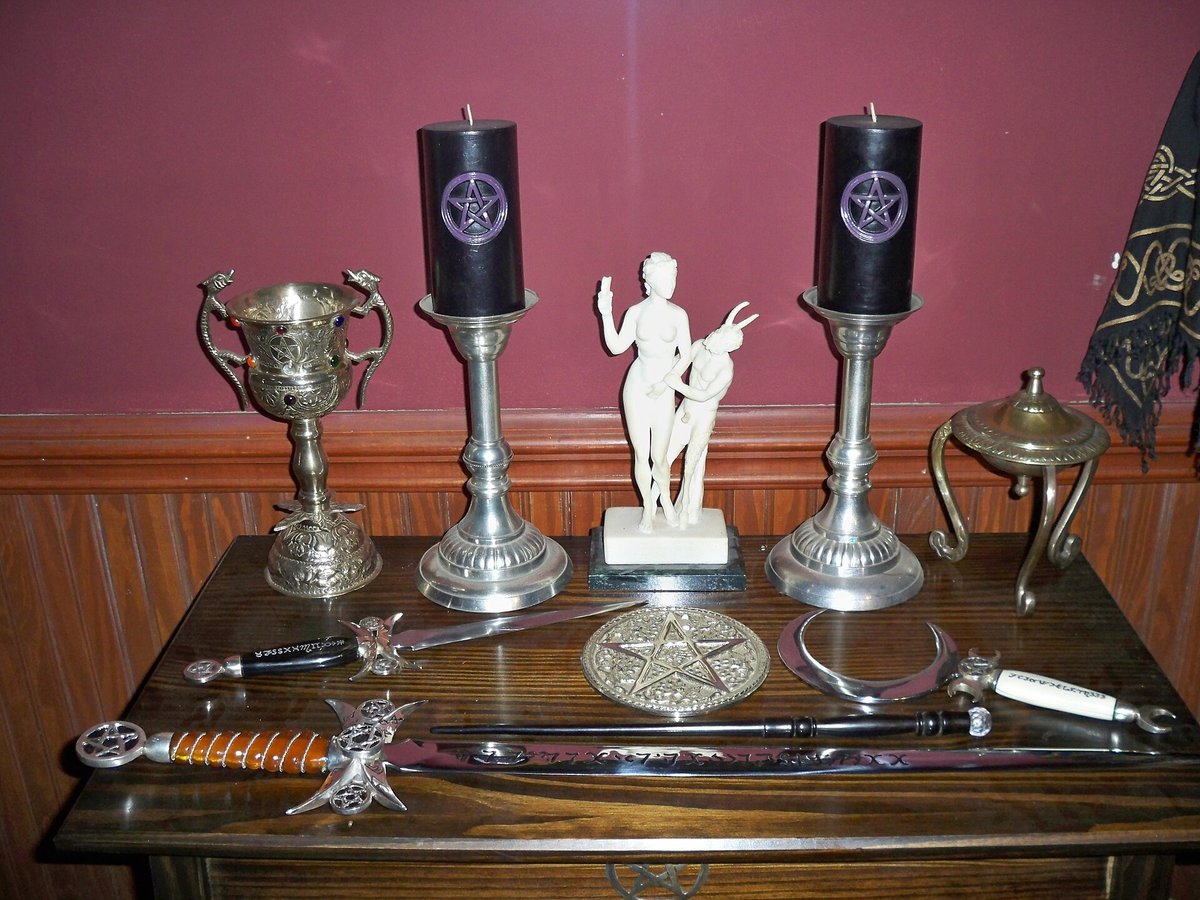
It is nature-venerating and generally duotheistic — a Goddess and a Horned God — and its year turns through eight sabbats, the wheel of the year, from Samhain and Yule to Beltane and Midsummer, celebrated in covens or alone. Its best-known symbol is the upright pentagram, a sign of protection and of the elements, which is one more reason it gets confused with the inverted one.
Why it is not Satanism
It has no Satan in it. None. Not as a being, not as a symbol, not as an enemy, not as a rejected option. The Horned God is not the Devil; he draws on Pan, Cernunnos and the old horned figure of the hunt and the greenwood. The traffic ran the other way: the horned, goat-legged Devil of medieval art borrowed his features from Pan and the satyrs, because the Church needed the old gods to be demons and horns were convenient. So the image people now use to accuse Wiccans of Satanism is a Christian invention turned against the older figure it was copied from. Wiccans find this exhausting, and they are entitled to.
Structurally, Wicca sits on the other path, and it is worth understanding why. It has a moral rule handed down — the Rede: an it harm none, do what ye will — and, in many traditions, a cosmic enforcement mechanism, the Threefold Law, which returns what you send three times over. That is an external moral order with a penalty clause attached. Compare Crowley’s do what thou wilt shall be the whole of the Law, which the Rede is plainly answering and deliberately fencing in; Gardner knew Crowley and borrowed from his rituals.
None of this is a criticism of Wiccans, who are on the whole doing something gentle and useful and are owed an apology by roughly everyone. It is a map fact: whatever Wicca is, it is not the Left-Hand Path and it is not Satanism. It is here because it is the single most common mistaken identification on this map.